
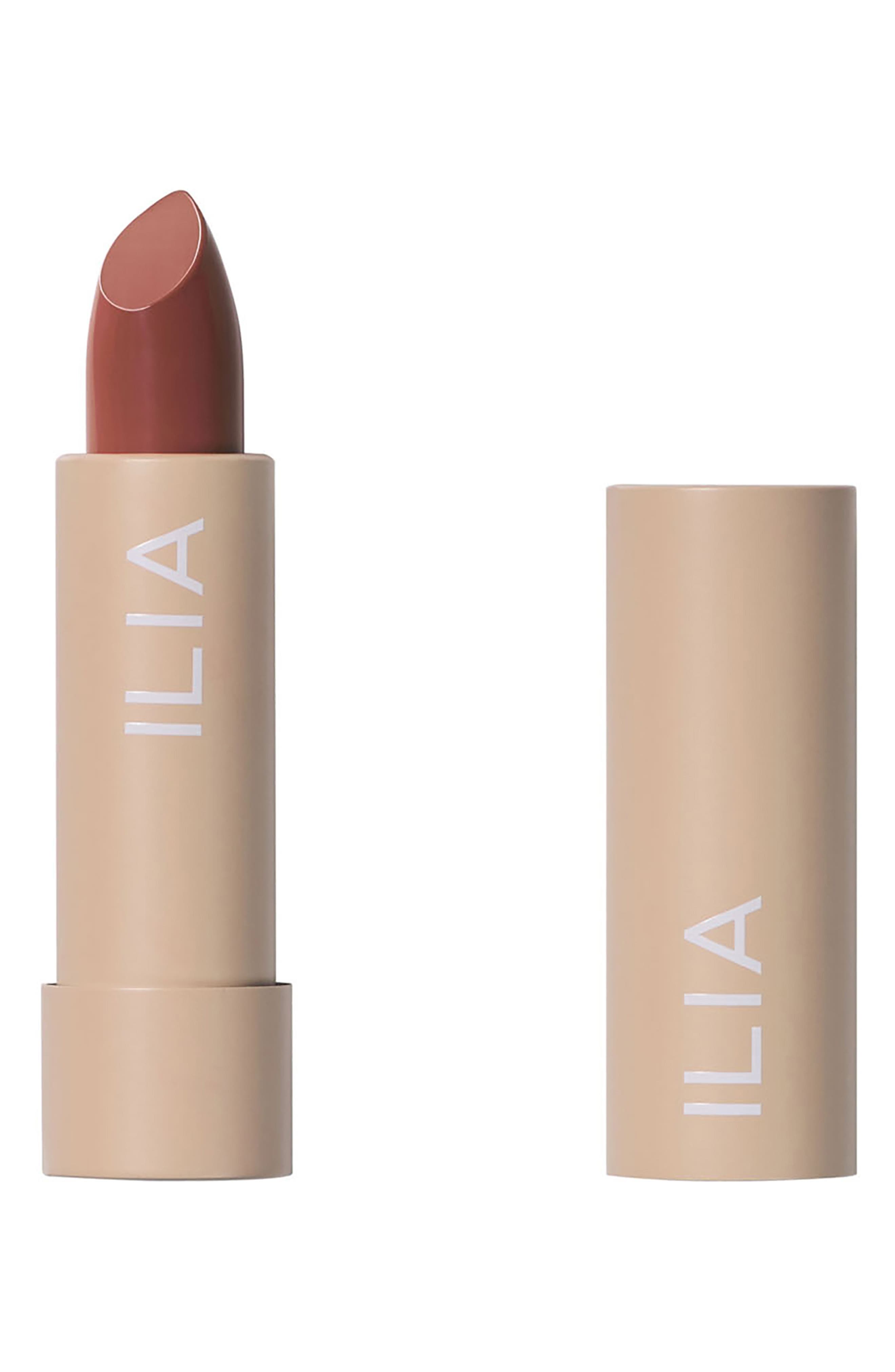


ILIA - Color Block Lipstick Non-Toxic Vegan Cruelty-Free Clean Makeup Marsala Neutral Brown With Cool Undertones
Analysis updated August 2026 · How Scout scores
At a glance
Summary
This lipstick features a predominantly natural ingredient list, including beneficial oils and waxes like castor seed oil, jojoba oil, and shea butter, which provide moisturizing and conditioning benefits. The product avoids harmful substances such as parabens, phthalates, and synthetic fragrances, contributing to its clean label. However, the presence of color additives and the processed nature of the product slightly limit its score potential.
Key ingredients 30
Ricinus Communis (Castor) Seed OilVery Good
Castor seed oil is a natural emollient that helps to moisturize and condition the skin. It is rich in ricinoleic acid, which has anti-inflammatory properties. This oil is commonly used in cosmetics for its ability to provide a smooth texture.
Risks
There is a low risk of allergic reactions, but it is generally considered safe for topical use.
Benefits
It provides deep hydration and helps to soothe dry, chapped lips.
Prunus Armeniaca (Apricot) Kernel OilVery Good
Apricot kernel oil is rich in essential fatty acids and vitamins A and E, which help to nourish and moisturize the skin. It is lightweight and easily absorbed, making it ideal for lip care products.
Risks
There is a low risk of allergic reactions, but it is generally safe for use.
Benefits
It helps to soften and smooth the lips, providing long-lasting hydration.
Oryza Sativa (Rice) Bran ExtractVery Good
Rice bran extract is rich in antioxidants, vitamins, and minerals that help to protect and nourish the skin. It has anti-inflammatory properties and is known for its ability to improve skin texture.
Risks
There are minimal risks, as it is generally considered safe for use.
Benefits
It helps to soothe and protect the lips from environmental stressors.
Simmondsia Chinensis (Jojoba) Seed OilVery Good
Jojoba oil is a natural emollient that closely resembles the skin's natural sebum. It is rich in vitamins E and B-complex, which help to repair and protect the skin. It is non-comedogenic and suitable for all skin types.
Risks
There are minimal risks, as it is well-tolerated by most skin types.
Benefits
It provides deep hydration and helps to maintain the skin's natural barrier.
TocopherolVery Good
Tocopherol, or vitamin E, is a powerful antioxidant that helps to protect the skin from free radical damage. It is commonly used in skincare products for its moisturizing and healing properties. It supports skin health and enhances the overall appearance of the skin.
Risks
There is a low risk of skin irritation, but it is generally considered safe for use.
Benefits
It helps to nourish and protect the skin, enhancing the overall health of the lips.
Butyrospermum Parkii (Shea) ButterVery Good
Shea butter is a natural fat extracted from the nuts of the shea tree. It is rich in vitamins A and E, which help to nourish and moisturize the skin. It is known for its anti-inflammatory and healing properties.
Risks
There is a low risk of allergic reactions, but it is generally considered safe for use.
Benefits
It provides deep hydration and helps to soothe dry, chapped lips.
Camellia Oleifera Seed OilVery Good
Camellia seed oil is rich in antioxidants and essential fatty acids that help to nourish and protect the skin. It is lightweight and easily absorbed, making it ideal for lip care products. It is known for its anti-aging and moisturizing properties.
Risks
There are minimal risks, as it is generally considered safe for use.
Benefits
It helps to soften and smooth the lips, providing long-lasting hydration.
Mangifera Indica (Mango) Seed ButterVery Good
Mango seed butter is a natural fat extracted from mango seeds. It is rich in vitamins A and C, which help to nourish and moisturize the skin. It is known for its emollient and regenerative properties.
Risks
There is a low risk of allergic reactions, but it is generally considered safe for use.
Benefits
It provides deep hydration and helps to soothe dry, chapped lips.
Rosa Canina Seed OilVery Good
Rosehip seed oil is rich in essential fatty acids and vitamins A and C, which help to nourish and rejuvenate the skin. It is known for its anti-aging and healing properties. It is commonly used in skincare products for its ability to improve skin texture and tone.
Risks
There is a low risk of allergic reactions, but it is generally considered safe for use.
Benefits
It helps to soften and smooth the lips, providing long-lasting hydration.
Theobroma Cacao (Cocoa) Seed ButterVery Good
Cocoa butter is a natural fat extracted from cocoa beans. It is rich in antioxidants and fatty acids that help to nourish and moisturize the skin. It is known for its emollient and healing properties.
Risks
There is a low risk of allergic reactions, but it is generally considered safe for use.
Benefits
It provides deep hydration and helps to soothe dry, chapped lips.
Vitis Vinifera (Grape) Seed OilVery Good
Grape seed oil is rich in antioxidants and essential fatty acids that help to nourish and protect the skin. It is lightweight and easily absorbed, making it ideal for lip care products. It is known for its anti-aging and moisturizing properties.
Risks
There are minimal risks, as it is generally considered safe for use.
Benefits
It helps to soften and smooth the lips, providing long-lasting hydration.
Rubus Idaeus (Raspberry) Seed OilVery Good
Raspberry seed oil is rich in essential fatty acids and antioxidants that help to nourish and protect the skin. It has anti-inflammatory properties and is known for its ability to improve skin texture. It is commonly used in cosmetics for its skin-conditioning benefits.
Risks
There are minimal risks, as it is generally considered safe for use.
Benefits
It helps to soothe and protect the lips from environmental stressors.
Caprylic/Capric TriglycerideGood
This ingredient is derived from coconut oil and glycerin, and it is used as an emollient and skin-repairing ingredient. It helps to create a barrier on the skin's surface, reducing moisture loss. It is lightweight and non-greasy, making it suitable for all skin types.
Risks
There are minimal risks associated with this ingredient, as it is generally well-tolerated.
Benefits
It enhances the spreadability of the product and provides a silky feel.
Candelilla Cera/Euphorbia Cerifera (Candelilla) Wax/Cire de CandelillaGood
Candelilla wax is a plant-based wax that is used as a thickening agent and emollient in cosmetics. It helps to stabilize formulations and provides a glossy finish. It is a vegan alternative to beeswax.
Risks
There are no significant risks associated with this ingredient.
Benefits
It helps to lock in moisture and provides a protective barrier on the lips.
Cera Carnauba/Copernicia Cerifera (Carnauba) Wax/Cire De CarnaubaGood
Carnauba wax is a natural wax obtained from the leaves of the carnauba palm. It is used to add texture and shine to cosmetic products. It is known for its hypoallergenic properties and high melting point.
Risks
There are minimal risks, as it is considered safe for use in cosmetics.
Benefits
It provides a smooth application and enhances the durability of the product.
Oleic/Linoleic/Linolenic PolyglyceridesGood
These polyglycerides are used as emulsifiers and skin-conditioning agents in cosmetics. They help to improve the texture and stability of formulations. They are derived from natural fatty acids.
Risks
There are no significant risks associated with these ingredients.
Benefits
They help to maintain the skin's natural moisture balance and improve product spreadability.
Jojoba EstersGood
Jojoba esters are derived from jojoba oil and are used as emollients and conditioning agents in cosmetics. They help to improve the texture and feel of products. They are biodegradable and environmentally friendly.
Risks
There are no significant risks associated with this ingredient.
Benefits
They provide a smooth, non-greasy feel and enhance the moisturizing properties of the product.
Hydroxystearic/Linolenic/Oleic PolyglyceridesGood
These polyglycerides are used as emulsifiers and skin-conditioning agents. They help to stabilize formulations and improve the texture of products. They are derived from natural fatty acids.
Risks
There are no significant risks associated with these ingredients.
Benefits
They help to maintain the skin's moisture balance and improve product spreadability.
Helianthus Annuus (Sunflower) Seed WaxGood
Sunflower seed wax is a natural wax used as a thickening agent and emollient in cosmetics. It helps to stabilize formulations and provides a smooth texture. It is a vegan alternative to beeswax.
Risks
There are no significant risks associated with this ingredient.
Benefits
It helps to lock in moisture and provides a protective barrier on the lips.
Tocopheryl AcetateGood
Tocopheryl acetate is a form of vitamin E that is used as an antioxidant in cosmetics. It helps to protect the skin from free radical damage and supports skin health. It is commonly used in skincare products for its moisturizing properties.
Risks
There is a low risk of skin irritation, but it is generally considered safe for use.
Benefits
It helps to nourish and protect the skin, enhancing the overall health of the lips.
Helianthus Annuus (Sunflower) ExtractGood
Sunflower extract is rich in vitamins and antioxidants that help to nourish and protect the skin. It has anti-inflammatory properties and is known for its ability to improve skin texture. It is commonly used in cosmetics for its skin-conditioning benefits.
Risks
There are minimal risks, as it is generally considered safe for use.
Benefits
It helps to soothe and protect the lips from environmental stressors.
Rosmarinus Officinalis (Rosemary) Leaf ExtractGood
Rosemary leaf extract is rich in antioxidants that help to protect the skin from free radical damage. It has anti-inflammatory properties and is known for its ability to improve skin texture. It is commonly used in cosmetics for its skin-conditioning benefits.
Risks
There are minimal risks, as it is generally considered safe for use.
Benefits
It helps to soothe and protect the lips from environmental stressors.
Acacia Decurrens Flower Cera/WaxGood
Acacia flower wax is a natural wax used as a thickening agent and emollient in cosmetics. It helps to stabilize formulations and provides a smooth texture. It is a vegan alternative to beeswax.
Risks
There are no significant risks associated with this ingredient.
Benefits
It helps to lock in moisture and provides a protective barrier on the lips.
CI 77491, CI 77492, CI 77499 (Iron Oxides)Good
Beneficial ingredient — whole-food or functional value in this product class.
Risks
There are minimal risks, as they are generally considered safe for use.
Benefits
They provide vibrant, long-lasting color to the product.
Caprylyl GlycolNeutral
Caprylyl glycol is a skin-conditioning agent and preservative used in cosmetics. It helps to improve the texture and feel of products. It is known for its antimicrobial properties.
Risks
There is a low risk of skin irritation, but it is generally considered safe for use.
Benefits
It helps to maintain the stability and shelf life of the product.
EthylhexylglycerinNeutral
Ethylhexylglycerin is a skin-conditioning agent and preservative used in cosmetics. It helps to improve the texture and feel of products. It is known for its antimicrobial properties.
Risks
There is a low risk of skin irritation, but it is generally considered safe for use.
Benefits
It helps to maintain the stability and shelf life of the product.
Polyglycerin-3Neutral
Polyglycerin-3 is used as an emulsifier and skin-conditioning agent in cosmetics. It helps to improve the texture and stability of formulations. It is derived from natural glycerin.
Risks
There are no significant risks associated with this ingredient.
Benefits
It helps to maintain the skin's moisture balance and improve product spreadability.
CI 77891 (Titanium Dioxide)Neutral
Titanium dioxide is a mineral used as a pigment and UV filter in cosmetics. It provides opacity and sun protection to products. It is generally recognized as safe for use in cosmetics.
Risks
There is a low risk of inhalation concerns in powder form, but it is generally safe in cream formulations.
Benefits
It provides sun protection and enhances the color of the product.
CI 15850 (Red 7 Lake), CI 19140 (Yellow 5 Lake), CI 45410 (Red 28 Lake), CI 73360 (Red 30 Lake), CI 77742 (Manganese Violet), CI 45380 (Red 22 Lake)Neutral
These are synthetic colorants used to provide vibrant colors in cosmetics. They are approved for use in cosmetics and are commonly used in lipsticks and other makeup products. They provide a wide range of color options for formulations.
Risks
There is a low risk of allergic reactions, but they are generally considered safe for use.
Benefits
They provide vibrant, long-lasting color to the product.
VanillinBad
Processed additive flagged under Scout's ingredient doctrine.
Risks
There is a low risk of allergic reactions, but it is generally considered safe for use.
Benefits
It provides a pleasant aroma and taste to the product.
Get the full breakdown in the Scout appTake Scout shopping
Scan any product to see lab results, healthy alternatives, and your personalized analysis.
Download on theApp Store GET IT ONGoogle PlayAmazon pricing & content
Amazon price as of . Product prices and availability are accurate as of the date/time indicated and are subject to change. Any price and availability information displayed on Amazon.com at the time of purchase will apply to the purchase of this product.
CERTAIN CONTENT THAT APPEARS ON THIS SITE COMES FROM AMAZON. THIS CONTENT IS PROVIDED “AS IS” AND IS SUBJECT TO CHANGE OR REMOVAL AT ANY TIME.