
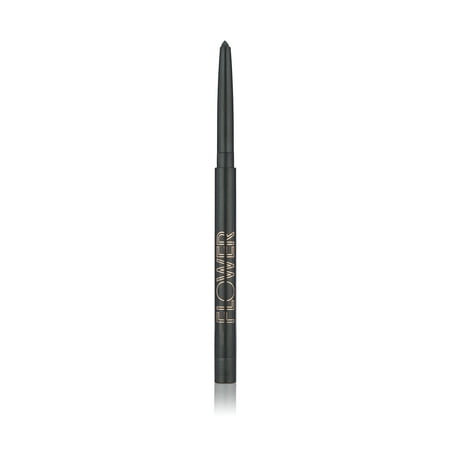


FLOWER Beauty Forever Wear Liner Long-wear Eyeliner -Emerald
Analysis updated August 2026 · How Scout scores
At a glance
Summary
This eyeliner contains dimethicone and dimethicone crosspolymer, which are non-water-soluble silicones that can cause buildup and prevent moisture penetration. While it includes tocopheryl acetate, a beneficial antioxidant, the presence of silicones and the processed nature of the product limit its overall score.
Key ingredients 26
MICAGood
Beneficial ingredient — whole-food or functional value in this product class.
Risks
Inhalation can cause respiratory irritation.
Benefits
Adds shimmer and color to products.
TOCOPHERYL ACETATEGood
Tocopheryl acetate is a form of vitamin E used for its antioxidant properties. It helps protect the skin and hair from damage caused by free radicals.
Risks
Minimal risk of irritation.
Benefits
Acts as an antioxidant, protecting skin and hair.
CYCLOPENTASILOXANENeutral
Cyclopentasiloxane is a volatile silicone that evaporates quickly, providing a smooth application. It is generally considered safe but can cause buildup in some cases.
Risks
May cause buildup with prolonged use.
Benefits
Helps in even application and smooth texture.
SUCROSE ACETATE ISOBUTYRATENeutral
Sucrose acetate isobutyrate is used as a film-forming agent and can enhance the texture of cosmetic products. It is generally considered safe with minimal risk.
Risks
Minimal known risks in cosmetic use.
Benefits
Improves texture and stability of the product.
SYNTHETIC WAXNeutral
Synthetic wax is used to provide structure and stability to cosmetic products. It is generally safe but may cause minor irritation in sensitive individuals.
Risks
Possible minor irritation for sensitive skin.
Benefits
Provides structure and stability to formulations.
TRIMETHYLSILOXYSILICATENeutral
Trimethylsiloxysilicate is a silicone resin that forms a flexible film on the skin or hair. It is considered safe but can contribute to buildup over time.
Risks
Potential for buildup with frequent use.
Benefits
Creates a flexible, long-lasting film.
POLYBUTENENeutral
Polybutene is a polymer used as a binder and film-former in cosmetics. It is generally safe but can cause minor irritation in some individuals.
Risks
Possible minor irritation for sensitive skin.
Benefits
Acts as a binder and film-former, enhancing product longevity.
POLYPROPYLSILSESQUIOXANENeutral
Polypropylsilsesquioxane is a silicone used for its film-forming properties, providing a smooth finish. It is generally considered safe with low risk of irritation.
Risks
Low risk of irritation.
Benefits
Provides a smooth, long-lasting finish.
C30-50 ALCOHOLSNeutral
C30-50 alcohols are fatty alcohols used as emollients and thickeners in cosmetics. They are generally safe and non-drying.
Risks
Minimal risk of irritation.
Benefits
Acts as an emollient and thickener, improving texture.
BIS-DIGLYCERYL POLYACYLADIPATE-2Neutral
Bis-diglyceryl polyacyladipate-2 is an emollient used to enhance the texture of cosmetics. It is generally considered safe with minimal risk.
Risks
Minimal known risks.
Benefits
Enhances texture and provides emollient properties.
POLYMETHYLSILSESQUIOXANENeutral
Polymethylsilsesquioxane is a silicone used for its film-forming and smoothing properties. It is generally safe but can contribute to buildup.
Risks
Potential for buildup with frequent use.
Benefits
Provides a smooth, long-lasting finish.
C20-40 PARETH-10Neutral
C20-40 pareth-10 is a polyethylene glycol ether used as an emulsifier. It is generally considered safe but can cause irritation in sensitive individuals.
Risks
Possible irritation for sensitive skin.
Benefits
Acts as an emulsifier, improving product stability.
CETYL PEG/PPG-10/1 DIMETHICONENeutral
Cetyl PEG/PPG-10/1 dimethicone is a silicone-based surfactant used for its conditioning properties. It is generally safe but can cause buildup.
Risks
Potential for buildup with frequent use.
Benefits
Provides conditioning and smoothness.
BIS-HYDROXYETHOXYPROPYL DIMETHICONENeutral
Bis-hydroxyethoxypropyl dimethicone is a silicone used for its conditioning properties. It is generally safe but can lead to buildup.
Risks
Potential for buildup with frequent use.
Benefits
Provides conditioning and smoothness.
TRIETHOXYCAPRYLYLSILANENeutral
Triethoxycaprylylsilane is a silicone used as a coupling agent to improve the dispersion of pigments. It is generally considered safe with minimal risk.
Risks
Minimal known risks.
Benefits
Improves pigment dispersion and product stability.
BISABOLOLNeutral
Bisabolol is a natural compound used for its soothing and anti-inflammatory properties. It is generally safe and beneficial for sensitive skin.
Risks
Minimal risk of irritation.
Benefits
Soothes and reduces inflammation.
SILICANeutral
Silica is used as an absorbent and anti-caking agent in cosmetics. It is generally safe but can cause irritation if inhaled.
Risks
Inhalation can cause respiratory irritation.
Benefits
Improves texture and prevents caking.
PENTAERYTHRITYL TETRA-DI-T-BUTYL HYDROXYHYDROCINNAMATENeutral
This ingredient is an antioxidant used to stabilize cosmetic formulations. It is generally considered safe with minimal risk.
Risks
Minimal known risks.
Benefits
Stabilizes formulations and prevents oxidation.
SYNTHETIC FLUORPHLOGOPITENeutral
Synthetic fluorophlogopite is a synthetic mica used to add shimmer and color. It is generally safe with minimal risk.
Risks
Minimal known risks.
Benefits
Adds shimmer and color to products.
IRON OXIDES (CI 77491, CI 77499)Neutral
Iron oxides are used as pigments in cosmetics. They are generally safe and non-irritating.
Risks
Minimal risk of irritation.
Benefits
Provides color and pigmentation.
TITANIUM DIOXIDE (CI 77891)Neutral
Titanium dioxide is used as a pigment and UV filter in cosmetics. It is generally safe but can cause irritation if inhaled.
Risks
Inhalation can cause respiratory irritation.
Benefits
Provides pigmentation and UV protection.
COPPER POWDER (CI 77400)Neutral
Copper powder is used as a pigment in cosmetics. It is generally safe but can cause irritation if inhaled.
Risks
Inhalation can cause respiratory irritation.
Benefits
Provides color and pigmentation.
FERRIC AMMONIUM FERROCYANIDE (CI 77510)Neutral
Ferric ammonium ferrocyanide is used as a pigment in cosmetics. It is generally safe but can cause irritation if inhaled.
Risks
Inhalation can cause respiratory irritation.
Benefits
Provides color and pigmentation.
DIMETHICONEBad
Dimethicone is a non-water-soluble silicone that can cause buildup on hair, leading to brittleness over time. It is often used for its smoothing properties but can prevent moisture from penetrating the hair shaft.
Risks
Potential for buildup and making hair brittle.
Benefits
Provides a smooth, silky feel to hair.
DIMETHICONE CROSSPOLYMERBad
Dimethicone crosspolymer is a silicone used for its smoothing properties but can lead to buildup on hair. It is not water-soluble, which can prevent moisture penetration.
Risks
Potential for buildup and moisture blockage.
Benefits
Provides a smooth, silky texture.
DIMETHICONE/VINYL DIMETHICONE CROSSPOLYMERBad
Processed additive flagged under Scout's ingredient doctrine.
Risks
Potential for buildup with frequent use.
Benefits
Provides a smooth, long-lasting finish.
Get the full breakdown in the Scout appTake Scout shopping
Scan any product to see lab results, healthy alternatives, and your personalized analysis.
Download on theApp Store GET IT ONGoogle Play