
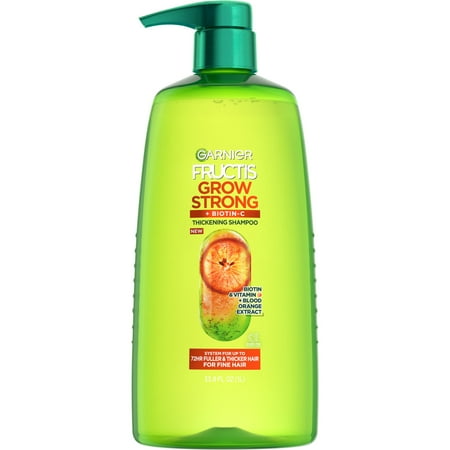
Garnier Fructis Grow Strong Thickening Shampoo with Biotin All Hair Types 33.8 fl oz
Analysis updated September 2026 · How Scout scores
At a glance
Summary
This shampoo contains Sodium Laureth Sulfate, which can strip natural oils and cause dryness, and synthetic fragrance, which may lead to irritation. However, it also includes beneficial ingredients like Biotin and Salicylic Acid, which support hair health and scalp maintenance. The presence of both beneficial and potentially harmful ingredients results in a mixed evaluation, with some concerns about ingredient safety and hair health impact.
Key ingredients 22
Coco-BetaineGood
Coco-Betaine is a mild surfactant derived from coconut oil, used to enhance foam and improve the texture of the product. It is considered gentle on the skin and hair. It helps to reduce irritation caused by harsher surfactants.
Risks
Generally considered safe with low risk of irritation.
Benefits
Enhances foam and provides a gentle cleansing action.
Salicylic AcidGood
Salicylic Acid is used for its exfoliating and anti-inflammatory properties. It helps to remove dead skin cells and reduce dandruff. It is beneficial for maintaining a healthy scalp.
Risks
May cause irritation in sensitive scalps if used excessively.
Benefits
Exfoliates the scalp and reduces dandruff.
Ascorbyl GlucosideGood
Ascorbyl Glucoside is a stable form of Vitamin C used for its antioxidant properties. It helps to protect hair from environmental damage. It is beneficial for maintaining healthy hair.
Benefits
Provides antioxidant protection for hair.
Citrus Sinensis Fruit Extract / Orange Fruit ExtractGood
Orange Fruit Extract is used for its antioxidant and fragrance properties. It helps to protect hair from environmental damage and provides a pleasant scent. It is beneficial for maintaining healthy hair.
Risks
May cause irritation in sensitive individuals, but generally safe.
Benefits
Provides antioxidant protection and a pleasant scent.
BiotinGood
Biotin is a B-vitamin used for its role in strengthening hair and promoting growth. It helps to improve the overall health and appearance of hair. It is beneficial for individuals looking to enhance hair thickness and strength.
Benefits
Strengthens hair and promotes growth.
TocopherolGood
Tocopherol, or Vitamin E, is used for its antioxidant properties. It helps to protect hair from environmental damage and improve overall health. It is beneficial for maintaining healthy and strong hair.
Benefits
Provides antioxidant protection and improves hair health.
Aqua / Water / EauNeutral
Water is the primary solvent in most shampoos, providing a base for other ingredients. It helps to dissolve and distribute the active components evenly. It does not have any direct benefits or risks.
Risks
There are no inherent risks associated with water in cosmetic formulations.
Benefits
Water acts as a carrier for other ingredients, ensuring they are evenly distributed.
Sodium ChlorideNeutral
Standard formulation ingredient — neither beneficial nor harmful at typical use.
Risks
May cause dryness and irritation, especially in sensitive scalps.
Benefits
Helps to thicken the shampoo for a better texture.
Citric AcidNeutral
Citric Acid is used to adjust the pH of the product, ensuring it is suitable for hair and scalp. It can help to maintain the stability of the formulation. It does not have direct benefits or risks when used in appropriate concentrations.
Risks
In high concentrations, it may cause irritation, but this is unlikely in shampoos.
Benefits
Helps to maintain the pH balance of the product.
Sodium HydroxideNeutral
Sodium Hydroxide is used to adjust the pH of cosmetic products. It is effective in small amounts to ensure the product is not too acidic or alkaline. It does not provide direct benefits or risks when used appropriately.
Risks
In high concentrations, it can be caustic, but this is controlled in formulations.
Benefits
Helps to maintain the desired pH level of the product.
Dicaprylyl EtherNeutral
Dicaprylyl Ether is used as an emollient and solvent in cosmetic formulations. It provides a smooth application and helps to improve the texture of the product. It is generally considered safe with no significant risks or benefits.
Benefits
Improves the texture and application of the product.
Peg-55 Propylene Glycol OleateNeutral
This ingredient is used as an emulsifier and surfactant in cosmetic products. It helps to stabilize formulations and improve texture. It is generally considered safe with no significant risks or benefits.
Benefits
Stabilizes the formulation and improves texture.
Hydroxypropyl Guar Hydroxypropyltrimonium ChlorideNeutral
This ingredient is used as a conditioning agent in hair care products. It helps to improve the texture and manageability of hair. It is generally considered safe with no significant risks or benefits.
Benefits
Improves hair texture and manageability.
Oleyl AlcoholNeutral
Oleyl Alcohol is used as an emollient and thickening agent in cosmetic products. It helps to improve the texture and feel of the product. It is generally considered safe with no significant risks or benefits.
Benefits
Improves texture and feel of the product.
Peg-60 Hydrogenated Castor OilNeutral
This ingredient is used as an emulsifier and surfactant in cosmetic products. It helps to stabilize formulations and improve texture. It is generally considered safe with no significant risks or benefits.
Benefits
Stabilizes the formulation and improves texture.
Polyquaternium-7Neutral
Polyquaternium-7 is used as a conditioning agent in hair care products. It helps to improve the texture and manageability of hair. It is generally considered safe with no significant risks or benefits.
Benefits
Improves hair texture and manageability.
Sodium Laureth SulfateBad
Sodium Laureth Sulfate is a surfactant used for its cleansing and foaming properties. It can strip natural oils from the hair, leading to dryness and irritation. It is considered less harsh than Sodium Lauryl Sulfate but still has potential negative effects.
Risks
May cause dryness and irritation to the scalp and hair.
Benefits
Provides effective cleansing and foaming action.
Sodium BenzoateBad
Synthetic preservative that can form benzene in the presence of vitamin C.
Risks
May cause irritation in sensitive individuals, but generally safe.
Benefits
Prevents microbial growth, extending the shelf life of the product.
LimoneneBad
Processed additive flagged under Scout's ingredient doctrine.
Risks
May cause irritation or allergic reactions in sensitive individuals.
Benefits
Provides a citrus scent and may have antimicrobial properties.
Propylene GlycolBad
Processed additive flagged under Scout's ingredient doctrine.
Risks
May cause irritation in sensitive individuals, but generally safe.
Benefits
Helps to retain moisture and improve product texture.
Potassium SorbateBad
Synthetic preservative — flagged in daily-use products.
Risks
May cause irritation in sensitive individuals, but generally safe.
Benefits
Prevents microbial growth, extending the shelf life of the product.
Parfum / FragranceVery Bad
Fragrance is added to enhance the sensory experience of the product. It can cause allergic reactions and irritation in sensitive individuals. The specific components of synthetic fragrances are often undisclosed, leading to potential unknown risks.
Risks
May cause allergic reactions and irritation.
Benefits
Improves the sensory experience with a pleasant scent.
Get the full breakdown in the Scout appTake Scout shopping
Scan any product to see lab results, healthy alternatives, and your personalized analysis.
Download on theApp Store GET IT ONGoogle PlayAmazon pricing & content
Amazon price as of . Product prices and availability are accurate as of the date/time indicated and are subject to change. Any price and availability information displayed on Amazon.com at the time of purchase will apply to the purchase of this product.
CERTAIN CONTENT THAT APPEARS ON THIS SITE COMES FROM AMAZON. THIS CONTENT IS PROVIDED “AS IS” AND IS SUBJECT TO CHANGE OR REMOVAL AT ANY TIME.