
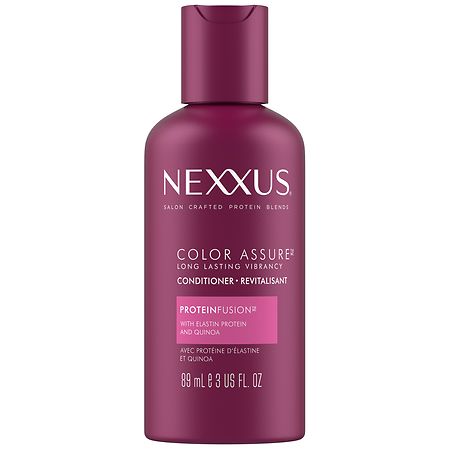

Nexxus Color Assure for Color Treated Hair Conditioner 3 oz
Analysis updated May 2026 · How Scout scores
At a glance
Summary
This conditioner contains dimethicone, a non-water-soluble silicone, which can build up on hair over time, and synthetic fragrance, which may cause irritation for some users. However, it is free from sulfates and parabens, and includes beneficial ingredients like coconut oil and hydrolyzed proteins that support hair health. The product is moderately processed, which impacts its overall rating.
Key ingredients 11
Cocos Nucifera (Coconut) OilGood
Coconut Oil is a natural oil known for its deep conditioning properties. It penetrates the hair shaft to provide moisture and reduce protein loss. It is highly valued for its ability to improve hair health and appearance.
Risks
There are minimal risks, though it may weigh down fine hair if used in excess.
Benefits
It deeply conditions and nourishes the hair, improving strength and shine.
Hydrolyzed Wheat ProteinGood
Hydrolyzed Wheat Protein is a protein derivative that helps to strengthen and repair hair. It penetrates the hair shaft to provide moisture and improve elasticity. It is particularly beneficial for damaged or chemically treated hair.
Risks
There are minimal risks, though individuals with wheat allergies should be cautious.
Benefits
It strengthens and repairs hair, improving its overall health and resilience.
Elastin ProteinGood
Elastin Protein is used to improve the elasticity and strength of hair. It helps to repair and protect hair from damage, making it more resilient. It is particularly beneficial for hair that is prone to breakage.
Risks
There are minimal risks associated with this ingredient.
Benefits
It enhances hair elasticity and strength, reducing breakage and improving texture.
QuinoaGood
Quinoa is a plant-derived ingredient rich in amino acids and proteins. It helps to nourish and strengthen hair, improving its overall health. It is valued for its ability to enhance hair shine and manageability.
Risks
There are minimal risks associated with quinoa in hair care products.
Benefits
It nourishes and strengthens hair, enhancing shine and manageability.
WaterNeutral
Water is a universal solvent and is used as a base in many cosmetic formulations. It helps to dissolve other ingredients and provides a medium for them to be evenly distributed. In conditioners, it aids in the application and spreadability of the product.
Risks
There are no significant risks associated with water in cosmetic formulations.
Benefits
Water hydrates the hair and helps in the even distribution of other beneficial ingredients.
Cetearyl AlcoholNeutral
Cetearyl Alcohol is a fatty alcohol that acts as an emulsifier and thickener in cosmetic products. It helps to stabilize formulations and provides a creamy texture. It is considered gentle and non-drying, unlike other alcohols.
Risks
There are minimal risks associated with Cetearyl Alcohol, as it is generally well-tolerated.
Benefits
It helps to condition and soften the hair, improving manageability and texture.
Stearamidopropyl DimethylamineNeutral
Stearamidopropyl Dimethylamine is a conditioning agent that helps to detangle and soften hair. It is derived from vegetable oil and is used to improve the texture of hair products. It is considered a mild alternative to harsher conditioning agents.
Risks
There are minimal risks associated with this ingredient, as it is generally considered safe.
Benefits
It helps to improve hair manageability and reduces static, making hair easier to style.
Citric AcidNeutral
Citric Acid is used to adjust the pH of cosmetic formulations, ensuring they are compatible with skin and hair. It can also act as a mild preservative. In hair care, it helps to close the hair cuticle, enhancing shine.
Risks
In high concentrations, it may cause irritation, but it is typically used in safe amounts.
Benefits
It helps to balance the pH of the product, which can enhance hair shine and smoothness.
Lactic AcidNeutral
Lactic Acid is an alpha hydroxy acid used to adjust the pH of cosmetic products. It can also act as a mild exfoliant, helping to remove dead skin cells. In hair care, it helps to smooth the hair cuticle.
Risks
In high concentrations, it may cause irritation, but it is typically used in safe amounts.
Benefits
It helps to maintain the pH balance of the product, which can enhance hair smoothness and manageability.
DimethiconeBad
Dimethicone is a silicone-based polymer used to provide smoothness and shine to hair. However, it is non-water-soluble and can lead to buildup on the hair over time. This buildup can make hair feel heavy and reduce the effectiveness of other conditioning agents.
Risks
Potential risks include buildup on the hair, which can lead to dullness and brittleness.
Benefits
It provides immediate smoothness and shine, making hair easier to detangle.
Fragrance (Parfum)Very Bad
Fragrance is used to impart a pleasant scent to cosmetic products. However, it is often a mixture of various chemicals, some of which can cause allergic reactions or sensitivities. It is considered a common irritant in personal care products.
Risks
Potential risks include skin irritation and allergic reactions, especially in sensitive individuals.
Benefits
It provides a pleasant scent, enhancing the sensory experience of using the product.
Processing
Processed Foods
Get the full breakdown in the Scout appTake Scout shopping
Scan any product to see lab results, healthy alternatives, and your personalized analysis.
Download on theApp Store GET IT ONGoogle PlayAmazon pricing & content
Amazon price as of . Product prices and availability are accurate as of the date/time indicated and are subject to change. Any price and availability information displayed on Amazon.com at the time of purchase will apply to the purchase of this product.
CERTAIN CONTENT THAT APPEARS ON THIS SITE COMES FROM AMAZON. THIS CONTENT IS PROVIDED “AS IS” AND IS SUBJECT TO CHANGE OR REMOVAL AT ANY TIME.