
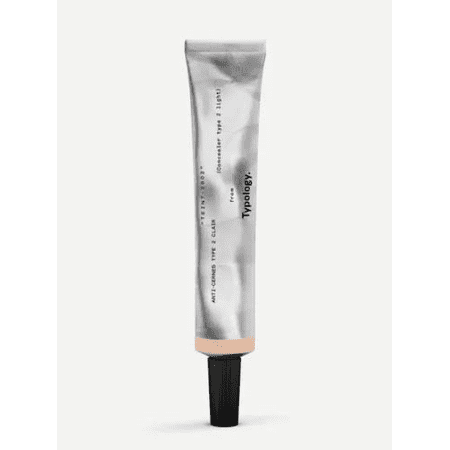
Tarte Creaseless Concealer
Summary
The Tarte Creaseless Concealer contains a mix of safe and concerning ingredients. While it includes beneficial components like natural oils and skin actives, it also has synthetic chemicals that could pose risks, such as potential skin irritants. The product's processing level and presence of synthetic ingredients prevent it from achieving a higher score.
At a glance
Key ingredients 15
Caprylic/Capric Triglyceride
Caprylic/Capric Triglyceride is a mixed triester derived from coconut oil and glycerin. It is used as an emollient and helps to improve the spreadability of the product. It is generally considered safe and non-irritating for most skin types.
Risks
There are minimal risks associated with this ingredient, primarily limited to rare allergic reactions.
Benefits
It provides a lightweight, non-greasy barrier of lubrication that helps to retain moisture in the skin.
Bis-Diglyceryl Polyacyladipate-2
Bis-Diglyceryl Polyacyladipate-2 is a synthetic ester used as a skin conditioning agent. It provides a smooth application and enhances the texture of the product. It is considered safe for use in cosmetics.
Risks
There are no significant risks associated with this ingredient.
Benefits
It helps to improve the feel of the product on the skin, making it more pleasant to use.
Cetyl Alcohol
Cetyl Alcohol is a fatty alcohol used as an emollient and thickening agent. It helps to stabilize and thicken formulations, providing a creamy texture. It is generally considered safe and non-irritating.
Risks
In rare cases, it may cause mild skin irritation or allergic reactions.
Benefits
It helps to soften and smooth the skin, enhancing the moisturizing properties of the product.
Vp/Hexadecene Copolymer
Vp/Hexadecene Copolymer is a synthetic polymer used as a film-forming agent. It helps to provide water resistance and improve the longevity of the product on the skin. It is considered safe for use in cosmetics.
Risks
There are minimal risks, primarily related to potential skin sensitivity in rare cases.
Benefits
It enhances the durability of the product, making it last longer on the skin.
Silica Dimethyl Silylate
Silica Dimethyl Silylate is a modified form of silica used as a thickening agent and to improve the texture of the product. It provides a matte finish and helps to control oil. It is generally considered safe for use in cosmetics.
Risks
Inhalation of silica particles can be a concern, but this is less relevant in liquid formulations.
Benefits
It helps to absorb excess oil and provides a smooth, matte finish to the skin.
Microcrystalline Wax
Microcrystalline Wax is a refined wax used to add structure and stability to cosmetic products. It helps to thicken formulations and improve texture. It is considered safe for use in cosmetics.
Risks
There are minimal risks, primarily related to potential skin sensitivity.
Benefits
It provides a stable base for the product, enhancing its application and wear.
Tocopheryl Acetate
Tocopheryl Acetate is a form of Vitamin E used as an antioxidant. It helps to protect the skin from damage caused by free radicals. It is generally considered safe and beneficial for the skin.
Risks
In rare cases, it may cause skin irritation or allergic reactions.
Benefits
It provides antioxidant benefits, helping to protect and nourish the skin.
Phenoxyethanol
Phenoxyethanol is a preservative used to prevent microbial growth in cosmetic products. It is effective in low concentrations and helps to extend the shelf life of the product. It is generally considered safe, but some concerns exist regarding skin irritation.
Risks
It can cause skin irritation, especially in sensitive individuals, and there are concerns about its potential neurotoxicity.
Benefits
It effectively preserves the product, preventing contamination and spoilage.
Caprylyl Glycol
Caprylyl Glycol is a skin conditioning agent and preservative booster. It helps to moisturize the skin and enhance the efficacy of preservatives. It is considered safe for use in cosmetics.
Risks
There are minimal risks, primarily related to potential skin sensitivity.
Benefits
It provides moisturizing benefits and helps to maintain the stability of the product.
Ascorbyl Palmitate
Ascorbyl Palmitate is a stable form of Vitamin C used as an antioxidant. It helps to protect the skin from oxidative stress and improve the appearance of aging skin. It is generally considered safe and beneficial for the skin.
Risks
In rare cases, it may cause skin irritation or allergic reactions.
Benefits
It provides antioxidant benefits, helping to brighten and protect the skin.
Passiflora Edulis Seed Oil
Passiflora Edulis Seed Oil is a natural oil rich in essential fatty acids. It helps to moisturize and nourish the skin, improving its overall appearance. It is considered safe and beneficial for use in cosmetics.
Risks
There are minimal risks, primarily related to potential allergic reactions.
Benefits
It provides moisturizing and nourishing benefits, enhancing skin softness and elasticity.
Tocopherol
Tocopherol is a form of Vitamin E used as an antioxidant. It helps to protect the skin from damage caused by free radicals and environmental stressors. It is generally considered safe and beneficial for the skin.
Risks
In rare cases, it may cause skin irritation or allergic reactions.
Benefits
It provides antioxidant benefits, helping to protect and nourish the skin.
Titanium Dioxide (Ci 77891)
Titanium Dioxide is a mineral used as a pigment and sunscreen agent. It provides opacity and UV protection in cosmetic products. It is generally considered safe for use in cosmetics.
Risks
Inhalation of fine particles can be a concern, but this is less relevant in liquid formulations.
Benefits
It provides UV protection and enhances the coverage of the product.
Iron Oxides (Ci 77492, Ci 77491, Ci 77499)
Iron Oxides are pigments used to provide color in cosmetic products. They are stable and non-reactive, making them suitable for use in a variety of formulations. They are generally considered safe for use in cosmetics.
Risks
There are minimal risks, primarily related to potential skin sensitivity.
Benefits
They provide natural-looking color and are stable in formulations.
Yellow 5 Lake (Ci 19140)
Yellow 5 Lake is a synthetic dye used to provide color in cosmetic products. It is commonly used in a variety of formulations to achieve vibrant colors. It is generally considered safe for use in cosmetics.
Risks
There are concerns about potential allergic reactions and sensitivity in some individuals.
Benefits
It provides vibrant color to the product, enhancing its visual appeal.
Processing
Processed Foods
Get the full breakdown in the Scout app
Scan any product to see lab results, healthy alternatives, and your personalized analysis.
Download on theApp Store