
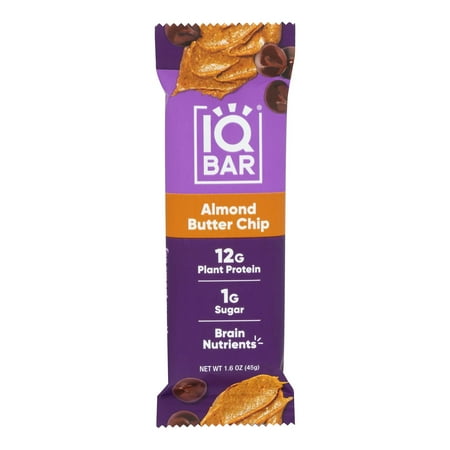


Iq Bar 1.6 oz Almond Butter Cup Bar
Summary
The Almond Butter Cup Bar contains several beneficial ingredients such as almonds, flaxseeds, and pea protein, which contribute to its nutritional value. However, it is considered highly processed due to the inclusion of natural flavors and multiple additives, which slightly detract from its overall healthiness. Despite these factors, the bar maintains a relatively low sugar content and includes healthy fats and fiber, making it a balanced option within its category.
At a glance
Key ingredients 18
AlmondsVery Good
Almonds are a nutrient-dense food rich in healthy fats, protein, and fiber. They provide essential vitamins and minerals such as vitamin E and magnesium. Their consumption is associated with improved heart health and reduced inflammation.
Benefits
Rich in monounsaturated fats that support heart health and provide anti-inflammatory properties.
Tapioca FiberGood
Tapioca fiber is a prebiotic fiber that supports digestive health by promoting beneficial gut bacteria. It is derived from the cassava root and is minimally processed. It can help improve bowel regularity and support a healthy gut microbiome.
Benefits
Supports digestive health and promotes beneficial gut bacteria.
Plant-Based Protein CrispsNeutral
Plant-based protein crisps provide a source of protein derived from pea protein and tapioca starch. They are a processed form of protein that can be beneficial for those seeking plant-based protein sources. However, they may lack the complete amino acid profile found in animal-based proteins.
Risks
May lack a complete amino acid profile compared to animal-based proteins.
Benefits
Provides a plant-based protein source suitable for vegetarians and vegans.
Natural FlavorsBad
Natural flavors are a catch-all term for flavoring agents derived from natural sources but can be highly processed. They often lack transparency regarding their specific composition. Their use is common in processed foods to enhance flavor without adding nutritional value.
Risks
Lack of transparency and potential for containing multiple processed compounds.
Pea ProteinGood
Pea protein is a high-quality plant-based protein that is rich in essential amino acids. It is hypoallergenic and suitable for those with dairy or soy allergies. It supports muscle growth and repair, making it a popular choice for vegetarians and vegans.
Benefits
Rich in essential amino acids and supports muscle growth and repair.
FlaxseedsVery Good
Flaxseeds are an excellent source of omega-3 fatty acids, fiber, and lignans. They support heart health, improve digestion, and may reduce the risk of certain cancers. Their nutrient profile makes them a valuable addition to a balanced diet.
Benefits
Rich in omega-3 fatty acids and fiber, supporting heart health and digestion.
Unsweetened ChocolateGood
Unsweetened chocolate is rich in antioxidants and flavonoids, which have been linked to heart health benefits. It is minimally processed compared to sweetened chocolate products. Its consumption in moderation can contribute to improved cardiovascular health.
Benefits
Rich in antioxidants and flavonoids, supporting heart health.
Gum AcaciaNeutral
Gum acacia is a natural gum derived from the sap of the acacia tree and is used as a stabilizer and thickener. It is considered safe for consumption and has minimal processing. It may have prebiotic effects, supporting gut health.
Benefits
May have prebiotic effects, supporting gut health.
Coconut OilNeutral
Coconut oil is a source of medium-chain triglycerides (MCTs), which are easily metabolized for energy. It is a saturated fat that has been debated for its health impacts. While it can provide quick energy, excessive consumption may raise cholesterol levels.
Risks
Excessive consumption may raise cholesterol levels.
Benefits
Provides medium-chain triglycerides (MCTs) for quick energy.
Cocoa ButterNeutral
Cocoa butter is a natural fat extracted from cocoa beans and is used for its smooth texture and flavor. It is high in saturated fats but also contains beneficial antioxidants. Its use in moderation is generally considered safe.
Risks
High in saturated fats, which may impact cholesterol levels if consumed in excess.
Benefits
Contains beneficial antioxidants and provides a smooth texture.
Sunflower LecithinNeutral
Sunflower lecithin is an emulsifier derived from sunflower seeds and is used to improve texture and consistency. It is a natural alternative to soy lecithin and is less likely to be genetically modified. It is generally considered safe for consumption.
Benefits
Improves texture and consistency as a natural emulsifier.
WaterNeutral
Water is used as a solvent and to maintain moisture in food products. It is essential for life and has no negative health impacts when used in food processing. Its presence ensures the product remains palatable and fresh.
Benefits
Essential for life and maintains moisture in food products.
CinnamonGood
Cinnamon is a spice known for its antioxidant properties and potential to regulate blood sugar levels. It is derived from the bark of cinnamon trees and is minimally processed. Its inclusion can enhance flavor while providing health benefits.
Benefits
Known for its antioxidant properties and potential to regulate blood sugar levels.
Vanilla ExtractNeutral
Vanilla extract is a flavoring derived from vanilla beans and is used to enhance the taste of food products. It is a natural flavoring agent with minimal processing. While it adds flavor, it does not provide significant nutritional benefits.
Benefits
Enhances flavor with minimal processing.
Sea SaltGood
Unrefined sea salt — a minimally processed, natural source of sodium and essential trace minerals, and a legitimate whole-food seasoning. Treated as a positive ingredient.
Risks
Excessive consumption can lead to increased blood pressure.
Benefits
Contains trace minerals and enhances flavor.
Non-GMO Steviol GlycosidesNeutral
Steviol glycosides are natural sweeteners derived from the stevia plant and are used as a sugar substitute. They provide sweetness without calories and are considered safe for consumption. They are a suitable option for those looking to reduce sugar intake.
Benefits
Provides sweetness without calories, suitable for reducing sugar intake.
Lion's ManeGood
Lion's Mane is a medicinal mushroom known for its potential cognitive and neurological benefits. It is used for its neuroprotective properties and may support brain health. Its inclusion in supplements is valued for potential mental clarity and focus enhancement.
Benefits
Known for potential cognitive and neurological benefits, supporting brain health.
Vitamin EVery Good
Vitamin E is a powerful antioxidant that helps protect cells from oxidative damage. It is essential for immune function and skin health. Its inclusion in supplements supports overall health and well-being.
Benefits
Powerful antioxidant supporting immune function and skin health.
Processing
Ultra-Processed Foods
Get the full breakdown in the Scout app
Scan any product to see lab results, healthy alternatives, and your personalized analysis.
Download on theApp Store