
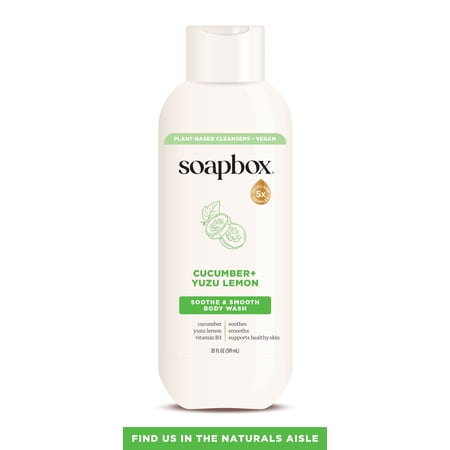
Soapbox Moisture Multiplying Body Wash for Women & Men All Skin Types Cucumber and Yuzu Lemon 20 oz
Analysis updated June 2026 · How Scout scores
At a glance
Summary
This body wash contains beneficial ingredients like shea butter and aloe vera, which provide moisturizing and soothing properties. However, it also includes several fragrance components such as limonene and citral, which are known allergens and can cause skin irritation. The presence of sodium coco-sulfate, a harsher surfactant, further impacts its suitability for sensitive skin, contributing to a moderate processing level.
Key ingredients 25
Butyrospermum Parkii (Shea) ButterVery Good
Shea butter is a natural fat extracted from the nuts of the shea tree, known for its moisturizing and anti-inflammatory properties. It is minimally processed and rich in vitamins A and E, making it highly beneficial for skin hydration and protection. Its emollient properties help to soothe and soften the skin.
Benefits
Deeply moisturizes and nourishes the skin, providing anti-inflammatory benefits.
Aloe Barbadensis (Aloe Vera) Leaf JuiceVery Good
Aloe vera juice is renowned for its soothing and healing properties, often used to treat skin irritation and burns. It is derived from the aloe plant and is minimally processed to retain its natural benefits. Its hydrating and anti-inflammatory effects make it a valuable ingredient in skincare.
Benefits
Provides soothing, hydrating, and healing benefits to the skin.
Panthenol (Vitamin B5)Very Good
Panthenol is a form of vitamin B5 known for its moisturizing and healing properties. It is used in skincare to improve hydration and reduce inflammation. Its ability to penetrate the skin makes it highly effective in enhancing skin barrier function.
Benefits
Enhances skin hydration and supports healing.
Cucumis Sativus (Cucumber) Fruit ExtractGood
Cucumber extract is known for its soothing and hydrating properties. It is rich in antioxidants and vitamins, which can help to calm and refresh the skin. Its natural origin and minimal processing make it a beneficial addition to skincare products.
Benefits
Provides soothing and hydrating effects, beneficial for calming irritated skin.
Citrus Junos (Yuzu) Peel OilGood
Yuzu peel oil is valued for its refreshing citrus scent and potential antioxidant properties. It is derived from the peel of the yuzu fruit, offering a natural fragrance alternative. Its use in moderation is generally safe and beneficial for uplifting the senses.
Risks
Potential for skin sensitivity or allergic reactions in some individuals.
Benefits
Offers a refreshing scent and potential antioxidant benefits.
Tocopheryl Acetate (Vitamin E)Good
Vitamin E is an antioxidant that helps protect the skin from damage caused by free radicals. It is often used in skincare for its moisturizing and protective properties. The acetate form is stable and effective in formulations.
Benefits
Acts as an antioxidant, protecting and moisturizing the skin.
Ascorbic Acid (Vitamin C)Good
Vitamin C is a potent antioxidant that helps brighten the skin and reduce signs of aging. It is included in formulations for its ability to boost collagen production and improve skin texture. Its stability can be a concern, but it is beneficial when effectively formulated.
Risks
Potential for skin irritation in sensitive individuals.
Benefits
Brightens the skin and supports collagen production.
Biotin (Vitamin B7)Good
Beneficial ingredient — whole-food or functional value in this product class.
Benefits
Supports overall skin health, though benefits are more pronounced when ingested.
WaterNeutral
Water is the primary solvent in this body wash, providing a base for other ingredients. It is typically purified to remove impurities, ensuring safety and effectiveness. No significant interactions or concerns are noted with water in this formulation.
See more about Water →Cocamidopropyl BetaineNeutral
Cocamidopropyl Betaine is a mild surfactant and foam booster derived from coconut oil. It is often used to reduce irritation potential of harsher surfactants. While generally considered safe, it can cause allergic reactions in some individuals.
Risks
Potential allergen for some individuals, leading to skin irritation.
Benefits
Helps to create a rich lather and reduce irritation from other surfactants.
Sodium ChlorideNeutral
Sodium Chloride, or table salt, is used to thicken the body wash. It is a natural mineral that is generally safe in cosmetic formulations. Excessive use can lead to dryness, but it is typically used in small amounts.
Benefits
Helps to adjust the viscosity of the product.
Folic Acid (Vitamin B9)Neutral
Folic acid is a form of vitamin B9 that supports skin health by aiding in cell regeneration. It is typically included in skincare for its potential to improve skin texture and tone. Its benefits are more pronounced when ingested rather than topically applied.
Benefits
Supports cell regeneration and may improve skin texture.
Isopropyl PalmitateNeutral
Isopropyl palmitate is an emollient that helps to soften and smooth the skin. It is derived from palm oil and is used to enhance the texture of skincare products. While generally safe, it can contribute to pore-clogging in acne-prone skin.
Risks
Potential to clog pores in acne-prone individuals.
Benefits
Improves skin texture by providing emollient properties.
Dehydroacetic AcidNeutral
Dehydroacetic acid is a preservative used to prevent microbial growth in cosmetics. It is considered a safer alternative to parabens and is effective in low concentrations. Its primary role is preservation, with no direct skin benefits.
Benefits
Provides effective preservation to extend product shelf life.
Sodium Coco-sulfateBad
Sodium Coco-sulfate is a surfactant used for its cleansing properties. It is derived from coconut oil but can be harsh on sensitive skin due to its sulfate content. Compared to Sodium Lauryl Sulfate, it is slightly milder but still a concern for skin irritation.
Risks
May cause skin irritation and dryness, especially in sensitive individuals.
Benefits
Provides effective cleansing and foaming properties.
LimoneneBad
Limonene is a fragrance component derived from citrus oils, used for its pleasant scent. It is prone to oxidation, which can lead to skin sensitization and allergic reactions. Its inclusion is primarily for fragrance, with limited skin benefits.
Risks
Can cause skin sensitization and allergic reactions upon oxidation.
Benefits
Provides a citrus scent to the product.
CitralBad
Citral is a fragrance ingredient that imparts a lemon scent, commonly used in cosmetics. It is a known allergen and can cause skin irritation in sensitive individuals. Its primary role is to enhance fragrance, with no direct skin benefits.
Risks
Potential allergen that can cause skin irritation.
Benefits
Contributes a lemon scent to the product.
CitronellolBad
Citronellol is a fragrance compound derived from essential oils, used for its floral scent. It is a known allergen and can cause skin irritation or sensitization. Its inclusion is primarily for fragrance purposes.
Risks
Can cause skin irritation and allergic reactions.
Benefits
Adds a floral scent to the product.
Benzyl AlcoholBad
Benzyl alcohol is used as a preservative and solvent in cosmetics. While it is effective in preventing microbial growth, it can cause skin irritation and allergic reactions in some individuals. Its use is necessary for product preservation but poses potential risks.
Risks
May cause skin irritation and allergic reactions.
Benefits
Acts as a preservative to extend product shelf life.
Acrylates/C10-30 Alkyl Acrylate CrosspolymerBad
Processed additive flagged under Scout's ingredient doctrine.
Benefits
Enhances product texture and stability.
Aminomethyl PropanolBad
Processed additive flagged under Scout's ingredient doctrine.
Benefits
Helps maintain the pH balance of the product.
Hexyl CinnamalBad
Hexyl cinnamal is a fragrance ingredient used for its floral scent. It is a known allergen and can cause skin irritation or sensitization. Its inclusion is primarily for fragrance, with no direct skin benefits.
Risks
Can cause skin irritation and allergic reactions.
Benefits
Adds a floral scent to the product.
LinaloolBad
Linalool is a fragrance compound found in many essential oils, used for its pleasant scent. It is prone to oxidation, which can lead to skin sensitization and allergic reactions. Its primary role is to enhance fragrance, with limited skin benefits.
Risks
Can cause skin sensitization and allergic reactions upon oxidation.
Benefits
Provides a pleasant scent to the product.
GeraniolBad
Geraniol is a fragrance ingredient with a rose-like scent, commonly used in cosmetics. It is a known allergen and can cause skin irritation in sensitive individuals. Its inclusion is primarily for fragrance purposes.
Risks
Can cause skin irritation and allergic reactions.
Benefits
Contributes a rose-like scent to the product.
Fragrance (Parfum)Very Bad
Fragrance is a complex mixture of aromatic compounds used to impart scent. It is often undisclosed, making it difficult to assess safety, and can cause allergic reactions or skin irritation. Its inclusion is primarily for scent, with potential risks for sensitive individuals.
Risks
Potential allergen that can cause skin irritation and allergic reactions.
Benefits
Provides a pleasant scent to the product.
Get the full breakdown in the Scout appTake Scout shopping
Scan any product to see lab results, healthy alternatives, and your personalized analysis.
Download on theApp Store GET IT ONGoogle Play