
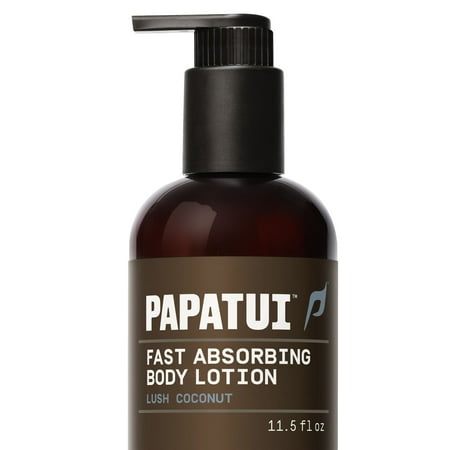

Papatui Men s Fast Absorbing Body Lotion Lush Coconut 11.5 oz
Summary
This body lotion contains beneficial ingredients such as jojoba seed oil, niacinamide, and rice bran wax, which are known for their moisturizing and skin-nourishing properties. However, the presence of synthetic fragrance and several fragrance allergens like limonene and linalool detracts from its overall safety profile. The product is moderately processed, which further impacts its rating, although it does not contain any of the most heavily penalized ingredients.
At a glance
Key ingredients 36
WaterNeutral
Water is a common solvent used in cosmetics to dissolve other ingredients. It helps in the application and absorption of the product. It does not provide direct benefits or risks.
Risks
There are no significant risks associated with water in cosmetics.
Benefits
Water helps in the application and absorption of the product.
AcetamidoethoxyethanolNeutral
Acetamidoethoxyethanol is used as a skin conditioning agent. It helps to improve the texture and feel of the skin. It is generally considered safe for use in cosmetics.
Risks
There are no significant risks associated with this ingredient.
Benefits
It helps to improve the texture and feel of the skin.
Stearyl AlcoholNeutral
Stearyl Alcohol is a fatty alcohol used as an emollient and thickener. It helps to soften and smooth the skin. It is generally considered safe for use in cosmetics.
Risks
There are no significant risks associated with Stearyl Alcohol.
Benefits
It helps to soften and smooth the skin.
Simmondsia Chinensis (Jojoba) Seed OilVery Good
Jojoba Oil is a natural oil known for its moisturizing properties. It closely resembles the skin's natural sebum, making it an excellent moisturizer. It is highly beneficial for skin hydration and barrier repair.
Risks
There are no significant risks associated with Jojoba Oil.
Benefits
It provides excellent moisturizing and skin barrier repair properties.
Caprylic/Capric TriglycerideGood
Caprylic/Capric Triglyceride is an emollient derived from coconut oil and glycerin. It helps to moisturize and replenish the skin. It is lightweight and non-greasy, making it suitable for all skin types.
Risks
There are no significant risks associated with this ingredient.
Benefits
It provides lightweight and non-greasy moisturization.
Glyceryl Stearate CitrateNeutral
Glyceryl Stearate Citrate is an emulsifier that helps to blend oil and water components. It improves the texture and stability of the product. It is generally considered safe for use in cosmetics.
Risks
There are no significant risks associated with this ingredient.
Benefits
It improves the texture and stability of the product.
C13-16 IsoalkaneNeutral
C13-16 Isoalkane is used as an emollient and solvent in cosmetics. It helps to improve the spreadability of the product. It is generally considered safe for use in cosmetics.
Risks
There are no significant risks associated with this ingredient.
Benefits
It improves the spreadability of the product.
PropanediolNeutral
Propanediol is a glycol used as a solvent and humectant. It helps to retain moisture in the skin. It is generally considered safe for use in cosmetics.
Risks
There are no significant risks associated with Propanediol.
Benefits
It helps to retain moisture in the skin.
MethylheptylglycerinNeutral
Methylheptylglycerin is used as a skin conditioning agent. It helps to improve the texture and feel of the skin. It is generally considered safe for use in cosmetics.
Risks
There are no significant risks associated with this ingredient.
Benefits
It helps to improve the texture and feel of the skin.
FragranceBad
Fragrance is used to impart scent to the product. It can cause skin irritation and allergic reactions in sensitive individuals. The specific components of fragrance are often undisclosed, leading to potential unknown risks.
Risks
Fragrance can cause skin irritation and allergic reactions.
Benefits
It provides a pleasant scent to the product.
Tapioca StarchNeutral
Tapioca Starch is used as a thickening agent in cosmetics. It helps to improve the texture and consistency of the product. It is generally considered safe for use in cosmetics.
Risks
There are no significant risks associated with Tapioca Starch.
Benefits
It improves the texture and consistency of the product.
Heptyl UndecylenateNeutral
Heptyl Undecylenate is used as an emollient and skin conditioning agent. It helps to improve the texture and feel of the skin. It is generally considered safe for use in cosmetics.
Risks
There are no significant risks associated with this ingredient.
Benefits
It helps to improve the texture and feel of the skin.
Glyceryl CaprylateNeutral
Glyceryl Caprylate is used as an emollient and emulsifier. It helps to stabilize the product and improve skin feel. It is generally considered safe for use in cosmetics.
Risks
There are no significant risks associated with Glyceryl Caprylate.
Benefits
It stabilizes the product and improves skin feel.
NiacinamideVery Good
Niacinamide is a form of Vitamin B3 known for its skin benefits. It helps to improve skin texture, reduce redness, and enhance barrier function. It is highly beneficial for overall skin health.
Risks
There are no significant risks associated with Niacinamide.
Benefits
It improves skin texture, reduces redness, and enhances barrier function.
Oryza Sativa (Rice) Bran WaxNeutral
Rice Bran Wax is used as a thickening agent and emollient. It helps to improve the texture and consistency of the product. It is generally considered safe for use in cosmetics.
Risks
There are no significant risks associated with Rice Bran Wax.
Benefits
It improves the texture and consistency of the product.
GlycerinGood
Glycerin is a well-known humectant that attracts moisture to the skin. It helps to keep the skin hydrated and soft. It is widely used in cosmetics for its moisturizing properties.
Risks
There are no significant risks associated with Glycerin.
Benefits
It keeps the skin hydrated and soft.
CelluloseNeutral
Cellulose is used as a thickening agent and stabilizer in cosmetics. It helps to improve the texture and consistency of the product. It is generally considered safe for use in cosmetics.
Risks
There are no significant risks associated with Cellulose.
Benefits
It improves the texture and consistency of the product.
CarbomerNeutral
Carbomer is used as a thickening agent and stabilizer in cosmetics. It helps to improve the texture and consistency of the product. It is generally considered safe for use in cosmetics.
Risks
There are no significant risks associated with Carbomer.
Benefits
It improves the texture and consistency of the product.
Caprylhydroxamic AcidNeutral
Caprylhydroxamic Acid is used as a preservative in cosmetics. It helps to prevent microbial growth and extend the shelf life of the product. It is generally considered safe for use in cosmetics.
Risks
There are no significant risks associated with Caprylhydroxamic Acid.
Benefits
It prevents microbial growth and extends shelf life.
Sodium HydroxideNeutral
Sodium Hydroxide is used to adjust the pH of cosmetics. It helps to maintain the stability and effectiveness of the product. It is generally considered safe for use in cosmetics when used in small amounts.
Risks
In high concentrations, it can be irritating to the skin.
Benefits
It helps to maintain the stability and effectiveness of the product.
Ceramide NPVery Good
Ceramide NP is a lipid that helps to restore the skin barrier. It improves skin hydration and reduces transepidermal water loss. It is highly beneficial for maintaining healthy skin.
Risks
There are no significant risks associated with Ceramide NP.
Benefits
It restores the skin barrier and improves hydration.
TocopherolVery Good
Tocopherol, also known as Vitamin E, is a powerful antioxidant. It helps to protect the skin from free radical damage and improve skin health. It is widely used in cosmetics for its protective properties.
Risks
There are no significant risks associated with Tocopherol.
Benefits
It protects the skin from free radical damage.
1, 2-HexanediolNeutral
1, 2-Hexanediol is used as a solvent and preservative in cosmetics. It helps to improve the texture and stability of the product. It is generally considered safe for use in cosmetics.
Risks
There are no significant risks associated with 1, 2-Hexanediol.
Benefits
It improves the texture and stability of the product.
HydroxyacetophenoneNeutral
Hydroxyacetophenone is used as an antioxidant and preservative. It helps to protect the product from degradation and extend its shelf life. It is generally considered safe for use in cosmetics.
Risks
There are no significant risks associated with Hydroxyacetophenone.
Benefits
It protects the product from degradation and extends shelf life.
Polyglyceryl-10 StearateNeutral
Polyglyceryl-10 Stearate is used as an emulsifier in cosmetics. It helps to blend oil and water components and improve product stability. It is generally considered safe for use in cosmetics.
Risks
There are no significant risks associated with Polyglyceryl-10 Stearate.
Benefits
It improves product stability and texture.
Hydrogenated LecithinNeutral
Hydrogenated Lecithin is used as an emulsifier and skin conditioning agent. It helps to improve the texture and feel of the skin. It is generally considered safe for use in cosmetics.
Risks
There are no significant risks associated with Hydrogenated Lecithin.
Benefits
It improves the texture and feel of the skin.
Sucrose StearateNeutral
Sucrose Stearate is used as an emulsifier and skin conditioning agent. It helps to improve the texture and feel of the skin. It is generally considered safe for use in cosmetics.
Risks
There are no significant risks associated with Sucrose Stearate.
Benefits
It improves the texture and feel of the skin.
Tetramethyl AcetyloctahydronaphthalenesNeutral
Tetramethyl Acetyloctahydronaphthalenes is used as a fragrance ingredient. It helps to impart scent to the product. It is generally considered safe for use in cosmetics.
Risks
There are no significant risks associated with this ingredient.
Benefits
It provides a pleasant scent to the product.
LimoneneBad
Limonene is a fragrance ingredient that can cause skin irritation. It is a known allergen and can oxidize to form skin-sensitizing compounds. It is often used for its citrus scent.
Risks
Limonene can cause skin irritation and allergic reactions.
Benefits
It provides a citrus scent to the product.
Citrus Aurantium Peel OilNeutral
Citrus Aurantium Peel Oil is used for its fragrance and potential skin benefits. It provides a natural citrus scent to the product. It is generally considered safe for use in cosmetics.
Risks
There are no significant risks associated with Citrus Aurantium Peel Oil.
Benefits
It provides a natural citrus scent and potential skin benefits.
LinaloolBad
Linalool is a fragrance ingredient that can cause skin irritation. It is a known allergen and can oxidize to form skin-sensitizing compounds. It is often used for its floral scent.
Risks
Linalool can cause skin irritation and allergic reactions.
Benefits
It provides a floral scent to the product.
CoumarinBad
Coumarin is a fragrance ingredient that can cause skin irritation. It is a known allergen and is often used for its sweet scent. It can be sensitizing to some individuals.
Risks
Coumarin can cause skin irritation and allergic reactions.
Benefits
It provides a sweet scent to the product.
Acetyl CedreneNeutral
Acetyl Cedrene is used as a fragrance ingredient. It helps to impart a woody scent to the product. It is generally considered safe for use in cosmetics.
Risks
There are no significant risks associated with Acetyl Cedrene.
Benefits
It provides a woody scent to the product.
Linalyl AcetateNeutral
Linalyl Acetate is used as a fragrance ingredient. It helps to impart a floral scent to the product. It is generally considered safe for use in cosmetics.
Risks
There are no significant risks associated with Linalyl Acetate.
Benefits
It provides a floral scent to the product.
Lavandula Oil/ExtractNeutral
Lavandula Oil is used for its fragrance and potential calming effects. It provides a natural lavender scent to the product. It is generally considered safe for use in cosmetics.
Risks
There are no significant risks associated with Lavandula Oil.
Benefits
It provides a natural lavender scent and potential calming effects.
PineneNeutral
Pinene is used as a fragrance ingredient. It helps to impart a pine-like scent to the product. It is generally considered safe for use in cosmetics.
Risks
There are no significant risks associated with Pinene.
Benefits
It provides a pine-like scent to the product.
Processing
Processed Foods
Get the full breakdown in the Scout app
Scan any product to see lab results, healthy alternatives, and your personalized analysis.
Download on theApp Store