
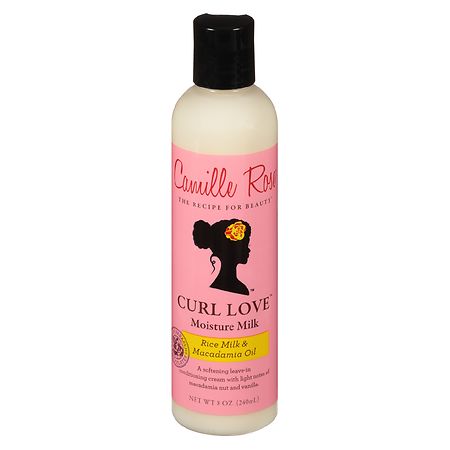

Camille Rose Curl Love Moisture Milk - 8oz
Analysis updated August 2026 · How Scout scores
At a glance
Summary
This product contains several beneficial ingredients such as avocado oil, rice bran oil, and aloe vera juice, which are known for their moisturizing and nourishing properties. However, the presence of phenoxyethanol and synthetic fragrance, which can cause irritation and allergic reactions, detracts from its overall safety profile. Additionally, the product is considered ultra-processed, which limits its potential score despite the presence of high-quality ingredients.
Key ingredients 17
Persea Gratissima (Avocado) OilVery Good
Avocado oil is rich in vitamins and fatty acids, providing deep nourishment and hydration to hair. It helps to strengthen and protect hair from damage. It is a natural and beneficial ingredient for hair care.
Risks
There are minimal risks associated with this ingredient.
Benefits
It enhances hair's shine and elasticity while providing essential nutrients.
Oryza Sativa (Rice Bran) OilGood
Rice bran oil is known for its antioxidant properties and ability to nourish hair. It helps to improve hair strength and elasticity. It is a beneficial ingredient for maintaining healthy hair.
Risks
There are minimal risks associated with this ingredient.
Benefits
It provides essential nutrients and helps protect hair from environmental damage.
Aloe Barbadensis Leaf JuiceGood
Aloe vera juice is known for its hydrating and soothing properties. It helps to moisturize the scalp and hair, reducing dryness and irritation. It is a beneficial ingredient for maintaining scalp health.
Risks
There are minimal risks associated with this ingredient.
Benefits
It provides hydration and helps soothe the scalp, promoting healthy hair growth.
Ricinus Communis (Castor) Seed OilGood
Castor oil is known for its ability to promote hair growth and thickness. It provides deep conditioning and helps to reduce hair breakage. It is a beneficial ingredient for strengthening hair.
Risks
There are minimal risks associated with this ingredient.
Benefits
It enhances hair growth and provides nourishment to the scalp and hair.
Macadamia Ternifolia Seed OilGood
Macadamia oil is rich in fatty acids and provides excellent moisturizing properties. It helps to smooth and soften hair, improving manageability. It is a beneficial ingredient for dry and damaged hair.
Risks
There are minimal risks associated with this ingredient.
Benefits
It provides deep hydration and helps to repair and protect hair.
Camellia Sinensis (Green Tea) Leaf ExtractGood
Green tea extract is rich in antioxidants and helps to protect hair from environmental damage. It has anti-inflammatory properties that can soothe the scalp. It is a beneficial ingredient for maintaining healthy hair and scalp.
Risks
There are minimal risks associated with this ingredient.
Benefits
It provides antioxidant protection and helps to soothe and calm the scalp.
Rosa Canina (Rosehip) Fruit OilGood
Rosehip oil is rich in essential fatty acids and vitamins, providing nourishment and hydration to hair. It helps to improve hair elasticity and shine. It is a beneficial ingredient for maintaining healthy hair.
Risks
There are minimal risks associated with this ingredient.
Benefits
It enhances hair's shine and elasticity while providing essential nutrients.
Ulmus Fulva (Slippery Elm) Bark ExtractGood
Slippery elm extract is known for its soothing and moisturizing properties. It helps to condition and detangle hair, improving manageability. It is a beneficial ingredient for maintaining healthy hair.
Risks
There are minimal risks associated with this ingredient.
Benefits
It provides moisture and helps to soothe and condition hair.
Deionized WaterNeutral
Deionized water is used as a solvent to dissolve other ingredients. It is free from ions and impurities, making it a pure base for formulations. It does not contribute any active benefits or risks.
Risks
There are no known risks associated with deionized water.
Benefits
It provides a clean and pure medium for other ingredients to be effective.
Cetearyl AlcoholNeutral
Standard formulation ingredient — neither beneficial nor harmful at typical use.
Risks
There are minimal risks associated with this ingredient.
Benefits
It helps to improve the texture and moisture retention of hair.
SorbitolNeutral
Sorbitol is a sugar alcohol used as a humectant to retain moisture in hair products. It helps to keep hair hydrated and prevent dryness. It is generally considered safe and effective.
Risks
There are minimal risks associated with this ingredient.
Benefits
It helps to maintain moisture balance in hair, preventing dryness.
Oryza Sativa (Rice) MilkNeutral
Rice milk is used for its moisturizing properties and ability to soften hair. It helps to improve hair texture and manageability. It is generally considered safe and effective.
Risks
There are minimal risks associated with this ingredient.
Benefits
It provides moisture and helps to improve the texture of hair.
Ceteareth-20Neutral
Ceteareth-20 is an emulsifier used to blend oil and water-based ingredients. It helps to stabilize formulations and improve texture. It is generally considered safe for use in cosmetics.
Risks
There are minimal risks associated with this ingredient.
Benefits
It helps to create a stable and smooth formulation.
Caprylyl GlycolNeutral
Caprylyl glycol is used as a skin conditioning agent and preservative booster. It helps to improve the texture and feel of the product. It is generally considered safe and effective.
Risks
There are minimal risks associated with this ingredient.
Benefits
It enhances the product's texture and helps to maintain its stability.
Behentrimonium MethosulfateBad
Processed additive flagged under Scout's ingredient doctrine.
Risks
There are minimal risks associated with this ingredient.
Benefits
It provides excellent conditioning properties and helps improve hair manageability.
PhenoxyethanolBad
Phenoxyethanol is a preservative used to prevent microbial growth in cosmetics. It is considered safe in low concentrations but can cause irritation in some individuals. It is a controversial ingredient due to potential skin sensitivity.
Risks
It may cause skin irritation or allergic reactions in sensitive individuals.
Benefits
It effectively preserves the product by preventing microbial contamination.
FragranceVery Bad
Fragrance is used to impart a pleasant scent to the product. However, it can be a mixture of various chemicals, some of which may cause irritation or allergic reactions. It is a controversial ingredient due to potential skin sensitivity.
Risks
It may cause skin irritation or allergic reactions in sensitive individuals.
Benefits
It provides a pleasant scent to the product.
Processing
Processed Foods
Get the full breakdown in the Scout appTake Scout shopping
Scan any product to see lab results, healthy alternatives, and your personalized analysis.
Download on theApp Store GET IT ONGoogle PlayAmazon pricing & content
Amazon price as of . Product prices and availability are accurate as of the date/time indicated and are subject to change. Any price and availability information displayed on Amazon.com at the time of purchase will apply to the purchase of this product.
CERTAIN CONTENT THAT APPEARS ON THIS SITE COMES FROM AMAZON. THIS CONTENT IS PROVIDED “AS IS” AND IS SUBJECT TO CHANGE OR REMOVAL AT ANY TIME.