
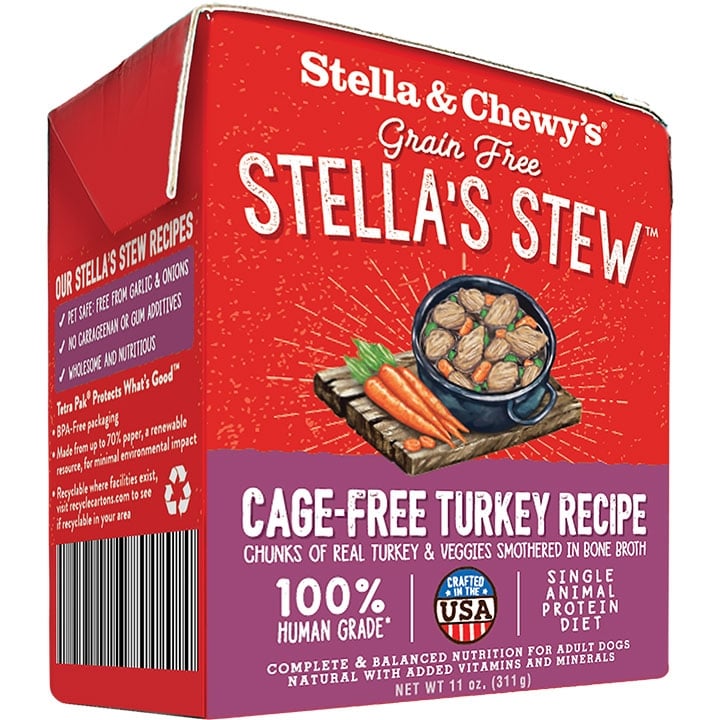
Stella & Chewy's Cage-Free Turkey Recipe Dog Food, 11 oz, 100% Human-Grade
Analysis updated September 2026 · How Scout scores
At a glance
Summary
This dog food features high-quality ingredients such as cage-free turkey, turkey bone broth, and organic vegetables, which provide essential nutrients and are minimally processed. The inclusion of organic ingredients like carrots and kale ensures fewer pesticide residues, enhancing the product's nutritional profile. However, the presence of processed ingredients like tapioca and potato starch, along with the overall processing level, limits the score despite the clean ingredient list.
Key ingredients 15
TurkeyVery Good
Turkey is a high-quality source of animal protein, providing essential amino acids for muscle maintenance. It is minimally processed and cage-free, indicating better animal welfare and potentially higher nutrient quality. Compared to plant-based proteins, turkey offers a richer amino acid profile.
Benefits
Rich in protein and essential nutrients, supporting muscle health and overall well-being in dogs.
Turkey bone brothGood
Turkey bone broth is a nutritious liquid made by simmering turkey bones, providing collagen and minerals. It is minimally processed and enhances flavor while offering hydration. Compared to water, bone broth adds nutritional value.
Benefits
Provides collagen and minerals that support joint health and hydration.
Organic carrotsGood
Organic carrots are a source of vitamins and fiber, supporting digestive health. Being organic, they are free from synthetic pesticides and fertilizers. Compared to non-organic carrots, they may have fewer pesticide residues.
Benefits
Rich in beta-carotene, which is converted to vitamin A, supporting vision and immune health.
Organic kaleGood
Organic kale is a nutrient-dense leafy green, providing vitamins, minerals, and antioxidants. Its organic status ensures it is grown without synthetic chemicals. Compared to conventional kale, it may have fewer pesticide residues.
Benefits
High in vitamins A, C, and K, supporting immune function and bone health.
Dried kelpGood
Dried kelp is a natural source of iodine and other trace minerals, supporting thyroid function. It is minimally processed and adds nutritional diversity. Compared to synthetic iodine supplements, kelp provides a broader range of nutrients.
Risks
Excessive consumption may lead to iodine overload, affecting thyroid health.
Benefits
Provides iodine and trace minerals essential for thyroid health and metabolism.
TaurineGood
Beneficial ingredient — whole-food or functional value in this product class.
Benefits
Supports heart health and vision by providing taurine.
Tapioca starchNeutral
Tapioca starch is a carbohydrate source used as a thickener and binder in pet foods. It is derived from the cassava root and is gluten-free. Compared to wheat-based thickeners, it is less likely to cause allergies.
Benefits
Provides a source of carbohydrates and acts as a binder in the product.
Potato starchNeutral
Potato starch is used as a thickening agent and carbohydrate source in pet foods. It is derived from potatoes and is gluten-free. Compared to other starches, it is easily digestible.
Benefits
Acts as a thickener and provides a source of carbohydrates.
Calcium carbonateNeutral
Calcium carbonate is a mineral supplement used to provide calcium, essential for bone health. It is a common additive in pet foods to ensure adequate calcium intake. Compared to other calcium sources, it is widely used for its cost-effectiveness.
Risks
Excessive intake may lead to calcium imbalances.
Benefits
Supports bone health by providing a source of calcium.
Potassium chlorideNeutral
Potassium chloride is used as a potassium supplement and salt substitute in pet foods. It helps maintain electrolyte balance and supports muscle function. Compared to sodium chloride, it provides potassium without increasing sodium levels.
Risks
Excessive intake may lead to hyperkalemia, affecting heart function.
Benefits
Supports electrolyte balance and muscle function.
Tricalcium phosphateNeutral
Tricalcium phosphate is used as a calcium and phosphorus supplement in pet foods. It supports bone health and is a common additive to ensure mineral balance. Compared to other mineral supplements, it provides both calcium and phosphorus.
Risks
Excessive intake may lead to mineral imbalances.
Benefits
Provides essential minerals for bone health and metabolic functions.
Choline chlorideNeutral
Choline chloride is a source of choline, an essential nutrient for liver function and brain health. It is commonly added to pet foods to ensure adequate choline intake. Compared to natural sources, it provides a consistent choline supply.
Benefits
Supports liver function and cognitive health by providing choline.
SaltNeutral
Salt is used to enhance flavor and provide sodium, an essential electrolyte. It is a common additive in pet foods to ensure adequate sodium intake. Compared to unrefined salts, it lacks trace minerals.
Risks
Excessive intake may lead to high blood pressure and other health issues.
Benefits
Provides sodium, essential for maintaining fluid balance and nerve function.
MineralsNeutral
Minerals such as zinc, iron, magnesium, copper, manganese, and selenium are essential for various bodily functions. They are added to pet foods to ensure nutritional adequacy. Compared to natural sources, they provide a consistent supply of essential minerals.
Risks
Excessive intake of certain minerals may lead to toxicity.
Benefits
Support immune function, bone health, and metabolic processes.
VitaminsNeutral
Vitamins such as A, D3, E, niacin, and B-complex are essential for overall health and well-being. They are added to pet foods to ensure nutritional adequacy. Compared to natural sources, they provide a consistent supply of essential vitamins.
Risks
Excessive intake of certain vitamins may lead to toxicity.
Benefits
Support immune function, skin health, and energy metabolism.
Processing
Processed Foods
Get the full breakdown in the Scout appTake Scout shopping
Scan any product to see lab results, healthy alternatives, and your personalized analysis.
Download on theApp Store GET IT ONGoogle Play