
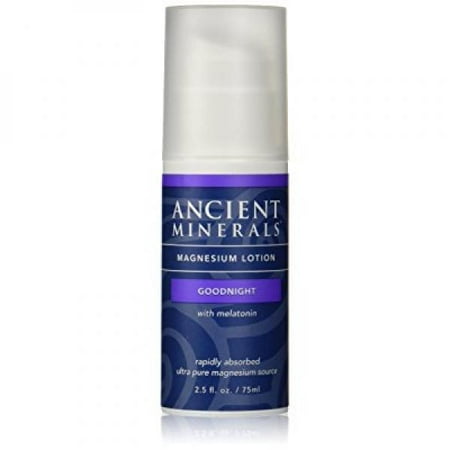

Ancient Minerals Goodnight Magnesium Lotion 2.5 oz
Analysis updated July 2026 · How Scout scores
At a glance
Summary
This magnesium lotion features a clean ingredient profile with a focus on natural components, such as magnesium chloride, which is beneficial for skin health. The absence of synthetic fragrances, parabens, and other harsh chemicals contributes to its high rating, making it a safe choice for sensitive skin. Its minimal processing and use of natural ingredients enhance its appeal as a skincare product.
Key ingredients 19
AllantoinVery Good
Allantoin is known for its soothing and skin conditioning properties. It helps to protect the skin and promote healing. It is widely used in skincare for its ability to improve skin smoothness.
Risks
There are minimal risks, as it is generally non-irritating.
Benefits
It soothes and protects the skin, promoting healing and smoothness.
JojobaVery Good
Jojoba oil is a natural oil that closely resembles the skin's natural sebum. It helps to moisturize and balance the skin without clogging pores. It is well-tolerated and beneficial for all skin types.
Risks
There are minimal risks, as it is generally non-irritating.
Benefits
It moisturizes and balances the skin, mimicking natural sebum.
SqualaneVery Good
Squalane is a highly effective emollient that mimics the skin's natural oils. It helps to moisturize and protect the skin without leaving a greasy residue. It is suitable for all skin types and is non-comedogenic.
Risks
There are minimal risks, as it is generally non-irritating.
Benefits
It moisturizes and protects the skin, mimicking natural oils.
Butyrospermum ParkiiVery Good
Butyrospermum Parkii, also known as Shea Butter, is a natural fat extracted from the nuts of the shea tree. It is highly moisturizing and helps to protect the skin barrier. It is well-tolerated and beneficial for dry and sensitive skin.
Risks
There are minimal risks, as it is generally non-irritating.
Benefits
It deeply moisturizes and protects the skin, improving barrier function.
Caprylic/Capric TriglycerideGood
Caprylic/Capric Triglyceride is derived from coconut oil and glycerin. It is used as an emollient and helps to smooth and soften the skin. It is well-tolerated by most skin types.
Risks
There are minimal risks, though it may cause mild irritation in very sensitive skin.
Benefits
It provides a lightweight, non-greasy barrier that helps retain moisture.
Candelilla/Jojoba/Rice Bran Polyglyceryl-3 EstersGood
This ingredient is a blend of natural esters used as an emulsifier and skin conditioning agent. It helps to improve the texture and feel of the product. It is derived from natural sources and is generally well-tolerated.
Risks
There are minimal risks associated with this ingredient.
Benefits
It enhances the texture and stability of the product while conditioning the skin.
Magnesium ChlorideGood
Magnesium Chloride is used for its potential benefits in soothing and relaxing the skin. It is believed to help with muscle relaxation and skin hydration. It is generally safe for topical use.
Risks
Excessive use may lead to mild skin irritation.
Benefits
It may help to relax muscles and improve skin hydration.
GlycerinGood
Glycerin is a humectant that attracts moisture to the skin. It helps to keep the skin hydrated and improve its barrier function. It is well-tolerated and widely used in skincare products.
Risks
There are minimal risks, as it is generally non-irritating.
Benefits
It hydrates the skin and improves its barrier function.
Hyaluronic AcidGood
Hyaluronic Acid is a powerful humectant that can hold up to 1000 times its weight in water. It helps to hydrate and plump the skin, reducing the appearance of fine lines. It is well-tolerated by most skin types.
Risks
There are minimal risks, as it is generally non-irritating.
Benefits
It provides intense hydration and plumps the skin, reducing fine lines.
RosemaryGood
Rosemary extract is known for its antioxidant and anti-inflammatory properties. It helps to protect the skin from environmental damage and soothe irritation. It is generally well-tolerated in skincare formulations.
Risks
Rarely, it may cause mild irritation in sensitive individuals.
Benefits
It provides antioxidant protection and soothes the skin.
WaterNeutral
Water is a common solvent used in cosmetics to dissolve other ingredients. It helps in the application and absorption of the product. It does not provide direct benefits or risks.
Risks
There are no direct risks associated with water in cosmetics.
Benefits
Water helps in the application and absorption of the product.
Glyceryl StearateNeutral
Standard formulation ingredient — neither beneficial nor harmful at typical use.
Risks
Rarely, it may cause mild irritation in sensitive individuals.
Benefits
It helps to stabilize formulations and improve skin texture.
Cetearyl AlcoholNeutral
Cetearyl Alcohol is a fatty alcohol used as an emollient and thickener. It helps to stabilize and thicken formulations. It is considered safe and non-irritating for most skin types.
Risks
Rarely, it may cause mild irritation in sensitive individuals.
Benefits
It helps to stabilize and thicken formulations, improving texture.
Cetyl AlcoholNeutral
Cetyl Alcohol is a fatty alcohol used as an emollient and thickener. It helps to soften and smooth the skin. It is generally considered safe and non-irritating.
Risks
Rarely, it may cause mild irritation in sensitive individuals.
Benefits
It softens and smooths the skin, improving texture.
Lactic AcidNeutral
Standard formulation ingredient — neither beneficial nor harmful at typical use.
Risks
Higher concentrations may cause irritation, especially in sensitive skin.
Benefits
It exfoliates and brightens the skin, improving texture.
MelatoninNeutral
Melatonin is a hormone that regulates sleep, and its topical use is believed to have antioxidant properties. It may help to protect the skin from oxidative stress. Its efficacy in skincare is still under research.
Risks
There are minimal risks, though its effects on the skin are not fully understood.
Benefits
It may provide antioxidant protection for the skin.
OptiMSMNeutral
OptiMSM is a form of methylsulfonylmethane, believed to support skin health and reduce inflammation. It is used for its potential benefits in improving skin elasticity. Its effectiveness in topical applications is still being studied.
Risks
There are minimal risks, though its effects on the skin are not fully understood.
Benefits
It may support skin health and improve elasticity.
ArginineNeutral
Arginine is an amino acid that is used in skincare for its moisturizing properties. It helps to improve skin hydration and barrier function. It is generally considered safe and non-irritating.
Risks
There are minimal risks, as it is generally non-irritating.
Benefits
It improves skin hydration and barrier function.
Arnica Montana ExtractNeutral
Arnica Montana Extract is used for its potential anti-inflammatory and soothing properties. It is often used in products aimed at reducing swelling and bruising. Its effectiveness in skincare is still under research.
Risks
There are minimal risks, though it may cause irritation in sensitive skin.
Benefits
It may help to reduce swelling and soothe the skin.
Get the full breakdown in the Scout appTake Scout shopping
Scan any product to see lab results, healthy alternatives, and your personalized analysis.
Download on theApp Store GET IT ONGoogle PlayAmazon pricing & content
Amazon price as of . Product prices and availability are accurate as of the date/time indicated and are subject to change. Any price and availability information displayed on Amazon.com at the time of purchase will apply to the purchase of this product.
CERTAIN CONTENT THAT APPEARS ON THIS SITE COMES FROM AMAZON. THIS CONTENT IS PROVIDED “AS IS” AND IS SUBJECT TO CHANGE OR REMOVAL AT ANY TIME.