
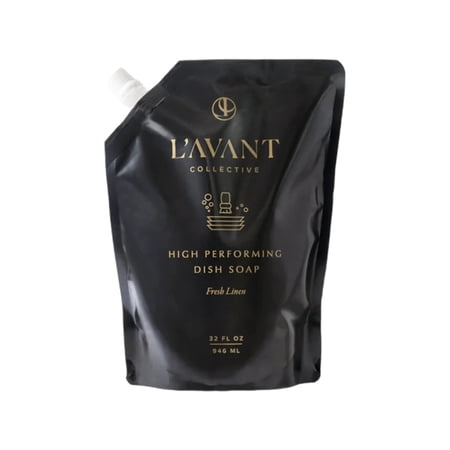

L'AVANT Collective High Performing Dish Soap Refill | Fresh Linen
Analysis updated August 2026 · How Scout scores
At a glance
Summary
This dish soap contains a mix of beneficial plant-derived ingredients such as aloe vera, glycerin, and various essential oils, which contribute to its eco-friendliness and skin-friendly properties. However, the presence of sodium coco-sulfate, a derivative of SLS, and synthetic preservatives like phenoxyethanol slightly detract from its overall safety and environmental impact. The product is moderately processed, which affects its score, but it still maintains a relatively clean ingredient profile.
Key ingredients 18
aloe barbadensis leaf juiceGood
Aloe barbadensis leaf juice is known for its soothing and moisturizing properties. It is often used in personal care products for its skin benefits. In cleaning products, it can help reduce irritation.
Risks
There are minimal risks associated with aloe in cleaning products.
Benefits
It can soothe and protect the skin from irritation caused by other ingredients.
alkyl polyglucosideGood
Alkyl polyglucoside is a plant-derived surfactant. It is known for being gentle on the skin and environmentally friendly. It is effective in cleaning without being harsh.
Risks
There are minimal risks associated with this ingredient.
Benefits
It is biodegradable and gentle, making it suitable for sensitive skin.
ocimum basilicum (basil) oilGood
Basil oil is derived from the basil plant and is used for its aromatic properties. It provides a natural fragrance and has antimicrobial properties. It is considered safe and beneficial in cleaning products.
Risks
There are minimal risks associated with basil oil.
Benefits
It provides a pleasant scent and has natural antimicrobial properties.
citrus limon (lemon) peel oilGood
Lemon peel oil is extracted from the peel of lemons and is used for its fresh scent. It has natural cleaning properties and is often used in eco-friendly products. It is considered safe and effective.
Risks
There are minimal risks associated with lemon peel oil.
Benefits
It provides a fresh scent and has natural cleaning properties.
lavandula angustifolia (lavender) oilGood
Lavender oil is derived from the lavender plant and is used for its calming scent. It has natural antimicrobial properties and is often used in cleaning products. It is considered safe and beneficial.
Risks
There are minimal risks associated with lavender oil.
Benefits
It provides a calming scent and has natural antimicrobial properties.
pelargonium graveolens (geranium) oilGood
Geranium oil is extracted from the geranium plant and is used for its floral scent. It has natural antimicrobial properties and is often used in eco-friendly products. It is considered safe and beneficial.
Risks
There are minimal risks associated with geranium oil.
Benefits
It provides a floral scent and has natural antimicrobial properties.
salvia sclarea (clary sage) oilGood
Clary sage oil is derived from the clary sage plant and is used for its herbal scent. It has natural antimicrobial properties and is often used in cleaning products. It is considered safe and beneficial.
Risks
There are minimal risks associated with clary sage oil.
Benefits
It provides an herbal scent and has natural antimicrobial properties.
waterNeutral
Water is a common solvent used in cleaning products. It helps dissolve other ingredients and facilitates the cleaning process. It does not have any direct cleaning properties.
Risks
There are no significant risks associated with water in cleaning products.
Benefits
Water acts as a carrier for other ingredients, allowing them to be evenly distributed.
sodium coco-sulfateNeutral
Sodium coco-sulfate is a surfactant derived from coconut oil. It is used to create lather and remove dirt and grease. It is considered milder than sodium lauryl sulfate.
Risks
It can cause skin irritation in sensitive individuals.
Benefits
It is effective in cleaning and is derived from a natural source.
glycerinNeutral
Standard formulation ingredient — neither beneficial nor harmful at typical use.
Risks
There are no significant risks associated with glycerin in cleaning products.
Benefits
It helps maintain skin hydration and reduces the drying effects of other ingredients.
lauramine oxideNeutral
Lauramine oxide is a surfactant and foam booster. It helps improve the cleaning efficiency of the product. It is considered relatively mild compared to harsher surfactants.
Risks
It may cause mild irritation in sensitive individuals.
Benefits
It enhances the cleaning power and foaming ability of the product.
natural fragranceNeutral
Natural fragrance is used to impart a pleasant scent to the product. It is derived from natural sources rather than synthetic chemicals. It enhances the user experience without synthetic additives.
Risks
Some individuals may still experience sensitivity to natural fragrances.
Benefits
It provides a pleasant scent without the use of synthetic chemicals.
alkanoate saltNeutral
Alkanoate salts are used as emulsifiers and stabilizers in cleaning products. They help maintain the consistency and effectiveness of the product. They are generally considered safe for use.
Risks
There are minimal risks associated with alkanoate salts.
Benefits
They help stabilize the product and improve its performance.
magnesium chlorideNeutral
Magnesium chloride is used as a stabilizer and thickener in cleaning products. It helps maintain the product's consistency and effectiveness. It is generally considered safe for use.
Risks
There are minimal risks associated with magnesium chloride.
Benefits
It helps stabilize the product and improve its texture.
citric acidNeutral
Common acidulant and preservative — safe at typical use levels, neither beneficial nor harmful.
Risks
There are minimal risks associated with citric acid in cleaning products.
Benefits
It is effective in cleaning and is derived from natural sources.
sodium hydroxideNeutral
Sodium hydroxide is used as a pH adjuster in cleaning products. It helps maintain the product's effectiveness by balancing acidity. It is a strong base and must be used in controlled amounts.
Risks
In high concentrations, it can be corrosive and cause skin irritation.
Benefits
It helps maintain the product's pH balance for optimal performance.
ethylhexylglycerinNeutral
Ethylhexylglycerin is used as a preservative and skin conditioning agent. It enhances the effectiveness of other preservatives. It is considered safe for use in personal care and cleaning products.
Risks
There are minimal risks associated with ethylhexylglycerin.
Benefits
It helps preserve the product and improve skin feel.
phenoxyethanolBad
Processed additive flagged under Scout's ingredient doctrine.
Risks
In high concentrations, it can cause skin irritation.
Benefits
It effectively preserves the product and prevents contamination.
Processing
Processed Foods
Get the full breakdown in the Scout appTake Scout shopping
Scan any product to see lab results, healthy alternatives, and your personalized analysis.
Download on theApp Store GET IT ONGoogle PlayAmazon pricing & content
Amazon price as of . Product prices and availability are accurate as of the date/time indicated and are subject to change. Any price and availability information displayed on Amazon.com at the time of purchase will apply to the purchase of this product.
CERTAIN CONTENT THAT APPEARS ON THIS SITE COMES FROM AMAZON. THIS CONTENT IS PROVIDED “AS IS” AND IS SUBJECT TO CHANGE OR REMOVAL AT ANY TIME.