
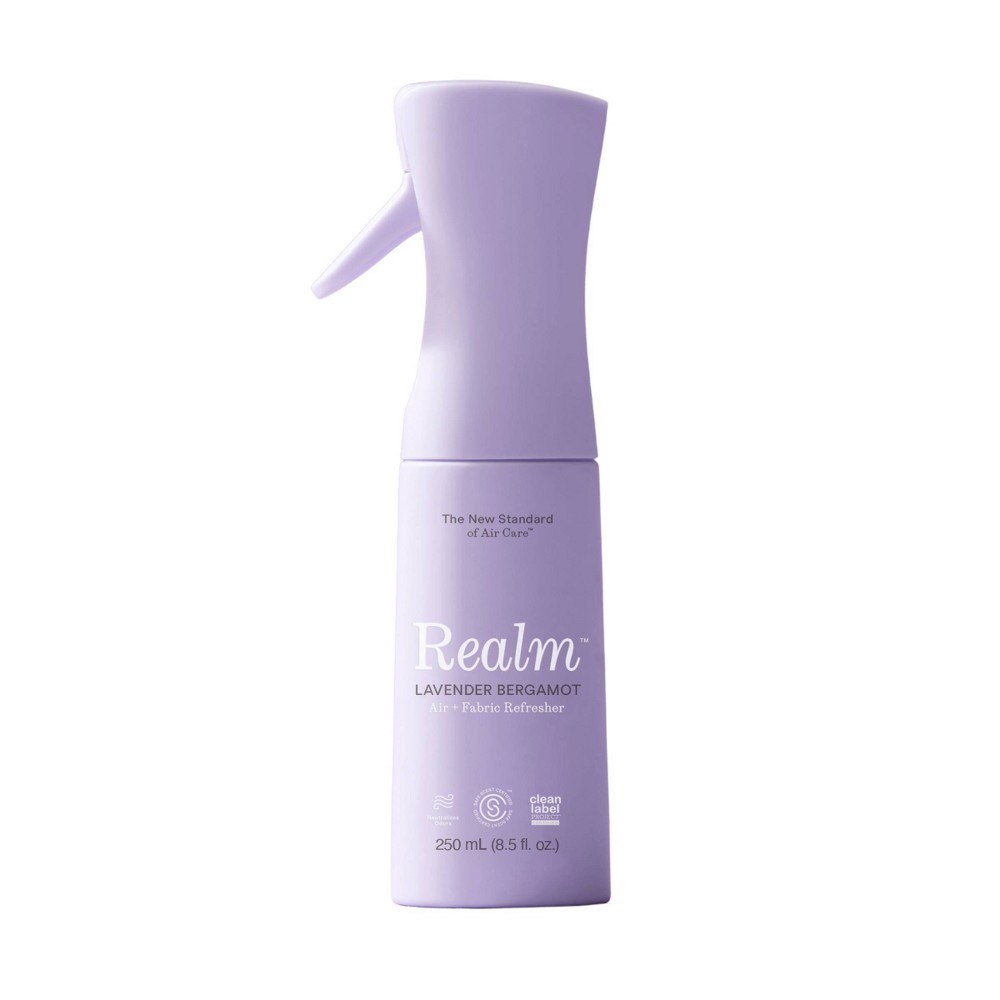


Realm Air + Fabric Spray Air Fresheners Lavender Bergamot - 8.5oz: Non-Powered, Liquid Spray
Analysis updated August 2026 · How Scout scores
At a glance
Summary
This air freshener contains synthetic fragrances, which can contribute to indoor air pollution and may cause allergic reactions. While it includes some beneficial ingredients like Glyceryl Caprylate and Saccharomyces Ferment Filtrate, the presence of undisclosed fragrance components and the processed nature of the product limit its overall score.
Key ingredients 9
Glyceryl CaprylateGood
Glyceryl Caprylate is a naturally derived ingredient used as an emulsifier and skin conditioning agent. It is considered safe and non-toxic. It helps to stabilize formulations and improve texture.
Risks
There are minimal risks associated with this ingredient.
Benefits
It has antimicrobial properties and helps to maintain product stability.
Saccharomyces Ferment FiltrateGood
This ingredient is a byproduct of yeast fermentation and is used for its conditioning properties. It is considered safe and beneficial for skin and hair. It can enhance the moisturizing properties of a product.
Risks
There are minimal risks associated with this ingredient.
Benefits
It provides conditioning benefits and can improve the texture of the product.
Water (Aqua)Neutral
Water is a common solvent used in many products. It helps to dissolve other ingredients and facilitate their application. It is generally considered safe and non-toxic.
Risks
There are no significant risks associated with water in this context.
Benefits
Water acts as a carrier for other ingredients, ensuring even distribution.
Zinc RicinoleateNeutral
Zinc Ricinoleate is used as an odor absorber in personal care products. It is derived from castor oil and zinc. It is generally considered safe for use in cosmetics.
Risks
There are no significant risks associated with this ingredient.
Benefits
It effectively absorbs and neutralizes odors.
Citric AcidNeutral
Citric Acid is a weak organic acid used as a pH adjuster and preservative. It is naturally found in citrus fruits. It is generally recognized as safe for use in food and cosmetics.
Risks
In high concentrations, it may cause skin irritation.
Benefits
It helps to maintain the stability and shelf life of the product.
GlycerinNeutral
Glycerin is a humectant that attracts moisture to the skin. It is derived from natural sources like vegetable oils. It is widely used in cosmetics for its moisturizing properties.
Risks
There are no significant risks associated with glycerin.
Benefits
It helps to keep the skin hydrated and soft.
Caprylhydroxamic AcidNeutral
Caprylhydroxamic Acid is a preservative used to prevent microbial growth. It is considered a safer alternative to traditional preservatives. It is effective in low concentrations.
Risks
There are minimal risks associated with this ingredient.
Benefits
It helps to extend the shelf life of the product by preventing spoilage.
Sodium PhytateNeutral
Sodium Phytate is a chelating agent used to stabilize formulations. It is derived from plant sources like rice bran. It is considered safe for use in cosmetics.
Risks
There are no significant risks associated with this ingredient.
Benefits
It helps to improve the stability and efficacy of the product.
Fragrance: (Coumarin, Habanolide, Lavandin Extract, Lavender Extract, Lemon Terpenes FR, Linalyl Acetate, Thibetolide)Bad
Fragrance mixtures often contain synthetic components that can cause allergic reactions. They are not fully disclosed, making it difficult to assess safety. Synthetic fragrances can contribute to indoor air pollution.
Risks
Potential risks include allergic reactions and respiratory irritation.
Benefits
Provides a pleasant scent to the product.
Get the full breakdown in the Scout appTake Scout shopping
Scan any product to see lab results, healthy alternatives, and your personalized analysis.
Download on theApp Store GET IT ONGoogle Play