
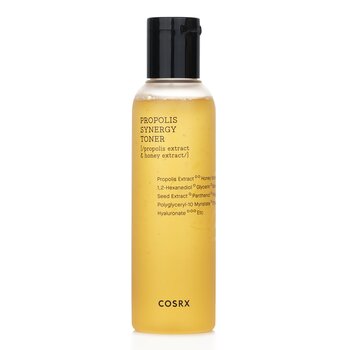
Full Fit Propolis Synergy Toner, 5.07 fl. oz
Analysis updated October 2026 · How Scout scores
At a glance
Summary
This toner features a high concentration of natural and beneficial ingredients such as propolis extract, honey extract, and sodium hyaluronate, which provide anti-inflammatory, hydrating, and skin-soothing properties. The formulation avoids harsh chemicals and synthetic fragrances, focusing instead on skin-friendly components that enhance hydration and barrier function. The presence of natural extracts and minimal processing contribute to its high rating.
Key ingredients 14
Propolis ExtractVery Good
Propolis extract is known for its anti-inflammatory and antimicrobial properties, making it beneficial for skin health. It can help soothe irritated skin and promote healing. It is a natural ingredient with a long history of use in skincare.
Risks
Propolis can cause allergic reactions in some individuals, especially those allergic to bees or bee products.
Benefits
It provides antioxidant protection and supports skin barrier function, enhancing overall skin health.
Honey ExtractVery Good
Honey extract is a natural humectant, drawing moisture into the skin and providing hydration. It also has antibacterial properties, which can help with acne-prone skin. Honey is rich in antioxidants, which protect the skin from environmental damage.
Risks
There is a potential for allergic reactions, particularly in individuals with pollen allergies.
Benefits
It helps to moisturize and soothe the skin, improving texture and appearance.
GlycerinGood
Glycerin is a well-known humectant that attracts moisture to the skin, helping to maintain hydration. It is non-irritating and suitable for all skin types. Glycerin is often used in skincare products for its ability to improve skin barrier function.
Risks
There are minimal risks associated with glycerin, though it can cause irritation if used in very high concentrations.
Benefits
It enhances skin hydration and smoothness, making it a staple in moisturizing formulations.
Sodium HyaluronateGood
Sodium hyaluronate is a form of hyaluronic acid that penetrates the skin easily, providing deep hydration. It helps to retain moisture, making the skin appear plumper and more youthful. It is a highly effective ingredient for improving skin elasticity and reducing the appearance of fine lines.
Risks
There are generally no significant risks associated with sodium hyaluronate, though it may cause irritation in very sensitive skin.
Benefits
It significantly boosts skin hydration and elasticity, contributing to a healthier and more youthful complexion.
PanthenolGood
Panthenol, also known as provitamin B5, is a moisturizing and soothing agent. It helps to improve skin hydration and reduce inflammation. It is widely used in skincare for its ability to enhance skin barrier function.
Risks
Panthenol is generally safe, but in rare cases, it can cause mild irritation.
Benefits
It enhances skin hydration and promotes healing, making it beneficial for dry or sensitive skin.
Caprylic/Capric TriglycerideGood
Caprylic/capric triglyceride is a skin-conditioning agent derived from coconut oil and glycerin. It helps to improve the spreadability and absorption of skincare products. It is non-greasy and suitable for all skin types.
Risks
There are minimal risks associated with this ingredient, though it can cause irritation in very sensitive skin.
Benefits
It provides a lightweight moisturizing effect and enhances the delivery of active ingredients.
Butylene GlycolNeutral
Butylene glycol is a common solvent and conditioning agent in skincare products. It helps to improve the texture and spreadability of formulations. It is generally considered safe and non-irritating for most skin types.
Risks
In rare cases, it can cause irritation or allergic reactions, particularly in sensitive skin.
Benefits
It enhances the absorption of other ingredients and improves the overall feel of the product.
1, 2-HexanediolNeutral
1, 2-Hexanediol is used as a preservative and moisture-binding agent in cosmetics. It helps to stabilize formulations and extend shelf life. It is generally regarded as safe for use in skincare products.
Risks
Potential for mild irritation exists, especially in sensitive skin types.
Benefits
It helps maintain product integrity and enhances moisture retention.
BetaineNeutral
Betaine is a naturally derived ingredient that acts as a humectant and anti-irritant. It helps to maintain skin hydration and improve texture. It is often used in skincare for its soothing properties.
Risks
There are minimal risks associated with betaine, though it can cause irritation in very sensitive individuals.
Benefits
It provides hydration and soothes the skin, making it suitable for sensitive skin formulations.
Cassia Obtusifolia Seed ExtractNeutral
Cassia obtusifolia seed extract is used for its antioxidant and anti-inflammatory properties. It can help protect the skin from environmental stressors. It is a botanical ingredient with potential skin-soothing benefits.
Risks
There is limited research on its safety, so potential for irritation or allergic reactions exists.
Benefits
It may provide antioxidant protection and soothe irritated skin.
Polyglyceryl-10 LaurateNeutral
Polyglyceryl-10 laurate is an emulsifier that helps to blend oil and water-based ingredients. It is derived from natural sources and is considered safe for use in cosmetics. It helps to stabilize formulations and improve texture.
Risks
There are minimal risks associated with this ingredient, though it can cause irritation in very sensitive skin.
Benefits
It improves product consistency and enhances the stability of formulations.
Polyglyceryl-10 MyristateNeutral
Polyglyceryl-10 myristate is used as an emulsifier and skin conditioning agent. It helps to improve the texture and feel of skincare products. It is derived from natural sources and is generally considered safe.
Risks
Potential for irritation exists, particularly in sensitive skin types.
Benefits
It enhances product stability and provides a smooth application experience.
EthylhexylglycerinNeutral
Ethylhexylglycerin is used as a preservative and skin conditioning agent. It helps to enhance the efficacy of other preservatives and improve skin feel. It is considered safe for use in cosmetics.
Risks
There is a low risk of irritation or allergic reactions, particularly in sensitive individuals.
Benefits
It helps to maintain product integrity and provides a conditioning effect on the skin.
Hydroxyethyl Acrylate/Sodium Acryloyldimethyl Taurate CopolymerNeutral
This copolymer is used as a thickening and stabilizing agent in cosmetics. It helps to improve the texture and consistency of formulations. It is considered safe for use in skincare products.
Risks
There is a potential for irritation, particularly in sensitive skin types.
Benefits
It enhances product texture and stability, providing a pleasant application experience.
Processing
Processed Foods
Get the full breakdown in the Scout appTake Scout shopping
Scan any product to see lab results, healthy alternatives, and your personalized analysis.
Download on theApp Store GET IT ONGoogle PlayAmazon pricing & content
Amazon price as of . Product prices and availability are accurate as of the date/time indicated and are subject to change. Any price and availability information displayed on Amazon.com at the time of purchase will apply to the purchase of this product.
CERTAIN CONTENT THAT APPEARS ON THIS SITE COMES FROM AMAZON. THIS CONTENT IS PROVIDED “AS IS” AND IS SUBJECT TO CHANGE OR REMOVAL AT ANY TIME.