
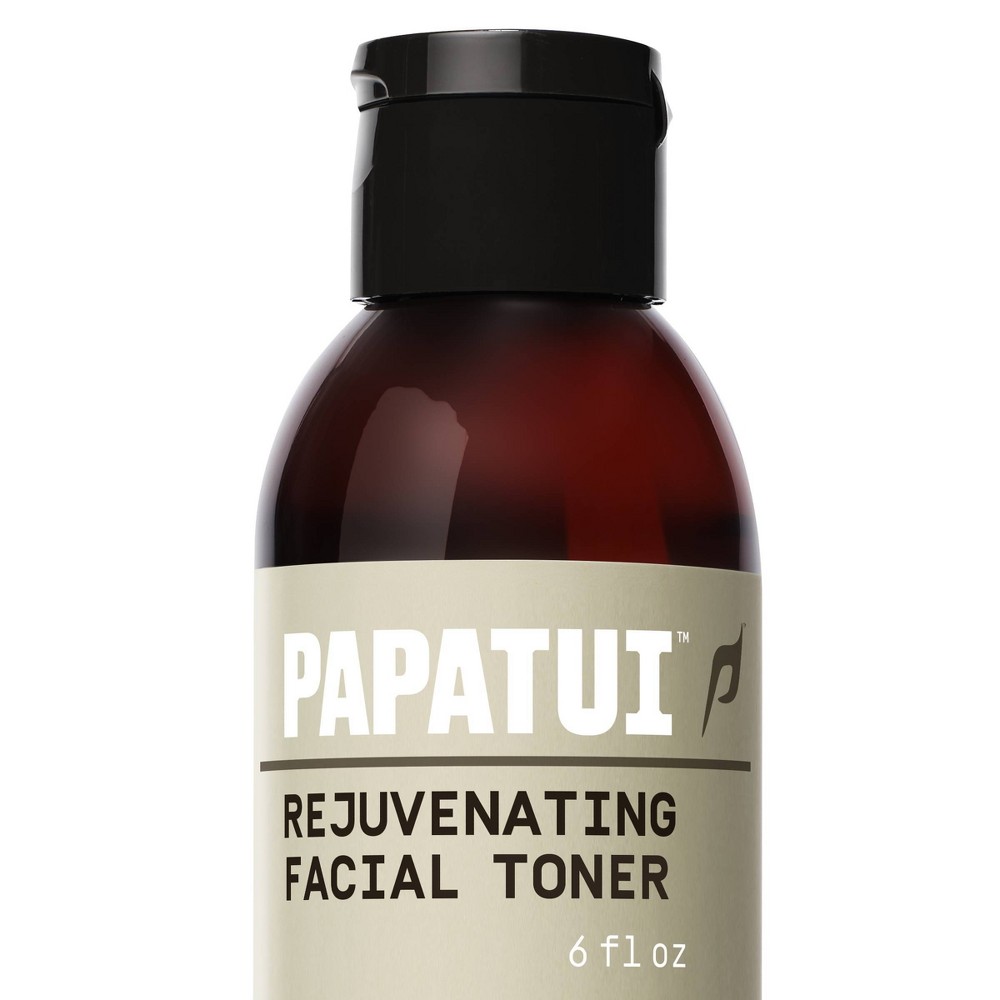
Papatui Rejuvenating and Freshening Pore Tightening Men's Face Toner - Unscented - 6 fl oz: Paraben-Free, Non-Toxic, Vegan Formula
Analysis updated August 2026 · How Scout scores
At a glance
Summary
This toner contains beneficial ingredients like witch hazel, glycolic acid, and sodium hyaluronate, which are known for their skin-soothing, exfoliating, and hydrating properties. The presence of phenoxyethanol as a preservative is a minor concern due to potential irritation, but the overall formulation is largely composed of safe and effective ingredients. The product is processed, which slightly limits its score, but it remains a good choice for skincare.
Key ingredients 17
Hamamelis Virginiana (Witch Hazel) WaterGood
Witch Hazel is known for its astringent properties, which can help tighten pores and reduce inflammation. It is often used in toners for its soothing effects on the skin.
Risks
Some individuals may experience irritation or dryness with witch hazel.
Benefits
It can help reduce skin irritation and inflammation, making it beneficial for acne-prone skin.
Glycolic AcidGood
Glycolic Acid is an alpha hydroxy acid (AHA) that helps exfoliate the skin, removing dead skin cells and promoting cell turnover. It is effective in improving skin texture and tone.
Risks
Overuse can lead to skin irritation and increased sensitivity to sunlight.
Benefits
It can improve skin texture, reduce fine lines, and promote a more even skin tone.
GlycerinGood
Glycerin is a humectant that attracts moisture to the skin, helping to keep it hydrated. It is widely used in skincare for its moisturizing properties.
Risks
There are no significant risks associated with glycerin in cosmetics.
Benefits
It helps maintain skin hydration and improves skin barrier function.
Sodium HyaluronateGood
Sodium Hyaluronate is a form of hyaluronic acid that is highly effective in retaining moisture in the skin. It is known for its ability to hydrate and plump the skin.
Risks
There are no significant risks associated with sodium hyaluronate.
Benefits
It provides intense hydration and helps reduce the appearance of fine lines and wrinkles.
Hibiscus Sabdariffa (Red Sorrel) Flower ExtractGood
Hibiscus Flower Extract is rich in antioxidants and has natural exfoliating properties. It is known for its ability to improve skin elasticity and tone.
Risks
There is a low risk of allergic reactions or irritation.
Benefits
It helps improve skin texture and provides antioxidant protection.
GluconolactoneGood
Beneficial ingredient — whole-food or functional value in this product class.
Risks
There are minimal risks associated with gluconolactone.
Benefits
It helps improve skin texture and provides mild exfoliation without irritation.
TocopherolGood
Tocopherol, also known as Vitamin E, is an antioxidant that helps protect the skin from free radical damage. It is beneficial for maintaining skin health.
Risks
There are no significant risks associated with tocopherol in cosmetics.
Benefits
It provides antioxidant protection and helps improve skin texture and hydration.
WaterNeutral
Water is a common solvent used in cosmetic formulations. It helps dissolve other ingredients and provides a base for the product. It does not have any active benefits or risks.
Risks
There are no significant risks associated with water in cosmetic products.
Benefits
Water acts as a carrier for other ingredients, allowing them to be evenly distributed.
PropanediolNeutral
Propanediol is a glycol that is used as a solvent and skin-conditioning agent. It helps improve the texture and feel of the product. It is generally considered safe for use in cosmetics.
Risks
There is a low risk of skin irritation with propanediol, especially in sensitive individuals.
Benefits
It enhances the absorption of other ingredients and provides a smooth application.
Lactic AcidNeutral
Standard formulation ingredient — neither beneficial nor harmful at typical use.
Risks
Potential for irritation if used in high concentrations or too frequently.
Benefits
It helps improve skin hydration and smoothness, making it softer and more supple.
EthoxydiglycolNeutral
Ethoxydiglycol is used as a solvent and carrier for other ingredients. It helps improve the texture and spreadability of the product. It is generally considered safe in cosmetics.
Risks
There is minimal risk associated with ethoxydiglycol, though it may cause irritation in sensitive individuals.
Benefits
It enhances the penetration of active ingredients into the skin.
Sodium HydroxideNeutral
Sodium Hydroxide is used to adjust the pH of cosmetic products. It is effective in small amounts to ensure product stability.
Risks
In high concentrations, it can be irritating to the skin and eyes.
Benefits
It helps maintain the desired pH level of the product for optimal performance.
Tartaric AcidNeutral
Tartaric Acid is an AHA that is used to adjust the pH and provide mild exfoliation. It is less commonly used than other AHAs.
Risks
Potential for irritation if used in high concentrations.
Benefits
It can help improve skin texture and promote a more even skin tone.
Phytic AcidNeutral
Phytic Acid is used as a chelating agent and antioxidant in cosmetics. It helps stabilize the product and protect it from degradation.
Risks
There are minimal risks associated with phytic acid in cosmetics.
Benefits
It can help improve the stability and efficacy of the product.
EthylhexylglycerinNeutral
Ethylhexylglycerin is used as a preservative and skin-conditioning agent. It enhances the efficacy of other preservatives.
Risks
There is a low risk of skin irritation with ethylhexylglycerin.
Benefits
It helps maintain product stability and provides mild skin conditioning.
Benzoic AcidNeutral
Benzoic Acid is used as a preservative in cosmetics to prevent microbial growth. It is effective in maintaining product safety.
Risks
Potential for skin irritation, particularly in sensitive individuals.
Benefits
It helps ensure the product remains free from harmful bacteria and fungi.
PhenoxyethanolBad
Phenoxyethanol is a preservative used to prevent microbial growth in cosmetics. It is effective but can be irritating to the skin and eyes.
Risks
Potential for skin irritation and allergic reactions, especially in sensitive individuals.
Benefits
It helps extend the shelf life of the product by preventing contamination.
Get the full breakdown in the Scout appTake Scout shopping
Scan any product to see lab results, healthy alternatives, and your personalized analysis.
Download on theApp Store GET IT ONGoogle PlayAmazon pricing & content
Amazon price as of . Product prices and availability are accurate as of the date/time indicated and are subject to change. Any price and availability information displayed on Amazon.com at the time of purchase will apply to the purchase of this product.
CERTAIN CONTENT THAT APPEARS ON THIS SITE COMES FROM AMAZON. THIS CONTENT IS PROVIDED “AS IS” AND IS SUBJECT TO CHANGE OR REMOVAL AT ANY TIME.