
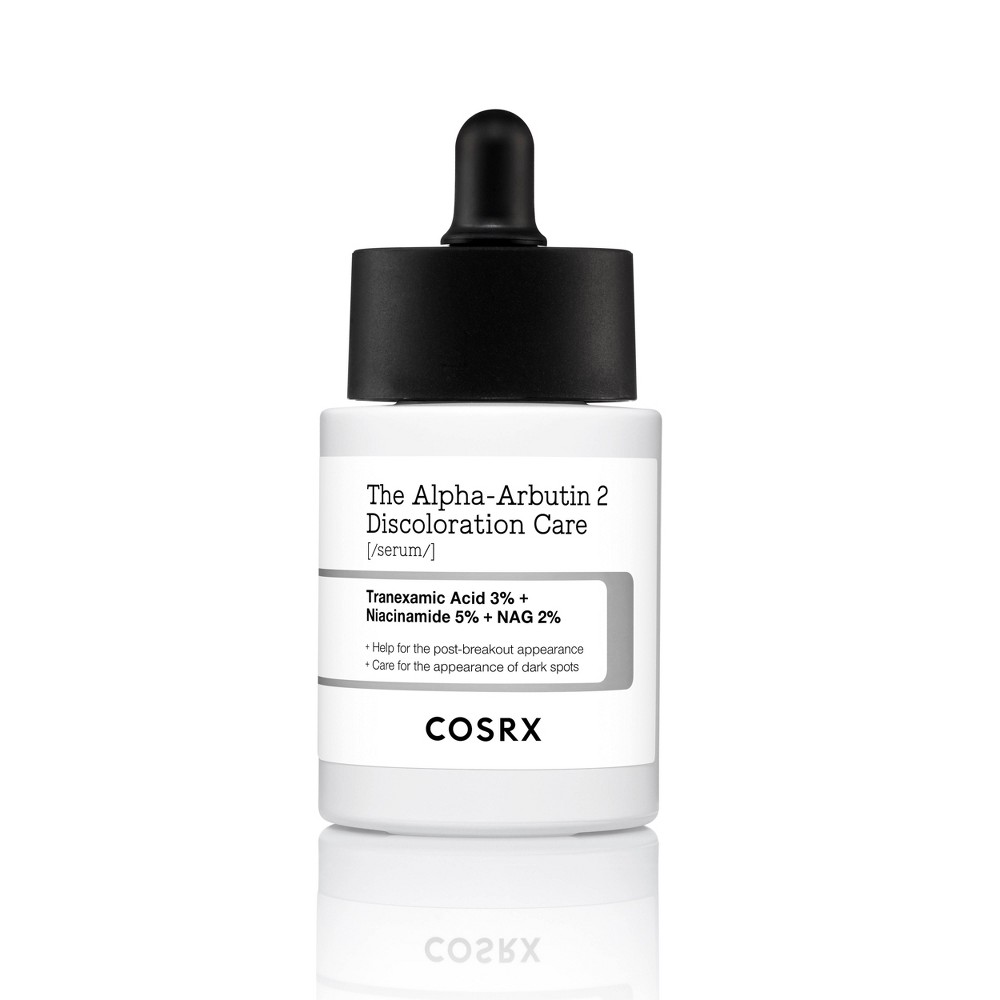

COSRX The Alpha Arbutin 2 Discoloration Care Serum - 50ml - Ulta Beauty: For Normal, Oily, Combination Skin, Liquid Form, Unscented
Analysis updated June 2026 · How Scout scores
At a glance
Summary
This serum contains beneficial skin actives like niacinamide, hyaluronic acid, and alpha-arbutin, which are known for their skin-brightening and hydrating properties. However, the presence of dimethicone and synthetic preservatives like disodium EDTA and sodium metabisulfite indicates a moderate level of processing. The inclusion of alcohol may also be a concern for sensitive skin types, slightly impacting the overall ingredient safety score.
Key ingredients 8
PropanediolVery Good
Propanediol acts as a gentle solvent and moisturizer, enhancing the serum's texture and skin hydration.
See more about Propanediol →Tranexamic AcidVery Good
Tranexamic Acid is known for its skin-brightening properties, helping to reduce the appearance of discoloration.
Acetyl GlucosamineVery Good
Acetyl Glucosamine supports skin renewal and can help improve skin clarity and brightness.
See more about Acetyl Glucosamine →Alpha-ArbutinVery Good
Alpha-Arbutin is a potent skin-brightening agent that helps diminish dark spots and uneven skin tone.
1,2-HexanediolVery Good
1,2-Hexanediol acts as a preservative and moisturizer, supporting product stability and skin hydration.
See more about 1,2-Hexanediol →GlycerinGood
Glycerin is a well-known humectant that attracts moisture to the skin, promoting hydration and softness.
See more about Glycerin →NiacinamideGood
Niacinamide helps improve skin tone and texture, making it beneficial for discoloration and uneven skin appearance.
See more about Niacinamide →WaterNeutral
Water is the base of the formulation — inert.
See more about Water →Processing
Processed Foods
Get the full breakdown in the Scout appTake Scout shopping
Scan any product to see lab results, healthy alternatives, and your personalized analysis.
Download on theApp Store GET IT ONGoogle PlayAmazon pricing & content
Amazon price as of . Product prices and availability are accurate as of the date/time indicated and are subject to change. Any price and availability information displayed on Amazon.com at the time of purchase will apply to the purchase of this product.
CERTAIN CONTENT THAT APPEARS ON THIS SITE COMES FROM AMAZON. THIS CONTENT IS PROVIDED “AS IS” AND IS SUBJECT TO CHANGE OR REMOVAL AT ANY TIME.