
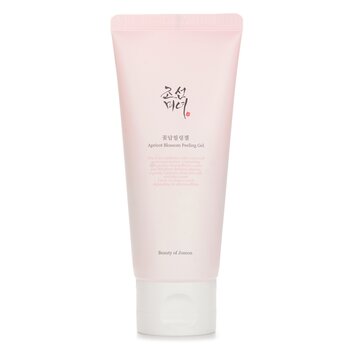

Beauty of JoseonApricot Blossom Peeling Gel 100ml
Analysis updated August 2026 · How Scout scores
At a glance
Summary
This product contains beneficial ingredients like Prunus Mume Flower Water, Arginine, Allantoin, and Glycerin, which are known for their soothing and moisturizing properties. However, the presence of Alcohol Denat, a potentially drying and barrier-disrupting ingredient, lowers its overall safety profile. The formulation is moderately processed, balancing beneficial components with the negative impact of denatured alcohol.
Key ingredients 12
Prunus Mume Flower WaterGood
Prunus Mume Flower Water is derived from the Japanese apricot and is known for its soothing properties. It can help calm irritated skin and provide a refreshing feel. It is generally considered safe and beneficial in skincare products.
Risks
There are minimal risks associated with this ingredient, though allergic reactions are possible.
Benefits
It provides soothing and calming effects on the skin.
ArginineGood
Arginine is an amino acid that helps improve skin hydration and elasticity. It is known for its moisturizing properties and ability to support collagen production. It is generally considered beneficial in skincare products.
Risks
There are minimal risks associated with arginine, though allergic reactions are possible.
Benefits
It improves skin hydration and supports collagen production.
AllantoinGood
Allantoin is a skin-soothing agent known for its ability to promote skin healing and reduce irritation. It is widely used in skincare for its calming and protective properties. It is generally considered beneficial in cosmetics.
Risks
There are minimal risks associated with allantoin, though allergic reactions are possible.
Benefits
It soothes and protects the skin, promoting healing.
GlycerinGood
Glycerin is a humectant that attracts moisture to the skin, helping to maintain hydration. It is widely used in skincare for its moisturizing properties. It is generally considered beneficial and safe in cosmetics.
Risks
There are minimal risks associated with glycerin, though allergic reactions are possible.
Benefits
It helps maintain skin hydration and improves moisture retention.
WaterNeutral
Water is a common solvent used in cosmetic formulations. It helps dissolve other ingredients and provides a base for the product. It does not have any direct benefits or risks associated with its use in cosmetics.
Risks
There are no significant risks associated with water in cosmetics.
Benefits
Water helps in the application and absorption of other ingredients.
CelluloseNeutral
Cellulose is a natural polymer used as a thickening agent in cosmetics. It helps improve the texture and stability of the product. It is generally considered safe and non-irritating.
Risks
There are no significant risks associated with cellulose in cosmetics.
Benefits
It enhances the texture and stability of the product.
MethylpropanediolNeutral
Methylpropanediol is a solvent and penetration enhancer used in cosmetics. It helps other ingredients penetrate the skin more effectively. It is generally considered safe for use in cosmetics.
Risks
There is a low risk of skin irritation with prolonged use.
Benefits
It enhances the penetration of active ingredients into the skin.
1, 2-HexanediolNeutral
1, 2-Hexanediol is a synthetic preservative and moisture-binding agent. It helps preserve the product and maintain skin hydration. It is generally considered safe for use in cosmetics.
Risks
There is a low risk of skin irritation with prolonged use.
Benefits
It helps preserve the product and maintain skin hydration.
CarbomerNeutral
Carbomer is a synthetic polymer used as a thickening agent in cosmetics. It helps stabilize and thicken formulations. It is generally considered safe and non-irritating.
Risks
There are no significant risks associated with carbomer in cosmetics.
Benefits
It enhances the texture and stability of the product.
EthylhexylglycerinNeutral
Ethylhexylglycerin is a preservative and skin-conditioning agent. It helps enhance the efficacy of preservatives and provides a soft feel to the skin. It is generally considered safe for use in cosmetics.
Risks
There is a low risk of skin irritation with prolonged use.
Benefits
It enhances preservative efficacy and conditions the skin.
Steartrimonium MethosulfateNeutral
Steartrimonium Methosulfate is a mild conditioning agent used in cosmetics. It helps improve the texture and manageability of the product. It is generally considered safe and non-irritating.
Risks
There are no significant risks associated with this ingredient in cosmetics.
Benefits
It improves the texture and manageability of the product.
Alcohol DenatVery Bad
Alcohol Denat is a denatured alcohol used as a solvent and astringent in cosmetics. It can be drying and irritating to the skin, especially with prolonged use. It is generally considered less favorable in skincare due to its potential to disrupt the skin barrier.
Risks
It can cause dryness and irritation, especially with prolonged use.
Benefits
It acts as a solvent and can provide a refreshing feel.
Get the full breakdown in the Scout appTake Scout shopping
Scan any product to see lab results, healthy alternatives, and your personalized analysis.
Download on theApp Store GET IT ONGoogle PlayAmazon pricing & content
Amazon price as of . Product prices and availability are accurate as of the date/time indicated and are subject to change. Any price and availability information displayed on Amazon.com at the time of purchase will apply to the purchase of this product.
CERTAIN CONTENT THAT APPEARS ON THIS SITE COMES FROM AMAZON. THIS CONTENT IS PROVIDED “AS IS” AND IS SUBJECT TO CHANGE OR REMOVAL AT ANY TIME.