
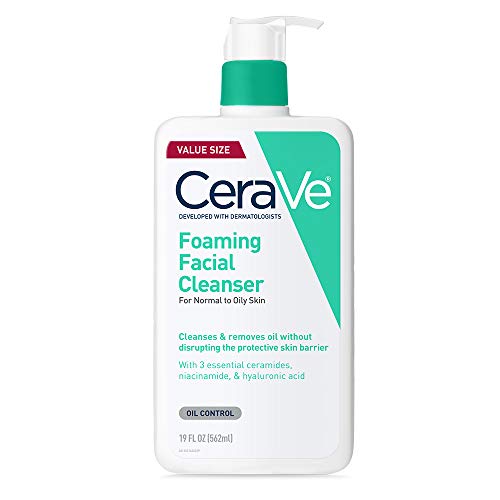

CeraVe Foaming Face Wash Face Cleanser for Normal to Oily Skin 12 oz.
Analysis updated August 2026 · How Scout scores
At a glance
Summary
This face wash contains beneficial ingredients like glycerin, niacinamide, and ceramides, which are known for their moisturizing and skin barrier-strengthening properties. However, the presence of parabens, which are associated with potential endocrine disruption, negatively impacts the product's safety profile. Additionally, the inclusion of PEG compounds and the processed nature of the product further influence its overall rating.
Key ingredients 24
Ceramide APVery Good
Ceramide AP is a type of ceramide that helps to reinforce the skin's natural barrier. It plays a crucial role in maintaining skin hydration and preventing water loss. It helps to improve skin texture and resilience.
Risks
Generally considered safe with minimal risk of irritation.
Benefits
Enhances skin barrier function and improves hydration.
Ceramide EOPVery Good
Ceramide EOP is a lipid that helps to restore and maintain the skin's natural barrier. It is important for preventing moisture loss and protecting the skin from environmental stressors. It helps to improve skin hydration and texture.
Risks
Generally considered safe with minimal risk of irritation.
Benefits
Strengthens the skin barrier and enhances moisture retention.
Hydrolyzed Hyaluronic AcidVery Good
Hydrolyzed hyaluronic acid is a smaller molecule form of hyaluronic acid that penetrates the skin more easily. It provides intense hydration and helps to plump the skin. It is known for its ability to retain moisture and improve skin elasticity.
Risks
Generally considered safe with minimal risk of irritation.
Benefits
Enhances skin hydration and elasticity.
GlycerinGood
Glycerin is a humectant that attracts moisture to the skin, helping to keep it hydrated. It is a common ingredient in skincare due to its moisturizing properties. It helps to maintain the skin's water balance.
Risks
Generally considered safe with minimal risk of irritation.
Benefits
Helps to improve skin hydration and barrier function.
NiacinamideGood
Niacinamide is a form of Vitamin B3 that offers multiple skin benefits, including improving skin tone and texture. It is known for its anti-inflammatory properties and ability to reduce redness. It helps to strengthen the skin barrier and improve hydration.
Risks
Generally well-tolerated with minimal risk of irritation.
Benefits
Improves skin elasticity, reduces fine lines, and enhances barrier function.
Ceramide NPGood
Ceramide NP is a lipid that helps to restore the skin barrier and retain moisture. It is essential for maintaining healthy skin and preventing moisture loss. It helps to improve skin hydration and resilience.
Risks
Generally considered safe with minimal risk of irritation.
Benefits
Strengthens the skin barrier and enhances moisture retention.
Aqua / Water / EauNeutral
Water is a universal solvent used in cosmetics to dissolve other ingredients. It is essential for the formulation but does not provide direct skin benefits. It acts as a base for the product.
Risks
There are no known risks associated with water in cosmetics.
Benefits
Water helps to hydrate the skin by providing moisture.
Cocamidopropyl HydroxysultaineNeutral
This is a mild surfactant used to create foam and cleanse the skin. It is derived from coconut oil and is considered less irritating than harsher surfactants. It helps to remove dirt and oil from the skin.
Risks
May cause irritation in sensitive individuals.
Benefits
Provides gentle cleansing without stripping the skin's natural oils.
PEG-150 Pentaerythrityl TetrastearateNeutral
This ingredient is used as a thickener and emulsifier in cosmetic formulations. It helps to stabilize the product and improve texture. It is generally considered safe for use in cosmetics.
Risks
Potential contamination with ethylene oxide and 1,4-dioxane.
Benefits
Improves product consistency and stability.
PEG-6 Caprylic/Capric GlyceridesNeutral
This ingredient is used as an emulsifier and skin-conditioning agent. It helps to blend oil and water-based ingredients. It is generally considered safe for use in cosmetics.
Risks
Potential contamination with ethylene oxide and 1,4-dioxane.
Benefits
Enhances product texture and provides mild skin conditioning.
Sodium Methyl Cocoyl TaurateNeutral
This is a mild surfactant derived from coconut oil, used for its cleansing properties. It is less irritating than traditional sulfates. It helps to create a rich lather and cleanse the skin effectively.
Risks
May cause mild irritation in sensitive individuals.
Benefits
Provides gentle cleansing with a lower risk of irritation.
CarbomerNeutral
Carbomer is used as a thickening agent in cosmetic formulations. It helps to stabilize and improve the texture of the product. It is generally considered safe for use in cosmetics.
Risks
May cause mild irritation in sensitive skin.
Benefits
Improves product consistency and stability.
Sodium ChlorideNeutral
Sodium chloride is used as a thickening agent in cosmetic formulations. It helps to improve the texture and stability of the product. It is generally considered safe for use in cosmetics.
Risks
May cause mild irritation in sensitive skin.
Benefits
Enhances product texture and stability.
Sodium Lauroyl LactylateNeutral
This is a mild surfactant used for its cleansing and emulsifying properties. It is derived from lauric acid and lactic acid. It helps to cleanse the skin without causing excessive dryness.
Risks
May cause mild irritation in sensitive individuals.
Benefits
Provides gentle cleansing and improves product texture.
CholesterolNeutral
Cholesterol is used as an emollient and skin-conditioning agent in cosmetics. It helps to improve skin barrier function and hydration. It is generally considered safe for use in cosmetics.
Risks
Generally considered safe with minimal risk of irritation.
Benefits
Enhances skin barrier function and improves hydration.
Citric AcidNeutral
Citric acid is used to adjust the pH of cosmetic formulations. It helps to maintain product stability and improve texture. It is generally considered safe for use in cosmetics.
Risks
May cause mild irritation in sensitive skin.
Benefits
Improves product stability and texture.
Tetrasodium EDTANeutral
Tetrasodium EDTA is used as a chelating agent in cosmetics to improve product stability. It helps to bind metal ions and prevent product degradation. It is generally considered safe for use in cosmetics.
Risks
May cause mild irritation in sensitive skin.
Benefits
Improves product stability and shelf life.
PhytosphingosineNeutral
Phytosphingosine is a lipid that helps to restore the skin barrier and reduce inflammation. It is naturally found in the skin and plays a role in maintaining skin health. It helps to improve skin texture and reduce redness.
Risks
Generally considered safe with minimal risk of irritation.
Benefits
Enhances skin barrier function and reduces inflammation.
Xanthan GumNeutral
Xanthan gum is used as a thickening and stabilizing agent in cosmetic formulations. It helps to improve product texture and consistency. It is generally considered safe for use in cosmetics.
Risks
May cause mild irritation in sensitive skin.
Benefits
Improves product texture and stability.
Sodium Lauroyl SarcosinateBad
Processed additive flagged under Scout's ingredient doctrine.
Risks
May cause mild irritation in sensitive skin.
Benefits
Provides effective cleansing with a lower risk of irritation.
Propylene GlycolBad
Processed additive flagged under Scout's ingredient doctrine.
Risks
May cause irritation in sensitive skin.
Benefits
Improves skin hydration and product consistency.
Disodium EDTABad
Processed additive flagged under Scout's ingredient doctrine.
Risks
May cause mild irritation in sensitive skin.
Benefits
Improves product stability and shelf life.
MethylparabenVery Bad
Methylparaben is a preservative used to prevent microbial growth in cosmetics. It is effective in extending the shelf life of products. However, it is associated with potential endocrine disruption.
Risks
Potential endocrine disruptor and may cause skin irritation.
Benefits
Prevents microbial growth and extends product shelf life.
PropylparabenVery Bad
Propylparaben is a preservative used to prevent microbial growth in cosmetics. It is effective in extending the shelf life of products. However, it is associated with potential endocrine disruption.
Risks
Potential endocrine disruptor and may cause skin irritation.
Benefits
Prevents microbial growth and extends product shelf life.
Get the full breakdown in the Scout appTake Scout shopping
Scan any product to see lab results, healthy alternatives, and your personalized analysis.
Download on theApp Store GET IT ONGoogle PlayAmazon pricing & content
Amazon price as of . Product prices and availability are accurate as of the date/time indicated and are subject to change. Any price and availability information displayed on Amazon.com at the time of purchase will apply to the purchase of this product.
CERTAIN CONTENT THAT APPEARS ON THIS SITE COMES FROM AMAZON. THIS CONTENT IS PROVIDED “AS IS” AND IS SUBJECT TO CHANGE OR REMOVAL AT ANY TIME.