
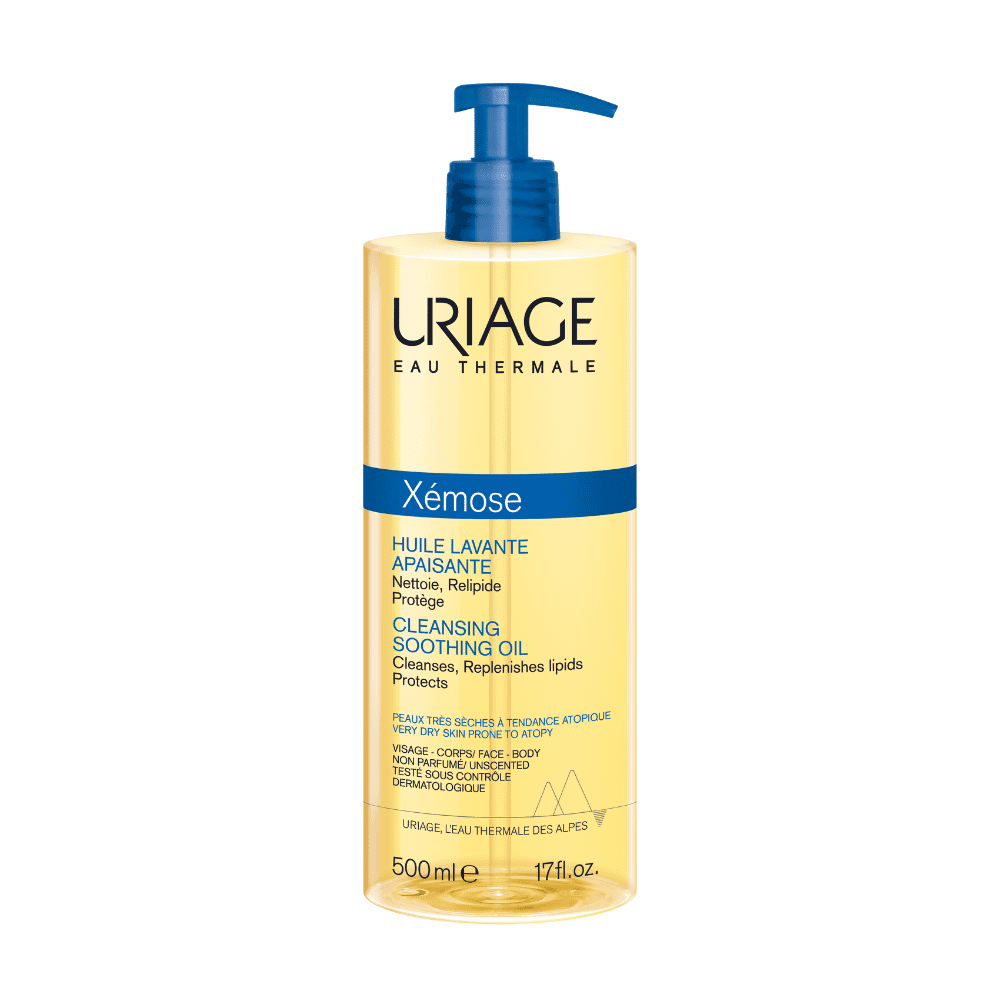

Uriage Xemose Cleansing Soothing Oil, 400 Ml
Analysis updated August 2026 · How Scout scores
At a glance
Summary
This product contains beneficial ingredients like glycerin and coco-glucoside, which are known for their moisturizing and gentle cleansing properties. However, the presence of sodium laureth sulfate, a surfactant with potential contamination risks and skin irritation concerns, negatively impacts the overall ingredient safety. The product is moderately processed, which further influences its rating.
Key ingredients 29
TOCOPHEROLVery Good
Tocopherol, or Vitamin E, is a powerful antioxidant that helps protect the skin from free radical damage. It also has moisturizing properties and is widely used in skincare products. It is generally well-tolerated and safe for use.
Risks
Rarely, it may cause irritation in very sensitive skin.
Benefits
Protects skin from oxidative stress and enhances moisture retention.
CERAMIDE NSVery Good
Ceramide NS is a lipid that helps to restore the skin's natural barrier. It is essential for maintaining skin hydration and preventing moisture loss. It is well-tolerated and beneficial for all skin types.
Risks
Generally considered safe with no significant risks.
Benefits
Strengthens the skin barrier and enhances moisture retention.
CERAMIDE EOPVery Good
Ceramide EOP is a lipid that helps to restore the skin's natural barrier. It is essential for maintaining skin hydration and preventing moisture loss. It is well-tolerated and beneficial for all skin types.
Risks
Generally considered safe with no significant risks.
Benefits
Strengthens the skin barrier and enhances moisture retention.
CERAMIDE APVery Good
Ceramide AP is a lipid that helps to restore the skin's natural barrier. It is essential for maintaining skin hydration and preventing moisture loss. It is well-tolerated and beneficial for all skin types.
Risks
Generally considered safe with no significant risks.
Benefits
Strengthens the skin barrier and enhances moisture retention.
GLYCERINGood
Glycerin is a powerful humectant that attracts water to the skin. It is widely used for its moisturizing properties and is considered safe and effective. It helps maintain the skin's natural barrier.
Risks
Rarely, it can cause irritation if used in high concentrations.
Benefits
Improves skin hydration and barrier function, making skin feel smoother and more supple.
COCO-GLUCOSIDEGood
Coco-glucoside is a mild, non-ionic surfactant derived from coconut oil and glucose. It is gentle on the skin and suitable for sensitive skin types. It helps to cleanse the skin without stripping its natural oils.
Risks
Generally considered safe with minimal risk of irritation.
Benefits
Provides gentle cleansing while maintaining skin moisture.
SODIUM COCOAMPHOACETATEGood
Sodium Cocoamphoacetate is a mild surfactant derived from coconut oil. It is used for its gentle cleansing properties and is suitable for sensitive skin. It helps to create a rich lather without causing irritation.
Risks
Low risk of irritation, generally safe for most skin types.
Benefits
Offers mild cleansing and foaming properties, enhancing the product's texture.
SODIUM METHYL COCOYL TAURATEGood
Sodium Methyl Cocoyl Taurate is a mild surfactant derived from coconut fatty acids. It is known for its gentle cleansing action and is less likely to irritate the skin compared to harsher surfactants. It helps to maintain the skin's natural moisture balance.
Risks
Minimal risk of irritation, generally safe for sensitive skin.
Benefits
Provides gentle cleansing while preserving skin moisture.
GLYCERYL OLEATEGood
Glyceryl Oleate is an emollient and emulsifier derived from natural oils. It helps to soften and smooth the skin, enhancing the product's texture. It is generally well-tolerated and safe for use.
Risks
Low risk of irritation, generally safe for most skin types.
Benefits
Improves skin softness and product consistency.
PEG-75 SHEA BUTTER GLYCERIDESGood
PEG-75 Shea Butter Glycerides are derived from shea butter and used as emollients. They help to moisturize and soften the skin, providing a smooth feel. They are generally well-tolerated and safe for use.
Risks
Potential for irritation in very sensitive skin due to PEG compounds.
Benefits
Enhances skin hydration and smoothness.
SAFFLOWER OIL/PALM OIL AMINOPROPANEDIOL ESTERSGood
These esters are derived from natural oils and used as emollients. They help to moisturize and condition the skin, improving its texture. They are generally considered safe and effective.
Risks
Low risk of irritation, generally safe for most skin types.
Benefits
Provides moisturizing and conditioning benefits to the skin.
POLYGLYCERYL-10 STEARATEGood
Polyglyceryl-10 Stearate is an emulsifier used to stabilize cosmetic formulations. It helps to blend oil and water components, improving product consistency. It is generally well-tolerated and safe for use.
Risks
Minimal risk of irritation, generally safe for most skin types.
Benefits
Enhances product stability and texture.
POLYGLYCERYL-6 BEHENATEGood
Polyglyceryl-6 Behenate is an emulsifier used to stabilize cosmetic formulations. It helps to blend oil and water components, improving product consistency. It is generally well-tolerated and safe for use.
Risks
Minimal risk of irritation, generally safe for most skin types.
Benefits
Enhances product stability and texture.
HYDROGENATED VEGETABLE GLYCERIDES CITRATEGood
Hydrogenated Vegetable Glycerides Citrate is used as an emollient and emulsifier in cosmetics. It helps to moisturize and soften the skin, providing a smooth feel. It is generally well-tolerated and safe for use.
Risks
Low risk of irritation, generally safe for most skin types.
Benefits
Improves skin hydration and product consistency.
CERAMIDE NPGood
Ceramide NP is a lipid that helps to restore the skin's natural barrier. It is essential for maintaining skin hydration and preventing moisture loss. It is well-tolerated and beneficial for all skin types.
Risks
Generally considered safe with no significant risks.
Benefits
Strengthens the skin barrier and enhances moisture retention.
CHOLESTEROLGood
Cholesterol is a lipid that helps to maintain the skin's natural barrier. It is essential for skin hydration and health. It is generally well-tolerated and beneficial for all skin types.
Risks
Generally considered safe with no significant risks.
Benefits
Supports skin barrier function and enhances moisture retention.
AQUA (WATER, EAU)Neutral
Water is a common solvent used in cosmetic formulations. It helps dissolve other ingredients and provides a base for the product. It does not have any direct benefits or risks.
Benefits
Provides a medium for other ingredients to be delivered to the skin.
SORBITOLNeutral
Standard formulation ingredient — neither beneficial nor harmful at typical use.
Risks
May cause irritation in very sensitive skin types.
Benefits
Enhances skin moisture retention, leading to softer and more hydrated skin.
CAPRYLYL GLYCOLNeutral
Standard formulation ingredient — neither beneficial nor harmful at typical use.
Risks
Rarely, it may cause mild irritation in sensitive individuals.
Benefits
Enhances skin hydration and extends product longevity.
CITRIC ACIDNeutral
Citric Acid is used to adjust the pH of cosmetic products. It can also act as a mild exfoliant, helping to remove dead skin cells. It is generally safe when used in appropriate concentrations.
Risks
High concentrations can cause skin irritation.
Benefits
Helps maintain product stability and can improve skin texture.
POLYQUATERNIUM-10Neutral
Polyquaternium-10 is a conditioning agent used to improve the texture and feel of hair and skin. It helps to reduce static and enhance smoothness. It is generally considered safe for use in cosmetics.
Risks
May cause build-up on hair with frequent use.
Benefits
Improves texture and reduces static in hair and skin products.
TRIETHYL CITRATENeutral
Triethyl Citrate is used as a fragrance ingredient and stabilizer in cosmetics. It helps to improve the scent and stability of the product. It is generally considered safe for use.
Risks
May cause irritation in sensitive skin when used in high concentrations.
Benefits
Enhances product fragrance and stability.
BEHENIC ACIDNeutral
Behenic Acid is a fatty acid used as an emollient and thickening agent in cosmetics. It helps to improve the texture and feel of the product. It is generally considered safe for use.
Risks
Minimal risk of irritation, generally safe for most skin types.
Benefits
Enhances product texture and provides emollient benefits.
CETEARYL ALCOHOLNeutral
Cetearyl Alcohol is a fatty alcohol used as an emollient and thickening agent. It helps to improve the texture and feel of the product. It is generally considered safe and non-irritating.
Risks
Low risk of irritation, generally safe for most skin types.
Benefits
Enhances product texture and provides emollient benefits.
GLYCERYL STEARATENeutral
Standard formulation ingredient — neither beneficial nor harmful at typical use.
Risks
Minimal risk of irritation, generally safe for most skin types.
Benefits
Enhances product stability and texture.
LACTIC ACIDNeutral
Standard formulation ingredient — neither beneficial nor harmful at typical use.
Risks
May cause irritation in sensitive skin if used in high concentrations.
Benefits
Improves skin texture and promotes a smoother complexion.
SODIUM CETEARYL SULFATENeutral
Sodium Cetearyl Sulfate is an emulsifier used to stabilize cosmetic formulations. It helps to blend oil and water components, improving product consistency. It is generally considered safe for use.
Risks
Minimal risk of irritation, generally safe for most skin types.
Benefits
Enhances product stability and texture.
SODIUM LAURETH SULFATEBad
Sodium Laureth Sulfate is a surfactant used for its cleansing properties. It can strip natural oils from the skin, leading to dryness and irritation. There is also a risk of contamination with 1,4-dioxane, a potential carcinogen.
Risks
May cause skin irritation and dryness, especially in sensitive skin.
Benefits
Effective at removing dirt and oil from the skin.
SODIUM BENZOATEBad
Synthetic preservative that can form benzene in the presence of vitamin C.
Risks
May cause irritation in sensitive skin when used in high concentrations.
Benefits
Prevents spoilage and extends product shelf life.
Get the full breakdown in the Scout appTake Scout shopping
Scan any product to see lab results, healthy alternatives, and your personalized analysis.
Download on theApp Store GET IT ONGoogle Play