
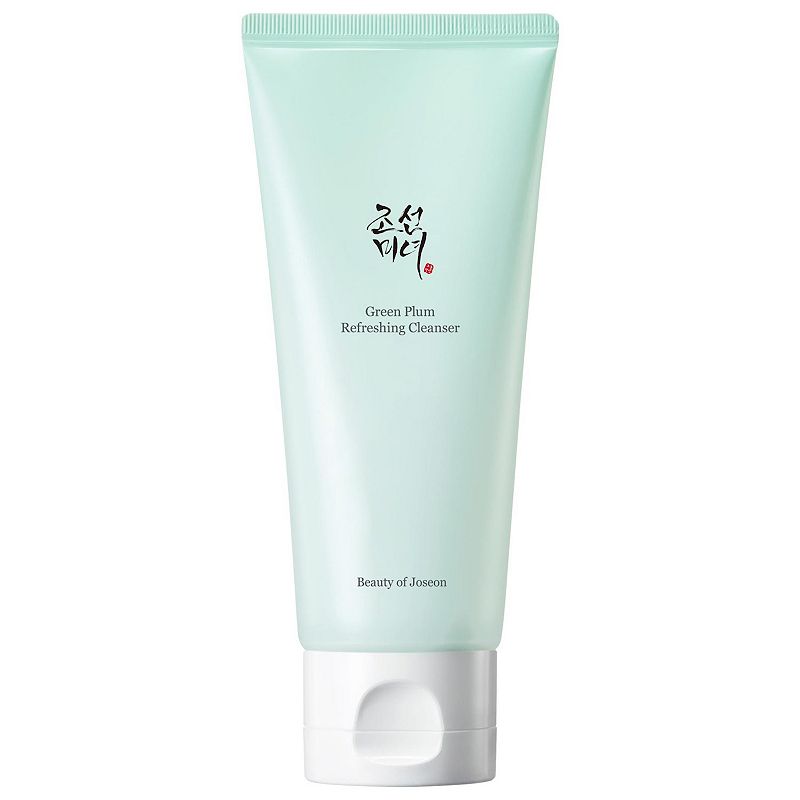

Beauty of Joseon Green Plum Refreshing Cleanser for Gentle Daily Wash, Size: 3.38 FL Oz, None
Analysis updated August 2026 · How Scout scores
At a glance
Summary
This face wash contains a variety of beneficial natural extracts like Prunus Mume Fruit Water and Camellia Sinensis Leaf Extract, which provide antioxidant and soothing properties. The presence of Disodium EDTA, a penetration enhancer, is a minor concern but does not significantly detract from the overall ingredient quality. The product is processed but maintains a clean label with mostly natural ingredients, contributing to its favorable rating.
Key ingredients 27
Camellia Sinensis Leaf ExtractVery Good
Camellia Sinensis Leaf Extract, commonly known as green tea extract, is rich in antioxidants. It helps protect the skin from free radical damage and has anti-inflammatory properties. It is highly beneficial for skin health.
Risks
There are minimal risks, though rare allergic reactions may occur.
Benefits
It provides antioxidant protection and soothes the skin.
Vaccinium Angustifolium (Blueberry) Fruit ExtractVery Good
Vaccinium Angustifolium (Blueberry) Fruit Extract is rich in antioxidants and vitamins. It helps protect the skin from free radical damage and has anti-aging properties. It is highly beneficial for maintaining youthful skin.
Risks
There are minimal risks, though rare allergic reactions may occur.
Benefits
It provides antioxidant protection and helps reduce signs of aging.
Prunus Mume Fruit WaterGood
Prunus Mume Fruit Water is derived from the Japanese apricot and is known for its antioxidant properties. It helps in soothing and revitalizing the skin. It is considered beneficial for maintaining skin health.
Risks
There are minimal risks associated with this ingredient, though rare allergic reactions may occur.
Benefits
It provides antioxidants that protect the skin from environmental stressors.
Phaseolus Radiatus Seed ExtractGood
Phaseolus Radiatus Seed Extract, also known as mung bean extract, is rich in vitamins and minerals. It is known for its anti-inflammatory and soothing properties. It is beneficial for calming irritated skin.
Risks
There are no significant risks associated with this ingredient.
Benefits
It helps reduce redness and inflammation, promoting a healthy complexion.
GlycerinGood
Glycerin is a humectant that attracts moisture to the skin, keeping it hydrated. It is widely used in skincare for its moisturizing properties. It is considered very beneficial for maintaining skin hydration.
Risks
There are no significant risks associated with glycerin.
Benefits
It helps maintain skin hydration and improves skin barrier function.
Houttuynia Cordata ExtractGood
Houttuynia Cordata Extract is known for its anti-inflammatory and antibacterial properties. It is used in skincare to calm and purify the skin. It is beneficial for reducing redness and irritation.
Risks
There are no significant risks associated with this ingredient.
Benefits
It helps soothe irritated skin and provides antibacterial benefits.
Nelumbo Nucifera Flower ExtractGood
Nelumbo Nucifera Flower Extract, or lotus flower extract, is known for its soothing and moisturizing properties. It helps to improve skin elasticity and hydration. It is considered beneficial for maintaining a youthful complexion.
Risks
There are minimal risks, though rare allergic reactions may occur.
Benefits
It hydrates the skin and improves elasticity.
Oryza Sativa (Rice) ExtractGood
Oryza Sativa (Rice) Extract is rich in antioxidants and nutrients. It is used in skincare for its brightening and anti-aging properties. It is beneficial for improving skin tone and texture.
Risks
There are no significant risks associated with this ingredient.
Benefits
It helps brighten the skin and reduce signs of aging.
Prunus Mume Fruit ExtractGood
Prunus Mume Fruit Extract is derived from the Japanese apricot and is known for its antioxidant properties. It helps in soothing and revitalizing the skin. It is considered beneficial for maintaining skin health.
Risks
There are minimal risks associated with this ingredient, though rare allergic reactions may occur.
Benefits
It provides antioxidants that protect the skin from environmental stressors.
Punica Granatum ExtractGood
Punica Granatum Extract, or pomegranate extract, is rich in antioxidants and vitamins. It helps protect the skin from free radical damage and has anti-aging properties. It is beneficial for maintaining youthful and healthy skin.
Risks
There are minimal risks, though rare allergic reactions may occur.
Benefits
It provides antioxidant protection and helps reduce signs of aging.
Clitoria Ternatea Flower ExtractGood
Clitoria Ternatea Flower Extract is known for its antioxidant and anti-inflammatory properties. It helps to soothe and protect the skin from environmental stressors. It is beneficial for maintaining skin health and reducing irritation.
Risks
There are minimal risks, though rare allergic reactions may occur.
Benefits
It provides antioxidant protection and soothes the skin.
Garcinia Mangostana Peel ExtractGood
Garcinia Mangostana Peel Extract is rich in antioxidants and has anti-inflammatory properties. It helps to protect the skin from free radical damage and soothes irritation. It is beneficial for maintaining healthy and youthful skin.
Risks
There are minimal risks, though rare allergic reactions may occur.
Benefits
It provides antioxidant protection and reduces inflammation.
WaterNeutral
Water is a common solvent used in cosmetic formulations. It helps dissolve other ingredients and provides a base for the product. It is generally considered safe and non-irritating.
Risks
There are no significant risks associated with water in cosmetics.
Benefits
Water hydrates the skin and helps in the application of the product.
Cocamidopropyl HydroxysultaineNeutral
Cocamidopropyl Hydroxysultaine is a mild surfactant used for its foaming and cleansing properties. It is derived from coconut oil and is considered less irritating than harsher surfactants. It is generally safe for use in cosmetics.
Risks
In rare cases, it may cause mild skin irritation or allergic reactions.
Benefits
It effectively cleanses the skin without stripping natural oils.
Sodium Cocoyl IsethionateNeutral
Sodium Cocoyl Isethionate is a mild surfactant derived from coconut oil. It is used for its gentle cleansing properties and ability to produce a creamy lather. It is considered safe for most skin types.
Risks
It may cause mild irritation in sensitive individuals.
Benefits
It cleanses the skin effectively while maintaining moisture balance.
Sodium ChlorideNeutral
Sodium Chloride, or table salt, is used as a thickening agent in cosmetics. It helps to improve the texture and consistency of the product. It is generally considered safe for use in skincare.
Risks
Excessive use may lead to dryness in some individuals.
Benefits
It enhances the texture of the product, making it easier to apply.
Guar Hydroxypropyltrimonium ChlorideNeutral
Guar Hydroxypropyltrimonium Chloride is a conditioning agent derived from guar gum. It is used to improve the texture and feel of the product. It is generally considered safe for use in cosmetics.
Risks
There are no significant risks associated with this ingredient.
Benefits
It enhances the texture and provides conditioning benefits.
Coconut AcidNeutral
Coconut Acid is derived from coconut oil and is used as a surfactant and emulsifier. It helps to cleanse and stabilize the formulation. It is generally safe for use in skincare products.
Risks
It may cause mild irritation in sensitive individuals.
Benefits
It helps cleanse the skin and stabilize the product formulation.
EthylhexylglycerinNeutral
Ethylhexylglycerin is used as a preservative and skin conditioning agent. It helps to enhance the efficacy of other preservatives and provides mild moisturizing benefits. It is generally considered safe for use in cosmetics.
Risks
There are minimal risks, though rare allergic reactions may occur.
Benefits
It helps preserve the product and provides mild moisturizing benefits.
Caprylyl GlycolNeutral
Caprylyl Glycol is used as a skin conditioning agent and preservative. It helps to improve the texture of the product and provides antimicrobial benefits. It is generally considered safe for use in cosmetics.
Risks
There are minimal risks, though rare allergic reactions may occur.
Benefits
It helps condition the skin and provides antimicrobial benefits.
Sodium IsethionateNeutral
Sodium Isethionate is a mild surfactant used for its cleansing properties. It is known for being gentle on the skin and producing a creamy lather. It is generally safe for use in skincare products.
Risks
It may cause mild irritation in sensitive individuals.
Benefits
It cleanses the skin effectively while being gentle.
Citric AcidNeutral
Citric Acid is used to adjust the pH of cosmetic formulations. It helps to maintain the stability and efficacy of the product. It is generally considered safe for use in cosmetics.
Risks
In high concentrations, it may cause skin irritation.
Benefits
It helps maintain the product's pH balance and stability.
Butylene GlycolNeutral
Butylene Glycol is used as a solvent and conditioning agent in cosmetics. It helps to improve the texture and spreadability of the product. It is generally considered safe for use in skincare.
Risks
There are minimal risks, though rare allergic reactions may occur.
Benefits
It enhances the texture and provides conditioning benefits.
1,2-HexanediolNeutral
1,2-Hexanediol is used as a preservative and humectant in cosmetics. It helps to enhance the shelf life of the product and provides moisturizing benefits. It is generally considered safe for use in skincare.
Risks
There are minimal risks, though rare allergic reactions may occur.
Benefits
It helps preserve the product and provides moisturizing benefits.
Propylene Glycol LaurateNeutral
Propylene Glycol Laurate is used as an emulsifier and skin conditioning agent. It helps to improve the texture and stability of the product. It is generally considered safe for use in cosmetics.
Risks
There are minimal risks, though rare allergic reactions may occur.
Benefits
It enhances the texture and stability of the product.
Sodium CitrateNeutral
Sodium Citrate is used as a buffering agent to maintain the pH of cosmetic formulations. It helps to stabilize the product and enhance its efficacy. It is generally considered safe for use in skincare.
Risks
There are no significant risks associated with this ingredient.
Benefits
It helps maintain the product's pH balance and stability.
Disodium EDTABad
Disodium EDTA is used as a chelating agent to improve the stability of cosmetic formulations. It binds to metal ions, preventing them from affecting the product's stability. However, it is considered a penetration enhancer, which may increase the absorption of other ingredients, including potential irritants.
Risks
It may enhance the penetration of harmful substances into the skin.
Benefits
It helps stabilize the product by binding metal ions.
Get the full breakdown in the Scout appTake Scout shopping
Scan any product to see lab results, healthy alternatives, and your personalized analysis.
Download on theApp Store GET IT ONGoogle PlayAmazon pricing & content
Amazon price as of . Product prices and availability are accurate as of the date/time indicated and are subject to change. Any price and availability information displayed on Amazon.com at the time of purchase will apply to the purchase of this product.
CERTAIN CONTENT THAT APPEARS ON THIS SITE COMES FROM AMAZON. THIS CONTENT IS PROVIDED “AS IS” AND IS SUBJECT TO CHANGE OR REMOVAL AT ANY TIME.