
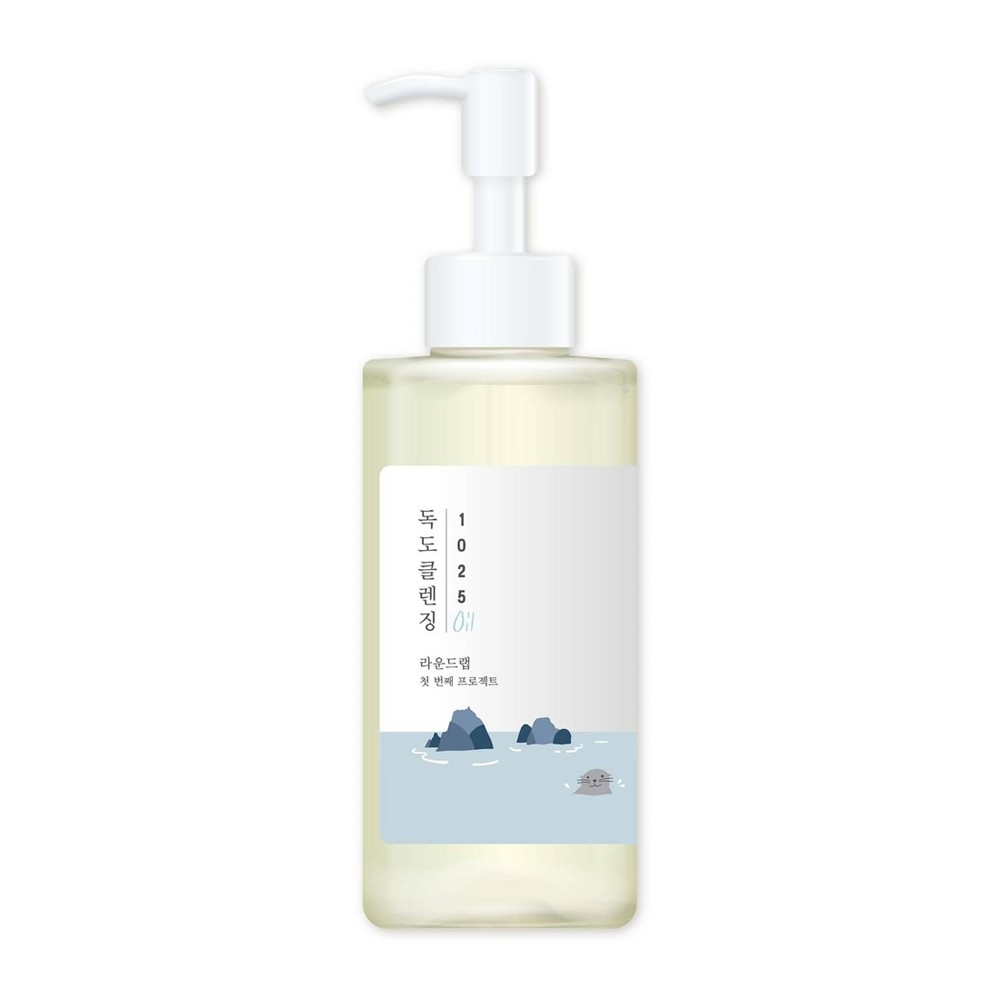
Round Lab 1025 Dokdo Cleansing Oil Korean Skincare for Deep Pore Cleansing and Removal of Impurities with Hydration - 200ml
Analysis updated July 2026 · How Scout scores
At a glance
Summary
This cleansing oil contains a variety of beneficial natural oils such as evening primrose, meadowfoam, and avocado oil, which provide moisturizing and anti-inflammatory benefits. However, the presence of bergamot oil and limonene, which can cause skin irritation and photosensitivity, slightly detracts from its overall safety profile. Despite these concerns, the product maintains a relatively clean ingredient list with minimal synthetic additives.
Key ingredients 30
Oenothera Biennis (Evening Primrose) OilVery Good
Evening Primrose Oil is rich in essential fatty acids, which help to maintain skin hydration and barrier function. It is known for its anti-inflammatory properties, making it beneficial for soothing irritated skin.
Risks
There is a minimal risk of allergic reactions in sensitive individuals.
Benefits
It provides excellent moisturizing and soothing effects, especially for dry or sensitive skin.
Limnanthes Alba (Meadowfoam) Seed OilVery Good
Meadowfoam Seed Oil is known for its stability and ability to lock in moisture, providing a protective barrier on the skin. It is rich in antioxidants, which help to protect the skin from environmental damage.
Risks
Generally considered safe with low risk of irritation.
Benefits
It enhances skin hydration and provides antioxidant protection.
Persea Gratissima (Avocado) OilVery Good
Avocado Oil is rich in vitamins A, D, and E, and is known for its deep moisturizing properties. It helps to nourish and soften the skin, making it ideal for dry skin types.
Risks
May cause allergic reactions in individuals with latex allergies.
Benefits
Provides deep hydration and nourishment to the skin.
Vitis Vinifera (Grape) Seed OilVery Good
Grape Seed Oil is lightweight and rich in linoleic acid, which helps to balance the skin's moisture levels. It is also high in antioxidants, which protect the skin from free radical damage.
Risks
Rarely causes allergic reactions.
Benefits
Offers moisturizing and antioxidant benefits, promoting healthy skin.
Macadamia Integrifolia Seed OilVery Good
Macadamia Oil is rich in monounsaturated fats and palmitoleic acid, which are beneficial for skin hydration and regeneration. It is easily absorbed and helps to improve skin elasticity.
Risks
Generally safe with low risk of irritation.
Benefits
Enhances skin hydration and elasticity, making it ideal for mature skin.
AllantoinVery Good
Allantoin is known for its soothing and skin-conditioning properties. It helps to promote skin healing and improve skin smoothness.
Risks
Generally considered safe with low risk of irritation.
Benefits
Soothes and conditions the skin, promoting healing and smoothness.
PanthenolVery Good
Panthenol, also known as provitamin B5, is a powerful moisturizer that helps to improve skin hydration and elasticity. It also has anti-inflammatory properties, making it beneficial for soothing irritated skin.
Risks
Rarely causes irritation or allergic reactions.
Benefits
Enhances skin hydration and soothes irritation, promoting healthy skin.
Hydrolyzed Hyaluronic AcidVery Good
Hydrolyzed Hyaluronic Acid is a smaller molecule form of hyaluronic acid that penetrates deeper into the skin, providing enhanced hydration. It helps to improve skin texture and reduce the appearance of fine lines.
Risks
Generally safe with low risk of irritation.
Benefits
Provides deep hydration and improves skin texture, reducing fine lines.
TocopherolVery Good
Tocopherol, or Vitamin E, is a powerful antioxidant that helps to protect the skin from free radical damage. It also has moisturizing properties, enhancing skin hydration.
Risks
Generally considered safe with low risk of irritation.
Benefits
Provides antioxidant protection and enhances skin hydration.
Caprylic/Capric TriglycerideGood
Caprylic/Capric Triglyceride is derived from coconut oil and glycerin, providing a lightweight emollient effect. It helps to improve the spreadability of products and leaves the skin feeling smooth.
Risks
Generally safe with low risk of irritation.
Benefits
Provides a lightweight emollient effect, enhancing product texture and skin smoothness.
Hyaluronic AcidGood
Hyaluronic Acid is a powerful humectant that can hold up to 1000 times its weight in water, providing intense hydration to the skin. It helps to plump and smooth the skin, reducing the appearance of fine lines.
Risks
Generally safe with low risk of irritation.
Benefits
Provides intense hydration and plumping effects, improving skin texture and reducing fine lines.
Ceramide NPGood
Ceramide NP is a lipid that helps to restore the skin's natural barrier, preventing moisture loss. It is essential for maintaining skin hydration and protecting against environmental damage.
Risks
Generally considered safe with low risk of irritation.
Benefits
Restores the skin's barrier function, enhancing hydration and protection.
GlycineGood
Beneficial ingredient — whole-food or functional value in this product class.
Risks
Generally safe with low risk of irritation.
Benefits
Enhances skin hydration and elasticity, providing conditioning effects.
Sodium HyaluronateGood
Sodium Hyaluronate is a salt form of hyaluronic acid that provides intense hydration and plumping effects. It helps to improve skin texture and reduce the appearance of fine lines.
Risks
Generally safe with low risk of irritation.
Benefits
Provides intense hydration and plumping effects, improving skin texture and reducing fine lines.
Canola OilNeutral
Canola Oil is used as an emollient in skincare products, providing a smooth texture. It contains omega-3 and omega-6 fatty acids, which can help to maintain skin health.
Risks
May cause minor irritation in sensitive individuals.
Benefits
Acts as an emollient, helping to soften and smooth the skin.
Sea WaterNeutral
Sea Water is used in skincare for its mineral content, which can help to cleanse and tone the skin. It may also have mild antibacterial properties.
Risks
Can be drying if used excessively.
Benefits
Provides minerals that can help to cleanse and tone the skin.
Butylene GlycolNeutral
Butylene Glycol is a common humectant that helps to retain moisture in the skin. It also acts as a solvent, improving the texture and spreadability of products.
Risks
May cause irritation in sensitive skin types.
Benefits
Helps to maintain skin hydration and improve product texture.
1, 2-HexanediolNeutral
1, 2-Hexanediol is used as a preservative and humectant in skincare products. It helps to maintain product stability and improve skin moisture levels.
Risks
May cause irritation in sensitive individuals.
Benefits
Acts as a preservative and humectant, enhancing product stability and skin hydration.
PhosphatidylcholineNeutral
Phosphatidylcholine is a phospholipid that helps to improve the texture and absorption of skincare products. It may also have moisturizing properties.
Risks
Generally considered safe with low risk of irritation.
Benefits
Improves product texture and absorption, potentially enhancing skin hydration.
Glutamic AcidNeutral
Glutamic Acid is an amino acid that helps to maintain skin hydration and balance. It is often used in skincare products for its moisturizing properties.
Risks
Generally considered safe with low risk of irritation.
Benefits
Maintains skin hydration and balance, providing moisturizing effects.
SerineNeutral
Serine is an amino acid that helps to improve skin hydration and texture. It is often used in skincare products for its conditioning properties.
Risks
Generally safe with low risk of irritation.
Benefits
Enhances skin hydration and texture, providing conditioning effects.
LysineNeutral
Lysine is an amino acid that helps to improve skin hydration and elasticity. It is often used in skincare products for its conditioning properties.
Risks
Generally considered safe with low risk of irritation.
Benefits
Enhances skin hydration and elasticity, providing conditioning effects.
AlanineNeutral
Alanine is an amino acid that helps to maintain skin hydration and balance. It is often used in skincare products for its moisturizing properties.
Risks
Generally considered safe with low risk of irritation.
Benefits
Maintains skin hydration and balance, providing moisturizing effects.
ArginineNeutral
Arginine is an amino acid that helps to improve skin hydration and elasticity. It is often used in skincare products for its conditioning properties.
Risks
Generally considered safe with low risk of irritation.
Benefits
Enhances skin hydration and elasticity, providing conditioning effects.
ThreonineNeutral
Threonine is an amino acid that helps to maintain skin hydration and balance. It is often used in skincare products for its moisturizing properties.
Risks
Generally considered safe with low risk of irritation.
Benefits
Maintains skin hydration and balance, providing moisturizing effects.
ProlineNeutral
Proline is an amino acid that helps to improve skin hydration and elasticity. It is often used in skincare products for its conditioning properties.
Risks
Generally considered safe with low risk of irritation.
Benefits
Enhances skin hydration and elasticity, providing conditioning effects.
Citrus Aurantium Bergamia (Bergamot) Fruit OilNeutral
Bergamot Oil is used for its aromatic properties and potential antibacterial effects. It can help to refresh and cleanse the skin.
Risks
May cause photosensitivity if exposed to sunlight after application.
Benefits
Provides a refreshing scent and potential antibacterial benefits.
Salvia Officinalis (Sage) OilNeutral
Sage Oil is known for its antimicrobial and antioxidant properties. It can help to cleanse and protect the skin from environmental damage.
Risks
May cause irritation in sensitive skin types.
Benefits
Offers antimicrobial and antioxidant benefits, promoting skin health.
LimoneneBad
Limonene is a fragrance component that can cause skin irritation and sensitization, especially in sensitive individuals. It is often used for its citrus scent in cosmetic products.
Risks
Can cause skin irritation and allergic reactions, particularly in sensitive skin.
Benefits
Provides a pleasant citrus scent to cosmetic products.
LinaloolBad
Linalool is a fragrance ingredient that can cause skin irritation and allergic reactions in some individuals. It is commonly used for its floral scent in cosmetics.
Risks
May cause skin irritation and allergic reactions, especially in sensitive individuals.
Benefits
Adds a floral scent to cosmetic products.
Processing
Processed Foods
Get the full breakdown in the Scout appTake Scout shopping
Scan any product to see lab results, healthy alternatives, and your personalized analysis.
Download on theApp Store GET IT ONGoogle PlayAmazon pricing & content
Amazon price as of . Product prices and availability are accurate as of the date/time indicated and are subject to change. Any price and availability information displayed on Amazon.com at the time of purchase will apply to the purchase of this product.
CERTAIN CONTENT THAT APPEARS ON THIS SITE COMES FROM AMAZON. THIS CONTENT IS PROVIDED “AS IS” AND IS SUBJECT TO CHANGE OR REMOVAL AT ANY TIME.