
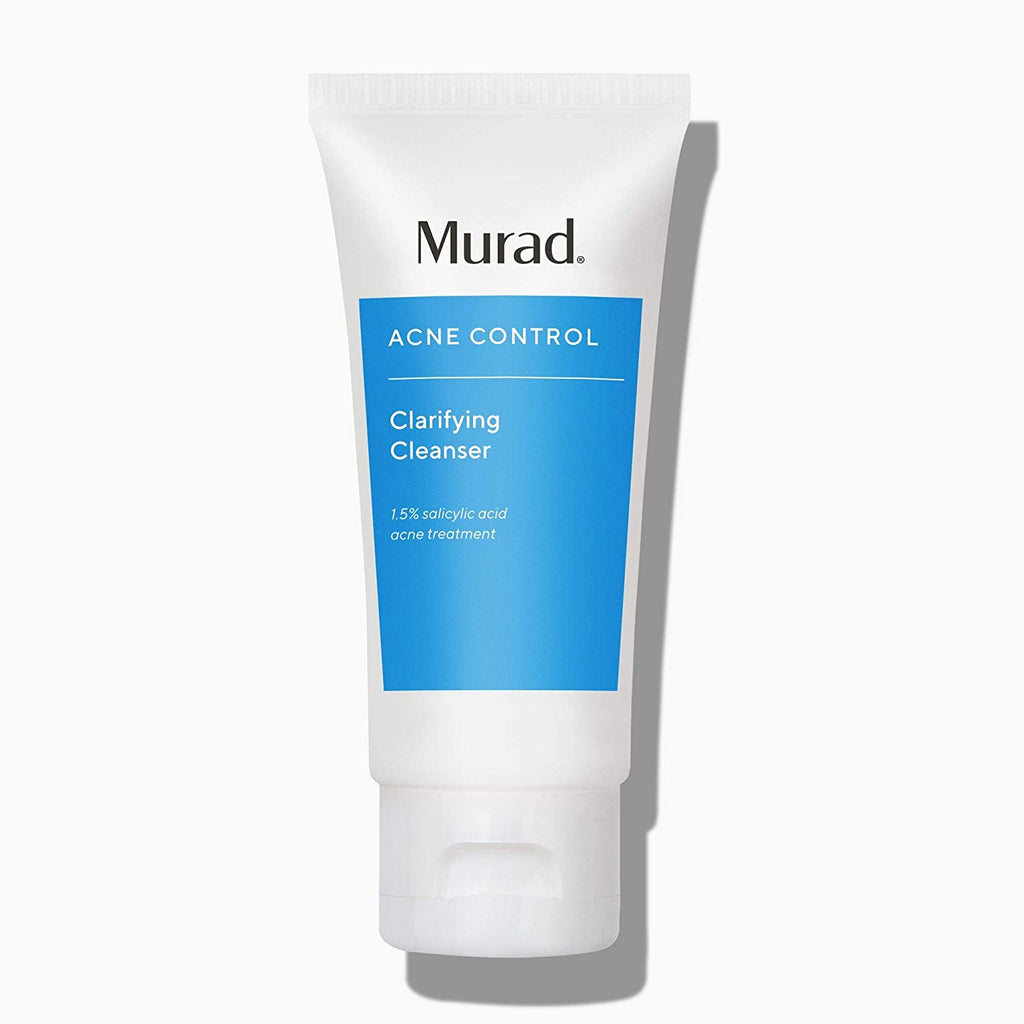

Murad Acne Control Clarifying Cleanser 16.9oz/500ml
Analysis updated August 2026 · How Scout scores
At a glance
Summary
This face wash contains beneficial ingredients like urea, yeast amino acids, and green tea extract, which provide moisturizing and antioxidant benefits. However, the presence of synthetic fragrance, which can cause skin irritation and allergic reactions, detracts from its overall safety profile. Additionally, the inclusion of PEG compounds and other synthetic ingredients indicates a moderate level of processing, which affects the overall rating.
Key ingredients 38
Camellia Oleifera Leaf ExtractVery Good
Camellia Oleifera Leaf Extract, also known as green tea extract, is rich in antioxidants. It helps to protect the skin from environmental damage and reduce inflammation. It is highly beneficial for skin health.
Benefits
Offers strong antioxidant protection and reduces inflammation.
Prunus Armeniaca (Apricot) Kernel OilVery Good
Prunus Armeniaca (Apricot) Kernel Oil is used for its emollient and moisturizing properties. It helps to soften and hydrate the skin. It is highly beneficial for maintaining skin moisture and improving texture.
Benefits
Provides excellent emollient and moisturizing benefits.
UreaGood
Urea is a humectant that helps to retain moisture in the skin. It also has keratolytic properties, which help in exfoliating dead skin cells. It is generally well-tolerated and beneficial for dry skin.
Risks
High concentrations may cause irritation.
Benefits
Improves skin hydration and aids in exfoliation.
Yeast Amino AcidsGood
Yeast amino acids are used for their moisturizing and skin-conditioning properties. They help to improve the skin's barrier function. They are generally considered safe and beneficial for the skin.
Risks
Minimal risk of irritation.
Benefits
Enhances skin hydration and barrier function.
TrehaloseGood
Trehalose is a sugar that acts as a moisturizer and antioxidant. It helps to protect the skin from dehydration and environmental stress. It is well-tolerated and beneficial for maintaining skin moisture.
Benefits
Provides moisture and antioxidant protection to the skin.
InositolGood
Inositol is a carbohydrate that helps to improve skin hydration and elasticity. It is often used in skincare for its moisturizing properties. It is generally safe and beneficial for the skin.
Benefits
Enhances skin hydration and elasticity.
TaurineGood
Taurine is an amino acid that helps to protect the skin from oxidative stress. It also has moisturizing properties. It is considered safe and beneficial for skin health.
Benefits
Provides antioxidant protection and hydration to the skin.
BetaineGood
Betaine is a natural humectant that helps to retain moisture in the skin. It is derived from sugar beet and is known for its soothing properties. It is generally safe and beneficial for maintaining skin hydration.
Benefits
Improves skin hydration and soothes irritation.
Cimicifuga Racemosa Root ExtractGood
Cimicifuga Racemosa Root Extract is used for its anti-inflammatory and antioxidant properties. It helps to soothe and protect the skin. It is generally considered safe and beneficial for skin health.
Benefits
Provides anti-inflammatory and antioxidant benefits.
Citrus Reticulata (Tangerine) Leaf OilGood
Citrus Reticulata (Tangerine) Leaf Oil is used for its fragrance and potential antioxidant properties. It provides a refreshing scent and may help protect the skin from oxidative stress. It is generally considered safe and beneficial for skin health.
Risks
May cause irritation in sensitive skin.
Benefits
Offers a refreshing scent and antioxidant protection.
Cymbopogon Nardus (Citronella) OilGood
Cymbopogon Nardus (Citronella) Oil is used for its fragrance and potential insect-repelling properties. It provides a fresh scent and may help protect the skin from insect bites. It is generally considered safe and beneficial for skin health.
Risks
May cause irritation in sensitive skin.
Benefits
Offers a fresh scent and potential insect-repelling benefits.
Citrus Limon (Lemon) Peel OilGood
Citrus Limon (Lemon) Peel Oil is used for its fragrance and potential antioxidant properties. It provides a refreshing scent and may help protect the skin from oxidative stress. It is generally considered safe and beneficial for skin health.
Risks
May cause irritation in sensitive skin.
Benefits
Offers a refreshing scent and antioxidant protection.
Citrus Aurantifolia (Lime) OilGood
Citrus Aurantifolia (Lime) Oil is used for its fragrance and potential antioxidant properties. It provides a refreshing scent and may help protect the skin from oxidative stress. It is generally considered safe and beneficial for skin health.
Risks
May cause irritation in sensitive skin.
Benefits
Offers a refreshing scent and antioxidant protection.
Lavandula Hybrida OilGood
Lavandula Hybrida Oil is used for its fragrance and potential calming properties. It provides a soothing scent and may help reduce stress and anxiety. It is generally considered safe and beneficial for skin health.
Risks
May cause irritation in sensitive skin.
Benefits
Offers a soothing scent and calming benefits.
Citrus Nobilis (Mandarin Orange) Peel OilGood
Citrus Nobilis (Mandarin Orange) Peel Oil is used for its fragrance and potential antioxidant properties. It provides a refreshing scent and may help protect the skin from oxidative stress. It is generally considered safe and beneficial for skin health.
Risks
May cause irritation in sensitive skin.
Benefits
Offers a refreshing scent and antioxidant protection.
WaterNeutral
Water is a common solvent used in cosmetics to dissolve other ingredients. It helps in forming the base of the product. It does not have any direct benefits or risks.
Benefits
Provides a medium for other ingredients to be delivered to the skin.
Sodium C14-16 Olefin SulfonateNeutral
This is a surfactant used to help cleanse the skin by removing dirt and oils. It is considered less irritating than SLS. However, it can still cause dryness in sensitive skin.
Risks
Potential to cause dryness or irritation in sensitive skin.
Benefits
Effective in cleansing and removing oils from the skin.
Cocamidopropyl BetaineNeutral
Cocamidopropyl Betaine is a mild surfactant derived from coconut oil. It is used to reduce irritation caused by other surfactants. It can cause allergic reactions in some individuals.
Risks
May cause allergic reactions in sensitive individuals.
Benefits
Helps to create a rich lather and reduce irritation from other surfactants.
Methyl Gluceth-20Neutral
Methyl Gluceth-20 is a humectant and emollient used to improve skin hydration. It is derived from glucose and is considered safe for use in cosmetics. It does not have significant risks or benefits.
Benefits
Helps to improve skin hydration.
PPG-26-Buteth-26Neutral
PPG-26-Buteth-26 is a synthetic polymer used as an emollient and surfactant. It helps to improve the texture and feel of the product. It is generally considered safe with no significant risks or benefits.
Benefits
Improves product texture and feel.
PEG-40 Hydrogenated Castor OilNeutral
PEG-40 Hydrogenated Castor Oil is used as an emulsifier and surfactant. It helps to mix oil and water-based ingredients. It is generally considered safe but may cause irritation in sensitive skin.
Risks
Potential for irritation in sensitive skin.
Benefits
Helps to stabilize and emulsify formulations.
Butylene GlycolNeutral
Butylene Glycol is a common solvent and humectant used in cosmetics. It helps to improve the texture and moisture content of the skin. It is generally safe but may cause irritation in sensitive individuals.
Risks
May cause irritation in sensitive skin.
Benefits
Improves skin texture and hydration.
Silver CitrateNeutral
Silver Citrate is used for its antimicrobial properties. It helps to preserve the product and prevent bacterial growth. It is generally safe but may cause irritation in some individuals.
Risks
Potential for irritation in sensitive skin.
Benefits
Provides antimicrobial protection to the product.
PEG-150 DistearateNeutral
PEG-150 Distearate is used as an emulsifier and thickening agent. It helps to stabilize formulations and improve texture. It is generally considered safe with no significant risks or benefits.
Benefits
Stabilizes formulations and improves texture.
MentholNeutral
Menthol is used for its cooling and soothing properties. It provides a refreshing sensation on the skin. It may cause irritation in sensitive individuals.
Risks
May cause irritation or allergic reactions in sensitive skin.
Benefits
Provides a cooling and soothing effect on the skin.
Zea Mays (Corn) StarchNeutral
Zea Mays (Corn) Starch is used as an absorbent and thickening agent. It helps to improve the texture and feel of the product. It is generally considered safe with no significant risks or benefits.
Benefits
Improves product texture and absorbs excess oil.
Hydrolyzed Corn StarchNeutral
Hydrolyzed Corn Starch is used as a film-forming agent and moisturizer. It helps to improve skin texture and hydration. It is generally considered safe with no significant risks or benefits.
Benefits
Enhances skin texture and hydration.
Hydrolyzed Corn Starch OctenylsuccinateNeutral
Hydrolyzed Corn Starch Octenylsuccinate is used as an emulsifier and thickening agent. It helps to stabilize formulations and improve texture. It is generally considered safe with no significant risks or benefits.
Benefits
Stabilizes formulations and improves texture.
Glyceryl StearateNeutral
Glyceryl Stearate is used as an emulsifier and emollient. It helps to stabilize formulations and improve skin feel. It is generally considered safe with no significant risks or benefits.
Benefits
Stabilizes formulations and improves skin feel.
Cocamidopropyl DimethylamineNeutral
Cocamidopropyl Dimethylamine is used as a conditioning agent and surfactant. It helps to improve the texture and feel of the product. It is generally considered safe with no significant risks or benefits.
Benefits
Improves product texture and conditioning properties.
Citric AcidNeutral
Citric Acid is used to adjust the pH of cosmetic formulations. It helps to maintain the stability and effectiveness of the product. It is generally considered safe with no significant risks or benefits.
Benefits
Maintains product stability and effectiveness.
Caprylyl GlycolNeutral
Caprylyl Glycol is used as a humectant and skin conditioning agent. It helps to improve skin hydration and texture. It is generally considered safe with no significant risks or benefits.
Benefits
Enhances skin hydration and texture.
ChlorphenesinNeutral
Chlorphenesin is used as a preservative to prevent microbial growth. It helps to extend the shelf life of the product. It is generally considered safe but may cause irritation in sensitive skin.
Risks
May cause irritation in sensitive skin.
Benefits
Provides antimicrobial protection and extends shelf life.
Polysorbate 80Bad
Processed additive flagged under Scout's ingredient doctrine.
Benefits
Helps to stabilize and emulsify formulations.
Disodium EDTABad
Processed additive flagged under Scout's ingredient doctrine.
Benefits
Improves product stability and prevents degradation.
PhenoxyethanolBad
Processed additive flagged under Scout's ingredient doctrine.
Risks
May cause irritation in sensitive skin.
Benefits
Provides antimicrobial protection and extends shelf life.
LimoneneBad
Processed additive flagged under Scout's ingredient doctrine.
Risks
Potential for irritation or allergic reactions.
Benefits
Provides a pleasant citrus scent.
Fragrance (Parfum)Very Bad
Fragrance (Parfum) is used to provide a pleasant scent to the product. It is a common cause of allergic reactions and skin irritation. It is generally considered a negative ingredient due to potential sensitivity issues.
Risks
High potential for causing allergic reactions and skin irritation.
Benefits
Provides a pleasant scent to the product.
Processing
Processed Foods
Get the full breakdown in the Scout appTake Scout shopping
Scan any product to see lab results, healthy alternatives, and your personalized analysis.
Download on theApp Store GET IT ONGoogle PlayAmazon pricing & content
Amazon price as of . Product prices and availability are accurate as of the date/time indicated and are subject to change. Any price and availability information displayed on Amazon.com at the time of purchase will apply to the purchase of this product.
CERTAIN CONTENT THAT APPEARS ON THIS SITE COMES FROM AMAZON. THIS CONTENT IS PROVIDED “AS IS” AND IS SUBJECT TO CHANGE OR REMOVAL AT ANY TIME.