
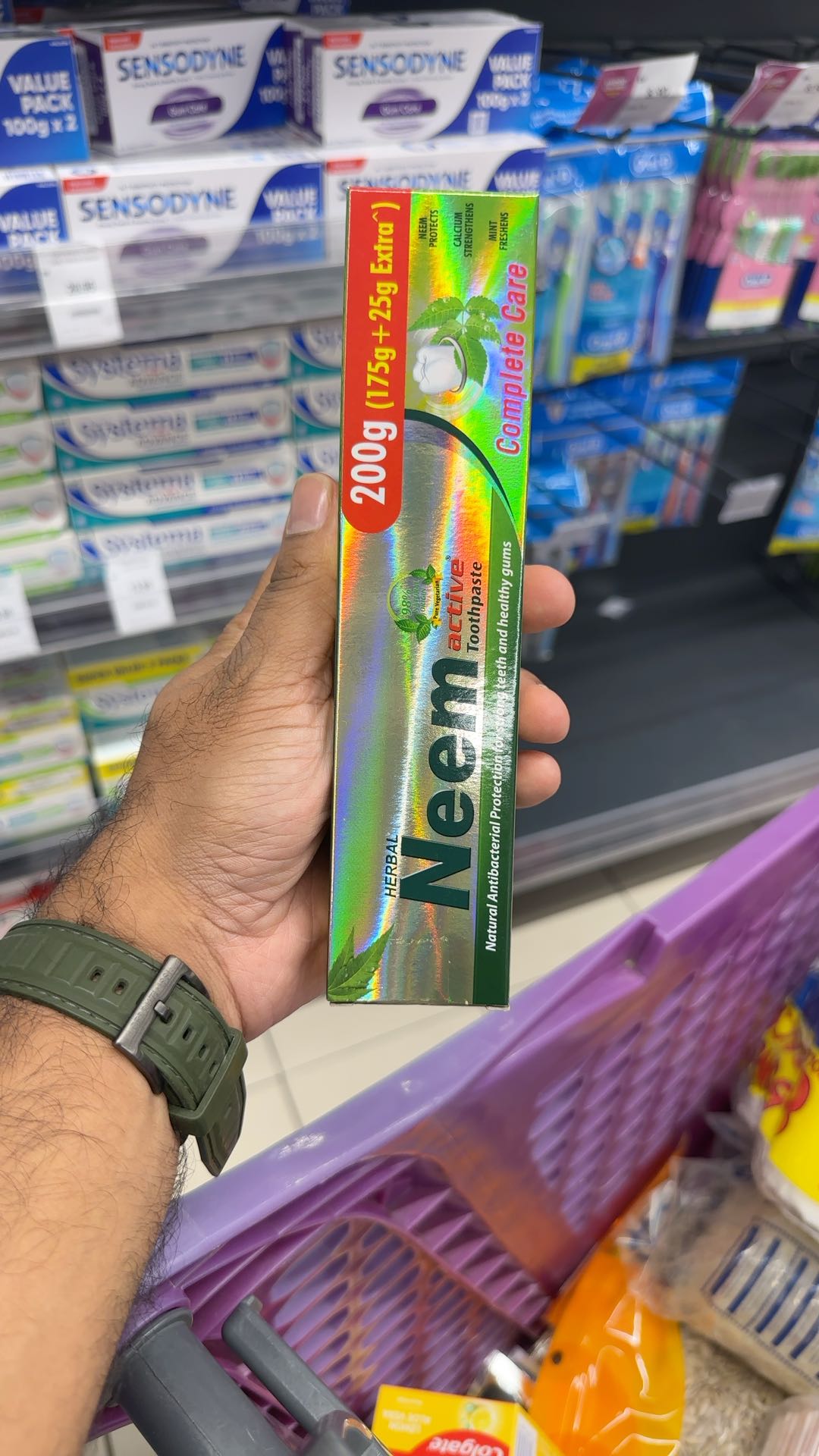


Neem Active Toothpaste 100 Grams Pack of 3
Analysis updated June 2026 · How Scout scores
At a glance
Summary
This toothpaste contains beneficial ingredients like neem and tea tree extracts, which are known for their antibacterial and antimicrobial properties, supporting oral health. However, the presence of sodium laurel sulfate, a synthetic surfactant, raises concerns due to its potential to cause irritation. The product is moderately processed, which impacts its overall rating.
Key ingredients 11
GlycerinGood
Beneficial ingredient — whole-food or functional value in this product class.
Benefits
It helps maintain moisture and prevents the toothpaste from drying out.
Neem ExtractGood
Neem extract is derived from the neem tree and is known for its antibacterial properties. It is minimally processed to retain its natural benefits. It is valued for its potential to support oral health by reducing bacteria.
Benefits
It has antibacterial properties that may help in maintaining oral hygiene.
Tea Tree ExtractGood
Tea tree extract is known for its antimicrobial properties and is used in toothpaste to support oral health. It is extracted from the leaves of the tea tree and is minimally processed. It may help reduce oral bacteria and improve gum health.
Benefits
It provides antimicrobial benefits that can support oral health.
Precipitated Calcium CarbonateNeutral
Precipitated calcium carbonate is used as an abrasive in toothpaste to help remove plaque. It is processed through precipitation to achieve a fine particle size suitable for dental care. This ingredient is generally considered safe and effective for its intended use.
Benefits
It helps in cleaning teeth by acting as a mild abrasive.
SorbitolNeutral
Sorbitol is a sugar alcohol used as a sweetener and humectant in toothpaste. It is synthetically produced and helps maintain moisture in the product. While it is generally safe, excessive ingestion can cause digestive issues.
Risks
Excessive ingestion may lead to digestive discomfort or laxative effects.
Benefits
It provides sweetness without contributing to tooth decay.
AquaNeutral
Aqua, or water, is used as a solvent in toothpaste formulations. The quality and purity of water are crucial to prevent contamination. It serves as a base for mixing other ingredients.
Benefits
It acts as a solvent and helps in the uniform distribution of ingredients.
Hydrated SilicaNeutral
Hydrated silica is used as an abrasive to aid in cleaning teeth. It is produced through a controlled chemical process to ensure safety and effectiveness. It is effective in removing surface stains without damaging enamel.
Benefits
It helps in polishing teeth and removing surface stains.
Sodium SilicateNeutral
Sodium silicate is used as a stabilizer and thickening agent in toothpaste. It is synthetically produced and helps maintain the consistency of the product. It is generally recognized as safe for use in oral care products.
Benefits
It helps in maintaining the stability and consistency of the toothpaste.
Sodium CarboxymethylcelluloseNeutral
Sodium carboxymethylcellulose is used as a thickening agent in toothpaste. It is synthetically derived from cellulose and helps maintain the product's texture. It is considered safe for use in oral care products.
Benefits
It helps in maintaining the desired consistency of the toothpaste.
Sodium Laurel SulfateBad
Sodium laurel sulfate is a surfactant used to create foam in toothpaste. It is synthetically produced and can cause irritation in some individuals. Its use is controversial due to potential mucosal irritation.
Risks
May cause irritation to the oral mucosa and is a known irritant for some individuals.
Benefits
It helps in dispersing toothpaste throughout the mouth for effective cleaning.
FlavorBad
Processed additive flagged under Scout's ingredient doctrine.
Benefits
Enhances the taste of toothpaste, encouraging regular use.
Processing
Processed Foods
Get the full breakdown in the Scout appTake Scout shopping
Scan any product to see lab results, healthy alternatives, and your personalized analysis.
Download on theApp Store GET IT ONGoogle PlayAmazon pricing & content
Amazon price as of . Product prices and availability are accurate as of the date/time indicated and are subject to change. Any price and availability information displayed on Amazon.com at the time of purchase will apply to the purchase of this product.
CERTAIN CONTENT THAT APPEARS ON THIS SITE COMES FROM AMAZON. THIS CONTENT IS PROVIDED “AS IS” AND IS SUBJECT TO CHANGE OR REMOVAL AT ANY TIME.