
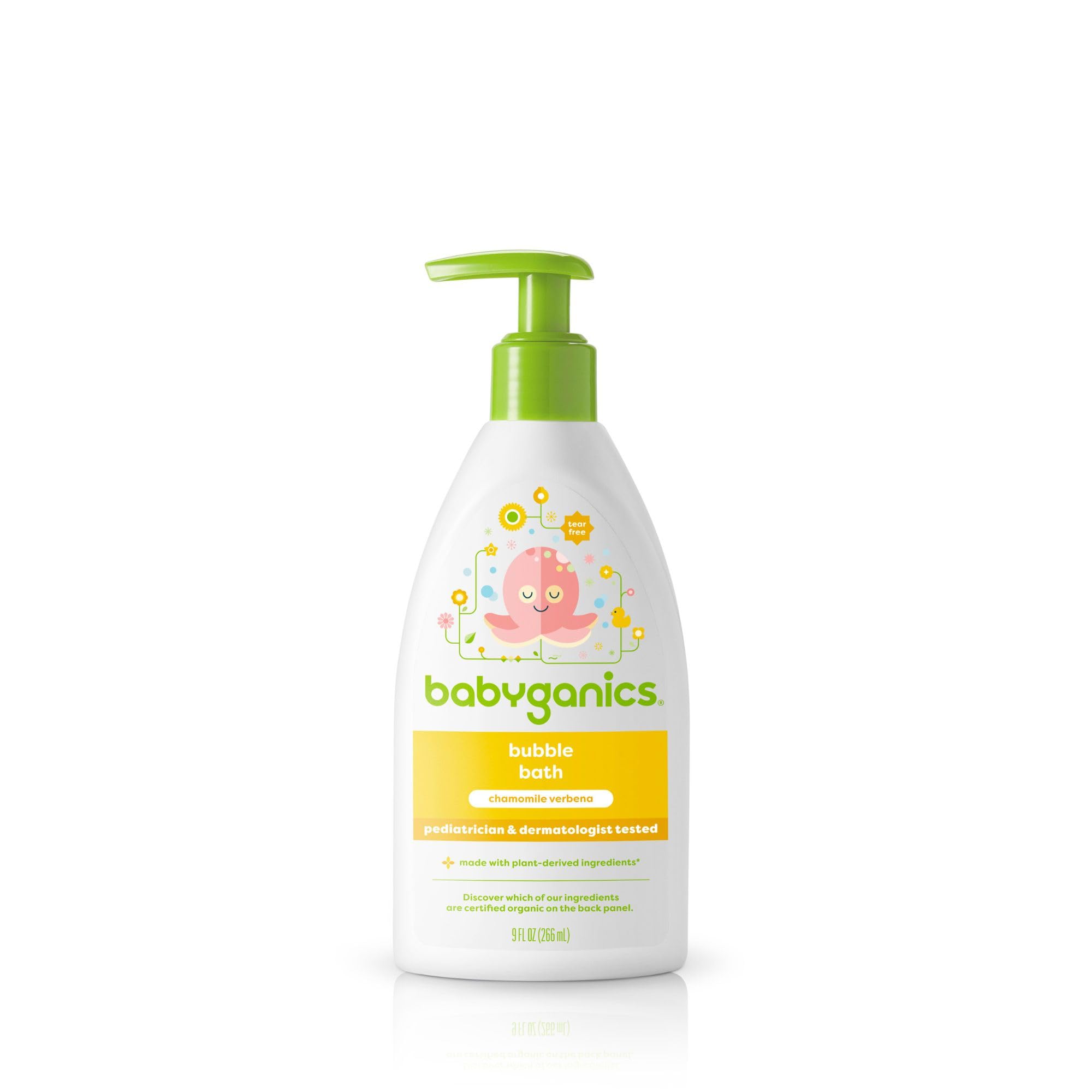

Babyganics Bubble Bath, Fragrance Free, 20oz, 2 Pack
Analysis updated August 2026 · How Scout scores
At a glance
Summary
This bubble bath product features a mix of gentle surfactants and natural seed oils, which are generally safe for skin contact. However, it contains phenoxyethanol and ethylhexylglycerin, which are preservatives that can be concerning for sensitive skin. The product is minimally processed, which is a positive aspect, but the presence of these preservatives prevents it from achieving a higher score.
Key ingredients 16
WaterNeutral
Water is a common solvent used in many personal care products. It acts as a base for dissolving other ingredients. It is generally considered safe and non-reactive.
Risks
There are no significant risks associated with water in personal care products.
Benefits
Water helps to dissolve and distribute other ingredients evenly.
Sodium Lauroyl Methyl IsethionateNeutral
Sodium Lauroyl Methyl Isethionate is a mild surfactant used for its cleansing properties. It is derived from coconut oil and is considered gentle on the skin. It is often used in products for sensitive skin.
Risks
There are minimal risks, though some individuals may experience mild irritation.
Benefits
It provides gentle cleansing without stripping the skin of natural oils.
Disodium CocoamphodiacetateNeutral
Disodium Cocoamphodiacetate is a mild surfactant and foam booster. It is derived from coconut oil and is used to enhance the texture of the product. It is generally considered safe for use in personal care products.
Risks
There is a low risk of skin irritation for sensitive individuals.
Benefits
It helps to create a rich lather and improve the feel of the product.
Coco GlucosideNeutral
Coco Glucoside is a non-ionic surfactant derived from coconut oil and glucose. It is used for its mild cleansing properties and is biodegradable. It is suitable for sensitive skin.
Risks
There are minimal risks associated with its use.
Benefits
It provides gentle cleansing and is environmentally friendly.
Lauryl GlucosideNeutral
Lauryl Glucoside is a mild surfactant derived from natural sources like coconut oil and sugar. It is used for its gentle cleansing properties. It is considered safe and non-irritating.
Risks
There are minimal risks, though it may cause mild irritation in some individuals.
Benefits
It is effective in cleansing while being gentle on the skin.
Capryl/Capramidopropyl BetaineNeutral
Capryl/Capramidopropyl Betaine is a mild surfactant used for its conditioning properties. It is derived from coconut oil and is used to improve the texture of the product. It is generally considered safe for use.
Risks
There is a low risk of skin irritation.
Benefits
It helps to condition the skin and improve product feel.
Solanum Lycopersicum (Tomato) Seed OilNeutral
Tomato Seed Oil is rich in antioxidants and fatty acids. It is used for its moisturizing properties. It is generally considered safe for topical use.
Risks
There are minimal risks, though allergic reactions are possible.
Benefits
It provides hydration and antioxidant benefits to the skin.
Helianthus Annuus (Sunflower) Seed OilNeutral
Sunflower Seed Oil is a natural oil rich in vitamins and fatty acids. It is used for its moisturizing and skin-conditioning properties. It is generally considered safe for use.
Risks
There are minimal risks, though it may cause allergic reactions in some individuals.
Benefits
It helps to moisturize and nourish the skin.
Vaccinium Macrocarpon (Cranberry) Seed OilNeutral
Cranberry Seed Oil is rich in antioxidants and essential fatty acids. It is used for its moisturizing and protective properties. It is generally considered safe for use.
Risks
There are minimal risks, though allergic reactions are possible.
Benefits
It provides antioxidant protection and hydration to the skin.
Nigella Sativa (Black Cumin) Seed OilNeutral
Black Cumin Seed Oil is known for its anti-inflammatory and antioxidant properties. It is used for its skin-soothing benefits. It is generally considered safe for topical use.
Risks
There are minimal risks, though allergic reactions are possible.
Benefits
It helps to soothe and protect the skin.
Rubus Idaeus (Red Raspberry) Seed OilNeutral
Red Raspberry Seed Oil is rich in antioxidants and essential fatty acids. It is used for its moisturizing and protective properties. It is generally considered safe for use.
Risks
There are minimal risks, though allergic reactions are possible.
Benefits
It provides hydration and antioxidant protection to the skin.
Citric AcidNeutral
Citric Acid is used to adjust the pH of products and as a preservative. It is naturally found in citrus fruits. It is generally considered safe for use in personal care products.
Risks
There is a low risk of skin irritation, especially in sensitive individuals.
Benefits
It helps to maintain the stability and effectiveness of the product.
EthylhexylglycerinNeutral
Ethylhexylglycerin is used as a skin-conditioning agent and preservative enhancer. It is considered safe for use in personal care products. It is often used in combination with other preservatives.
Risks
There is a low risk of skin irritation.
Benefits
It enhances the effectiveness of preservatives and conditions the skin.
Trisodium Ethylenediamine DisuccinateNeutral
Trisodium Ethylenediamine Disuccinate is a chelating agent used to improve product stability. It is considered safe for use in personal care products. It helps to bind metal ions and prevent discoloration.
Risks
There are minimal risks associated with its use.
Benefits
It enhances the stability and appearance of the product.
PhenoxyethanolBad
Processed additive flagged under Scout's ingredient doctrine.
Risks
There is a low risk of skin irritation and allergic reactions.
Benefits
It helps to preserve the product and extend its shelf life.
Sodium BenzoateBad
Synthetic preservative that can form benzene in the presence of vitamin C.
Risks
There is a low risk of skin irritation and allergic reactions.
Benefits
It helps to preserve the product and extend its shelf life.
Get the full breakdown in the Scout appTake Scout shopping
Scan any product to see lab results, healthy alternatives, and your personalized analysis.
Download on theApp Store GET IT ONGoogle Play