
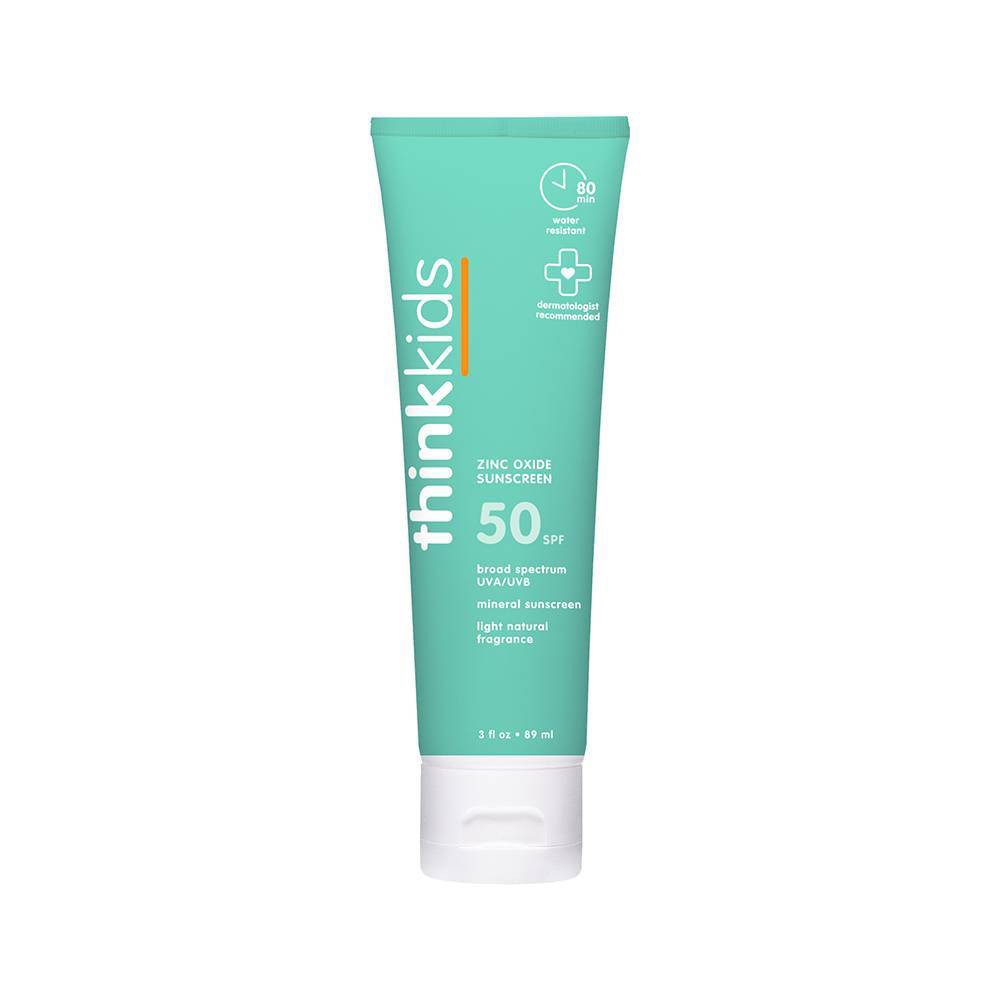
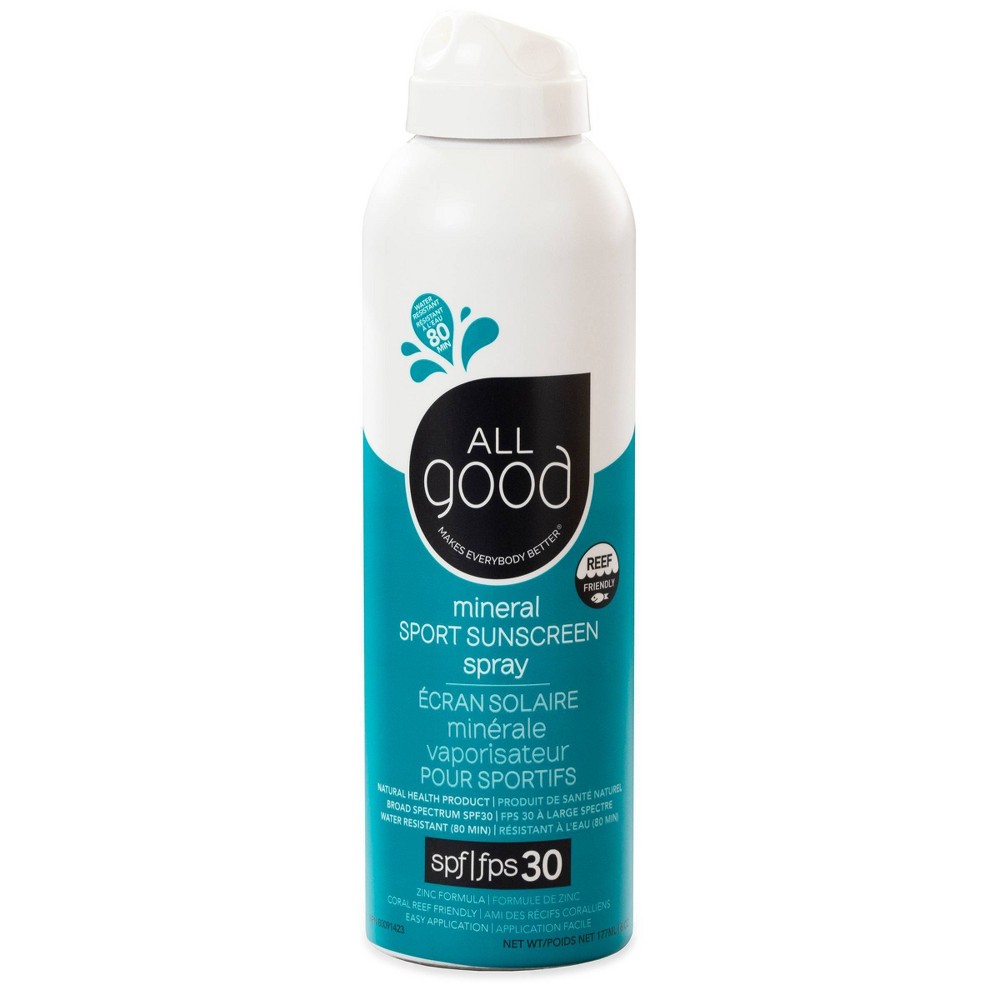
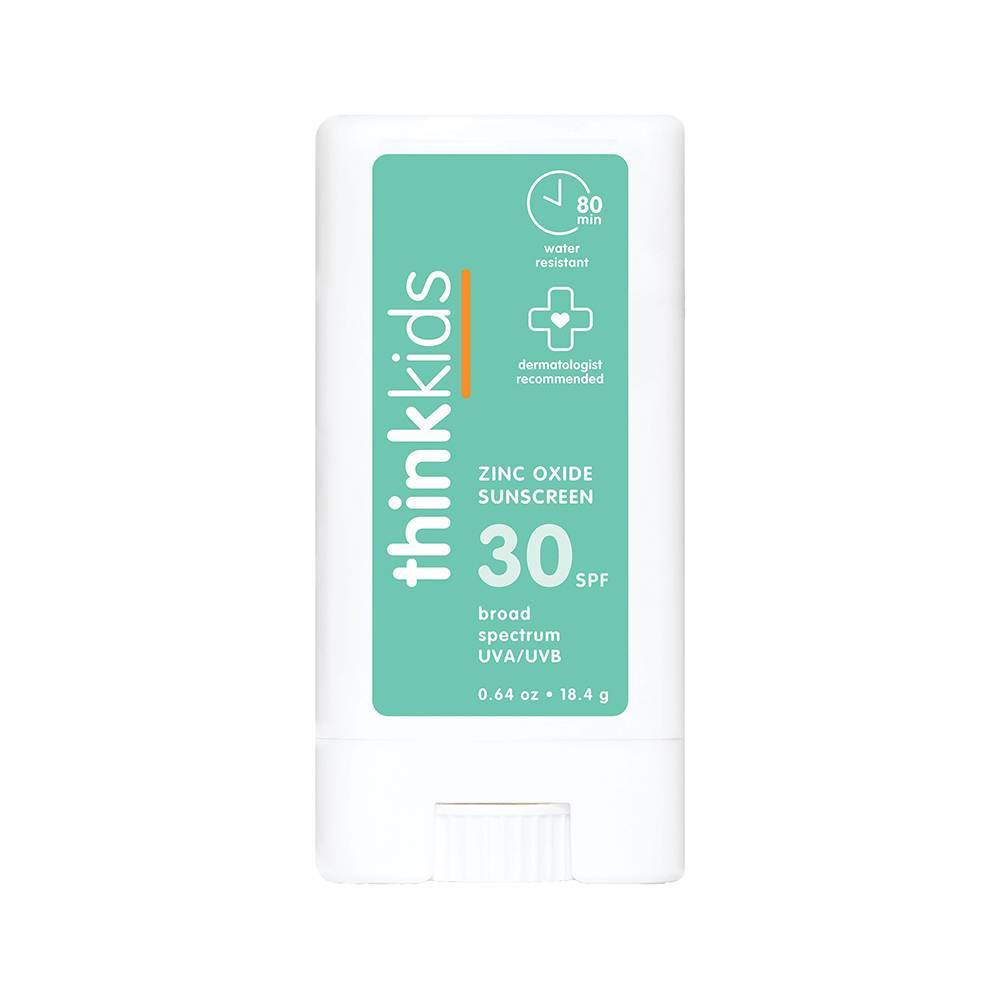
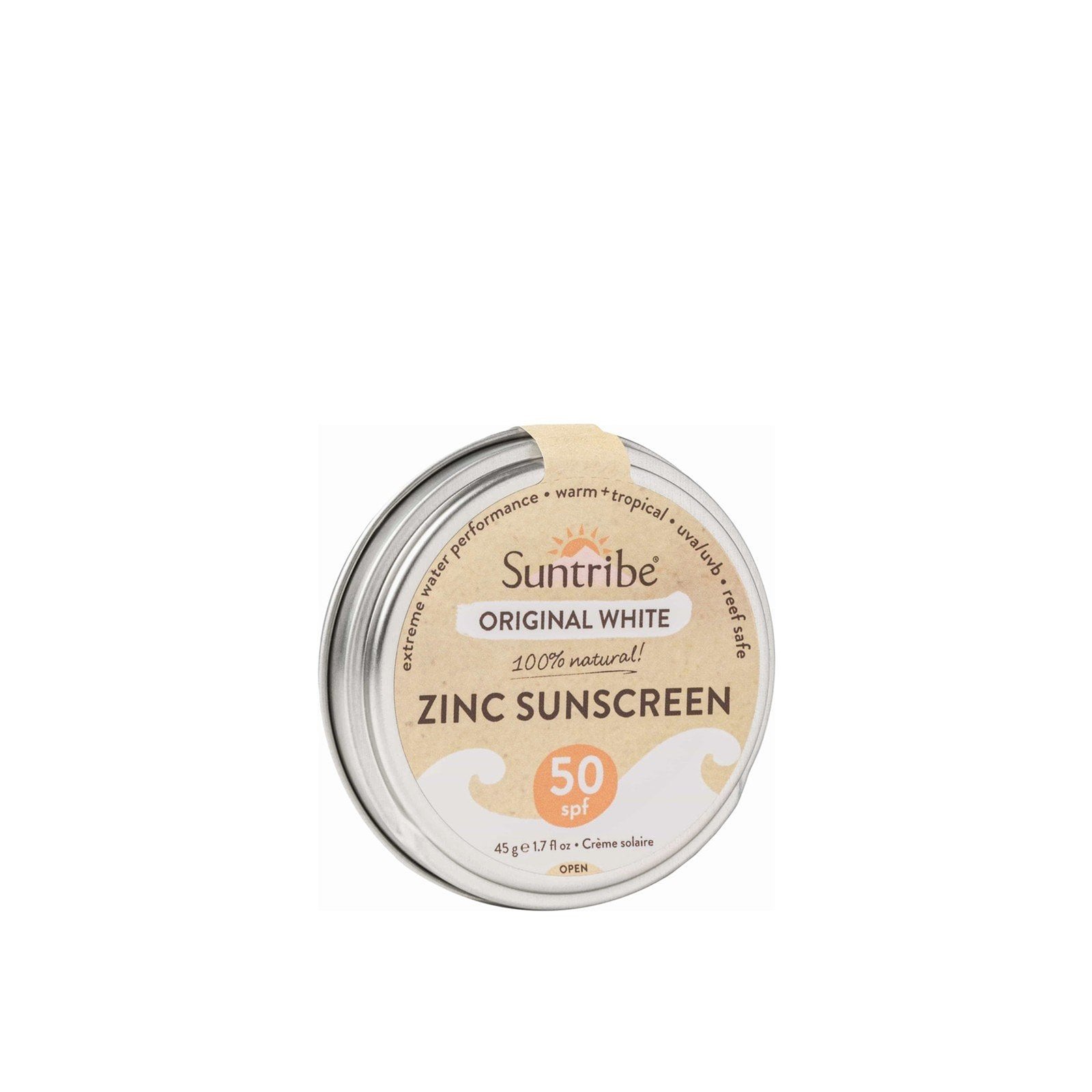
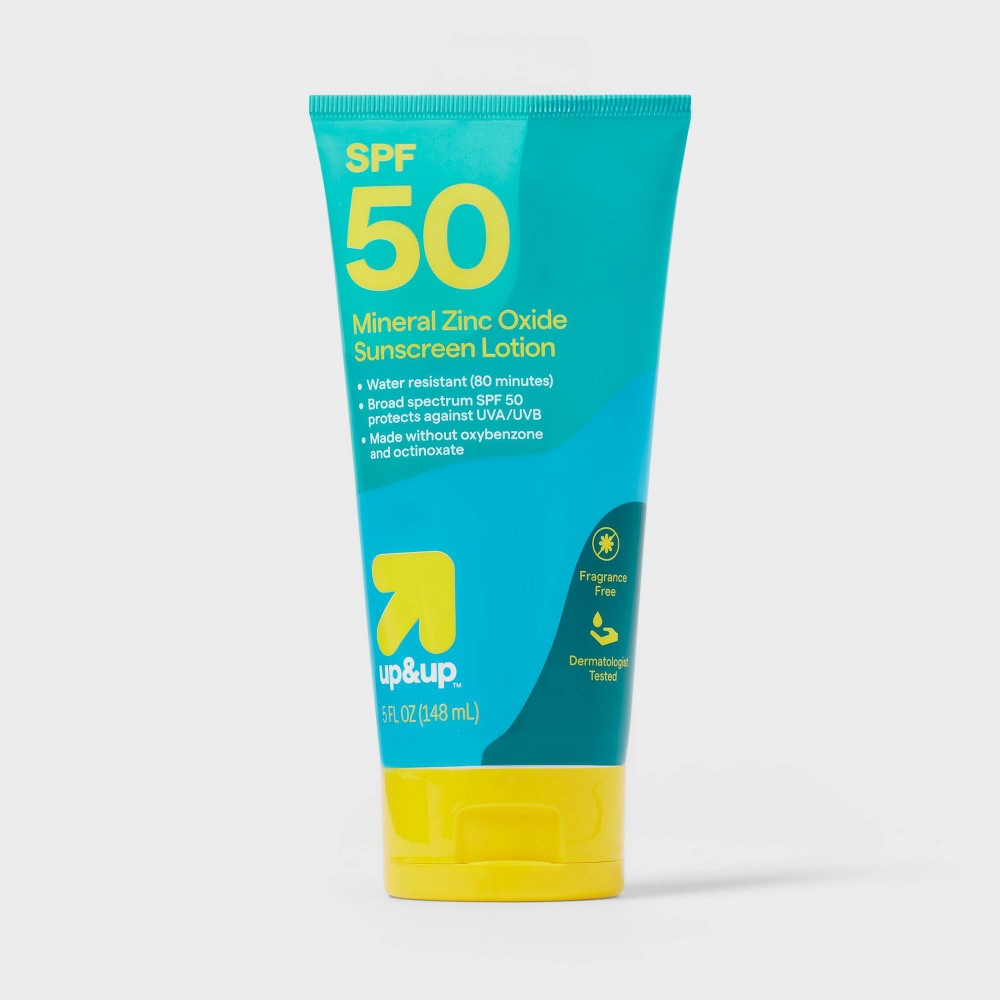
thinkkids Mineral Sunscreen with Non-Nano Zinc OxideUVA/UV, B Protection - Water Resistant - SPF 50 - 3 fl oz
Analysis updated August 2026 · How Scout scores
At a glance
Summary
This mineral sunscreen features non-nano zinc oxide as its active ingredient, providing effective broad-spectrum UV protection without the risks associated with chemical filters. The formulation includes beneficial natural oils and skin-friendly ingredients like glycerin and sodium hyaluronate, which enhance hydration and skin health. However, the presence of natural fragrance oil, which can cause irritation for some users, slightly detracts from its overall safety profile.
Key ingredients 24
TocopherolVery Good
Tocopherol, also known as Vitamin E, is an antioxidant that helps to protect the skin from free radical damage. It is widely used in skincare products for its protective and moisturizing properties. It is suitable for all skin types.
Risks
There are minimal risks, though high concentrations may cause irritation in sensitive individuals.
Benefits
It helps to protect the skin from environmental damage and supports skin health.
Helianthus Annuus (Sunflower) Seed OilVery Good
Sunflower Seed Oil is a natural oil rich in essential fatty acids and Vitamin E. It is used for its moisturizing and skin-conditioning properties. It is non-comedogenic and suitable for all skin types.
Risks
There are minimal risks, though it may cause allergic reactions in individuals with sunflower allergies.
Benefits
It helps to nourish and protect the skin, improving its overall health and appearance.
Simmondsia Chinensis (Jojoba) Seed OilVery Good
Jojoba Oil is a natural oil that closely resembles the skin's natural sebum. It is used for its moisturizing and balancing properties. It is non-comedogenic and suitable for all skin types.
Risks
There are minimal risks, though it may cause allergic reactions in sensitive individuals.
Benefits
It helps to balance oil production and provides long-lasting hydration.
Olea Europaea (Olive) Fruit OilVery Good
Olive Fruit Oil is a natural oil rich in antioxidants and essential fatty acids. It is used for its moisturizing and nourishing properties. It is suitable for dry and sensitive skin types.
Risks
There are minimal risks, though it may cause allergic reactions in individuals with olive allergies.
Benefits
It helps to hydrate and protect the skin, improving its texture and appearance.
Vaccinium Macrocarpon (Cranberry) Seed OilVery Good
Cranberry Seed Oil is rich in antioxidants and essential fatty acids. It is used for its moisturizing and protective properties. It is suitable for all skin types and helps to improve skin health.
Risks
There are minimal risks, though it may cause allergic reactions in sensitive individuals.
Benefits
It helps to nourish and protect the skin, providing antioxidant benefits.
Rubus Idaeus (Raspberry) Seed OilVery Good
Raspberry Seed Oil is a natural oil rich in antioxidants and essential fatty acids. It is used for its moisturizing and protective properties. It is suitable for all skin types and helps to improve skin elasticity.
Risks
There are minimal risks, though it may cause allergic reactions in sensitive individuals.
Benefits
It provides hydration and protection, supporting overall skin health.
Zinc OxideGood
Zinc Oxide is a mineral sunscreen agent that provides broad-spectrum UV protection. It is non-nano, which reduces the risk of skin penetration and environmental harm. It is considered safe and effective for sensitive skin.
Risks
There are minimal risks associated with Zinc Oxide, primarily related to potential white cast on the skin.
Benefits
It offers excellent protection against both UVA and UVB rays and is suitable for sensitive skin.
Caprylic/Capric TriglycerideGood
Caprylic/Capric Triglyceride is derived from coconut oil and glycerin. It is used as an emollient and helps to improve the spreadability of the product. It is lightweight and non-greasy, making it suitable for all skin types.
Risks
There are minimal risks, though some individuals may experience mild irritation.
Benefits
It provides a silky feel and helps to moisturize and soften the skin.
GlycerinGood
Glycerin is a humectant that attracts moisture to the skin. It is widely used in skincare products for its hydrating properties. It is non-irritating and suitable for all skin types.
Risks
There are minimal risks, though excessive use may lead to a sticky feel.
Benefits
It helps to maintain skin hydration and improve skin barrier function.
Sodium HyaluronateGood
Sodium Hyaluronate is a form of hyaluronic acid that is used for its hydrating properties. It can hold up to 1000 times its weight in water, making it an excellent moisturizer. It is suitable for all skin types and helps to improve skin elasticity.
Risks
There are minimal risks, though some individuals may experience mild irritation.
Benefits
It provides deep hydration and helps to plump and smooth the skin.
Carica Papaya (Papaya) Fruit ExtractGood
Papaya Fruit Extract is used for its exfoliating and brightening properties. It contains enzymes that help to gently remove dead skin cells. It is suitable for most skin types and helps to improve skin texture.
Risks
There is a risk of irritation, especially for sensitive skin types.
Benefits
It helps to brighten the skin and improve its texture and tone.
Purified WaterNeutral
Purified Water is used as a solvent in cosmetic formulations. It helps to dissolve other ingredients and provides a base for the product. It is generally considered safe and non-irritating.
Risks
There are no significant risks associated with Purified Water.
Benefits
It acts as a carrier for active ingredients and hydrates the skin.
Polyglyceryl-4 IsostearateNeutral
Polyglyceryl-4 Isostearate is an emulsifier that helps to blend oil and water-based ingredients. It is derived from natural sources and is considered safe for use in cosmetics. It helps to stabilize formulations.
Risks
There are no significant risks associated with this ingredient.
Benefits
It improves the texture and consistency of the product.
Hydrogenated Glyceryl AbietateNeutral
Hydrogenated Glyceryl Abietate is used as a film-forming agent in cosmetics. It helps to improve the water resistance of the product. It is generally considered safe for use.
Risks
There are no significant risks associated with this ingredient.
Benefits
It enhances the longevity and water resistance of the sunscreen.
Hexyl LaurateNeutral
Hexyl Laurate is an ester used as an emollient and skin conditioning agent. It helps to improve the texture and feel of the product. It is considered safe for use in cosmetics.
Risks
There are minimal risks, though it may cause mild irritation in sensitive individuals.
Benefits
It provides a smooth application and enhances the sensory experience of the product.
Cetyl DimethiconeNeutral
Cetyl Dimethicone is a silicone-based ingredient used to improve the spreadability of products. It provides a silky, smooth feel and enhances the product's texture. It is considered safe for use in cosmetics.
Risks
There are minimal risks, though some individuals may experience mild irritation.
Benefits
It improves the application and feel of the product on the skin.
Sorbitan SesquioleateNeutral
Sorbitan Sesquioleate is an emulsifier that helps to stabilize formulations. It is derived from sorbitol and oleic acid and is considered safe for use in cosmetics. It helps to blend oil and water-based ingredients.
Risks
There are no significant risks associated with this ingredient.
Benefits
It improves the stability and consistency of the product.
Magnesium SulfateNeutral
Magnesium Sulfate is used as a thickening agent in cosmetics. It helps to improve the texture and consistency of the product. It is generally considered safe for use.
Risks
There are no significant risks associated with this ingredient.
Benefits
It enhances the texture and stability of the formulation.
Citrus Paradisi (Grapefruit) Peel OilNeutral
Grapefruit Peel Oil is used for its fragrance and potential antioxidant properties. It is derived from the peel of grapefruits and is considered safe for use in cosmetics. It provides a refreshing scent to the product.
Risks
There is a risk of photosensitivity, especially in high concentrations.
Benefits
It offers a pleasant fragrance and may provide antioxidant benefits.
Hydrogenated Castor OilNeutral
Hydrogenated Castor Oil is used as an emollient and thickening agent in cosmetics. It helps to improve the texture and consistency of the product. It is considered safe for use in cosmetics.
Risks
There are minimal risks, though it may cause mild irritation in sensitive individuals.
Benefits
It provides a smooth application and enhances the product's texture.
Caprylhydroxamic AcidNeutral
Caprylhydroxamic Acid is used as a preservative in cosmetics. It helps to prevent microbial growth and extend the shelf life of the product. It is considered safe for use in cosmetics.
Risks
There are minimal risks, though it may cause mild irritation in sensitive individuals.
Benefits
It helps to maintain the product's stability and safety.
TriethoxycaprylylsilaneNeutral
Triethoxycaprylylsilane is used as a surface modifier in cosmetics. It helps to improve the dispersion of pigments and enhance the product's texture. It is considered safe for use in cosmetics.
Risks
There are minimal risks, though it may cause mild irritation in sensitive individuals.
Benefits
It improves the application and feel of the product on the skin.
Glyceryl CaprylateNeutral
Glyceryl Caprylate is used as an emollient and co-emulsifier in cosmetics. It helps to improve the texture and stability of the product. It is considered safe for use in cosmetics.
Risks
There are minimal risks, though it may cause mild irritation in sensitive individuals.
Benefits
It enhances the product's texture and provides a smooth application.
Natural Fragrance OilBad
Natural Fragrance Oil is used to provide scent to cosmetic products. While derived from natural sources, fragrances can still cause irritation and allergic reactions. It is important to use them in moderation to minimize potential risks.
Risks
There is a risk of skin irritation and allergic reactions, especially for sensitive individuals.
Benefits
It provides a pleasant scent to the product, enhancing the user experience.
Get the full breakdown in the Scout appTake Scout shopping
Scan any product to see lab results, healthy alternatives, and your personalized analysis.
Download on theApp Store GET IT ONGoogle PlayAmazon pricing & content
Amazon price as of . Product prices and availability are accurate as of the date/time indicated and are subject to change. Any price and availability information displayed on Amazon.com at the time of purchase will apply to the purchase of this product.
CERTAIN CONTENT THAT APPEARS ON THIS SITE COMES FROM AMAZON. THIS CONTENT IS PROVIDED “AS IS” AND IS SUBJECT TO CHANGE OR REMOVAL AT ANY TIME.