Glow Lab Coconut & Sandalwood Body Wash 900mL
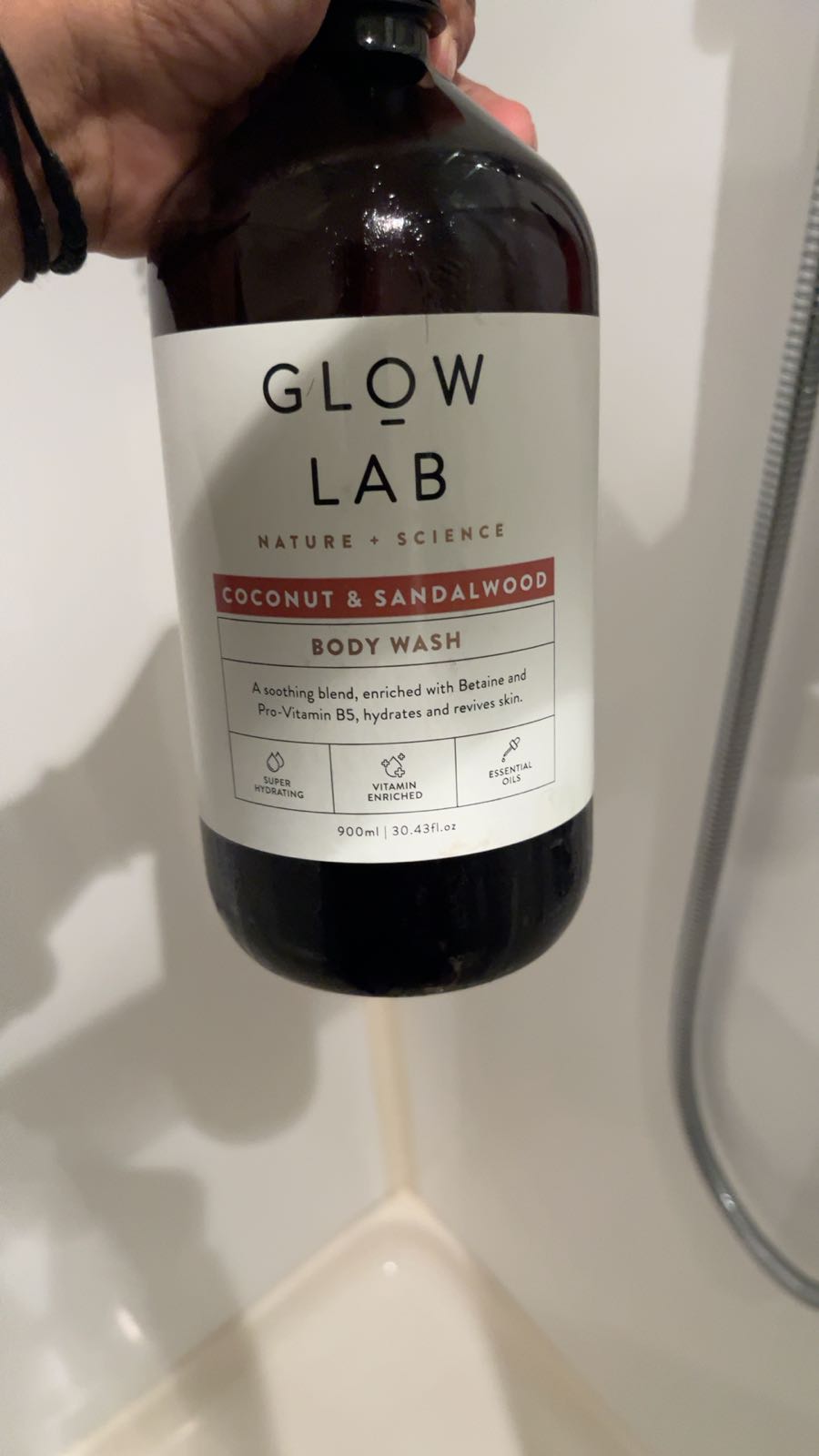
At a glance
Summary
This body wash contains beneficial ingredients such as shea butter, argan oil, and vitamins B5 and E, which provide moisturizing and antioxidant benefits. However, the presence of Sodium Lauryl Ether Sulfate, a surfactant with potential skin irritation and contamination risks, along with undisclosed fragrance components, lowers its overall safety profile. The product balances between natural and synthetic elements, resulting in a moderate processing level.
Key ingredients 19
Butyrospermum Parkii (Shea) ButterVery Good
Shea Butter is a natural fat extracted from the nuts of the shea tree, known for its moisturizing and anti-inflammatory properties. It helps to nourish and protect the skin, making it soft and supple. It is highly beneficial for dry and sensitive skin.
Risks
Generally safe, but may cause allergic reactions in individuals with nut allergies.
Benefits
Deeply moisturizes and nourishes the skin, providing anti-inflammatory benefits.
Argania Spinosa Kernel (Argan) OilVery Good
Argan Oil is a natural oil rich in essential fatty acids and vitamin E, known for its moisturizing and antioxidant properties. It helps to hydrate and protect the skin from environmental damage. It is beneficial for all skin types, especially dry and mature skin.
Risks
Generally considered safe with minimal risk of irritation.
Benefits
Moisturizes and protects the skin, providing antioxidant benefits.
Panthenol (Vitamin B5)Very Good
Panthenol is a form of Vitamin B5, known for its moisturizing and healing properties. It helps to improve skin hydration, elasticity, and smoothness. It is beneficial for all skin types and promotes skin barrier repair.
Risks
Generally considered safe with minimal risk of irritation.
Benefits
Enhances skin hydration and promotes healing and barrier repair.
Caprylyl/Capryl GlucosideGood
Caprylyl/Capryl Glucoside is a mild, non-ionic surfactant derived from sugar and fatty alcohols. It is biodegradable and gentle on the skin, making it suitable for sensitive skin types. It enhances the cleansing ability of the product without causing irritation.
Risks
Generally considered safe with minimal risk of irritation.
Benefits
Provides gentle cleansing and is environmentally friendly.
Coco-GlucosideGood
Coco-Glucoside is a mild, non-ionic surfactant derived from coconut oil and glucose. It is gentle on the skin and helps to stabilize foam. It is suitable for sensitive skin and is biodegradable.
Risks
Low risk of irritation, generally considered safe.
Benefits
Provides gentle cleansing and is environmentally friendly.
Glyceryl Oleate (Plant-Based Surfactants)Good
Glyceryl Oleate is an emulsifier and surfactant derived from natural oils. It helps to condition and soften the skin, enhancing the moisturizing properties of the product. It is considered safe and beneficial for skin health.
Risks
Minimal risk of irritation, generally safe for use.
Benefits
Conditions and softens the skin, enhancing moisture retention.
Betaine (Sugar Beet Extract)Good
Betaine is a natural humectant derived from sugar beets, known for its moisturizing properties. It helps to maintain skin hydration and improve skin texture. It is considered safe and beneficial for all skin types.
Risks
Generally considered safe with minimal risk of irritation.
Benefits
Enhances skin hydration and improves texture.
Tocopheryl Acetate (Vitamin E)Good
Tocopheryl Acetate is a stable form of Vitamin E, known for its antioxidant properties. It helps to protect the skin from free radical damage and improve skin texture. It is beneficial for maintaining healthy skin and preventing premature aging.
Risks
Generally considered safe with minimal risk of irritation.
Benefits
Provides antioxidant protection and improves skin texture.
Water (Aqua)Neutral
Water is a universal solvent and is used as a base in many cosmetic formulations. It helps dissolve other ingredients and provides a medium for them to function. It does not have any direct benefits or risks in this context.
Risks
There are no direct risks associated with water in cosmetic formulations.
Benefits
Water helps in dissolving and distributing other ingredients evenly.
Cocamidopropyl BetaineNeutral
Cocamidopropyl Betaine is a mild surfactant derived from coconut oil, used to enhance foam and reduce irritation from other surfactants. It is generally considered safe but can cause allergic reactions in some individuals. It balances the harshness of primary surfactants.
Risks
Potential for skin irritation or allergic reactions in sensitive individuals.
Benefits
It helps to create a rich lather and reduces irritation from harsher surfactants.
Sodium Methyl Palmitate SulfonateNeutral
Sodium Methyl Palmitate Sulfonate is a surfactant used for its cleansing properties. It is considered milder than traditional sulfates. It helps in removing dirt and oil from the skin.
Risks
May cause mild irritation in sensitive skin types.
Benefits
Provides effective cleansing with less irritation compared to harsher sulfates.
Sodium SulfateNeutral
Sodium Sulfate is used as a filler and thickening agent in cosmetic formulations. It helps to improve the texture and consistency of the product. It does not have significant benefits or risks in this context.
Risks
Generally considered safe with minimal risk of irritation.
Benefits
Improves product texture and consistency.
Sodium PhytateNeutral
Sodium Phytate is a chelating agent used to stabilize cosmetic formulations. It helps to prevent the degradation of the product by binding metal ions. It does not have direct benefits or risks for the skin.
Risks
Generally considered safe with minimal risk of irritation.
Benefits
Stabilizes the formulation by binding metal ions.
Dehydroacetic AcidNeutral
Dehydroacetic Acid is a preservative used to inhibit the growth of microorganisms in cosmetic products. It helps to ensure product safety and extend shelf life. It is generally considered safe but can cause irritation in sensitive individuals.
Risks
May cause irritation in sensitive skin types.
Benefits
Inhibits microbial growth, ensuring product safety.
Citric AcidNeutral
Citric Acid is used to adjust the pH of cosmetic formulations. It helps to maintain the stability and effectiveness of the product. It is generally considered safe but can cause irritation in sensitive individuals.
Risks
May cause irritation in sensitive skin types.
Benefits
Adjusts pH to maintain product stability and effectiveness.
Sodium Lauryl Ether SulfateBad
Sodium Lauryl Ether Sulfate (SLES) is a surfactant used for its cleansing and foaming properties. It is milder than Sodium Lauryl Sulfate but can still cause skin irritation and dryness. There is also a risk of contamination with 1,4-dioxane, a potential carcinogen.
Risks
SLES can strip natural oils from the skin, leading to dryness and irritation.
Benefits
It effectively cleanses the skin by removing dirt and oil.
Sodium BenzoateBad
Synthetic preservative that can form benzene in the presence of vitamin C.
Risks
May cause irritation in sensitive skin types.
Benefits
Prevents microbial growth, ensuring product safety.
Benzyl AlcoholBad
Processed additive flagged under Scout's ingredient doctrine.
Risks
May cause irritation in sensitive skin types.
Benefits
Maintains product stability and prevents microbial contamination.
Fragrance (Essential Oil Blend)Very Bad
Fragrance in cosmetics can cause allergic reactions and skin irritation, especially in sensitive individuals. It is often a blend of various chemicals, some of which may be harmful. The exact composition is usually undisclosed, making it difficult to assess safety.
Risks
Potential for allergic reactions and skin irritation.
Benefits
Provides a pleasant scent to the product.
Processing
Processed Foods
Get the full breakdown in the Scout appTake Scout shopping
Scan any product to see lab results, healthy alternatives, and your personalized analysis.
Are you Glow Lab? Fix an error Get the badge Get tested