


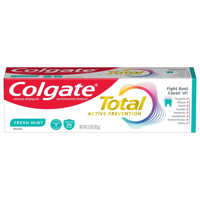
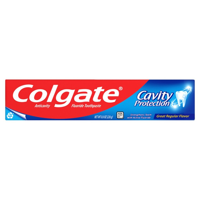

Colgate Kids Anticavity Fluoride Toothpaste Watermelon Burst Liquid Gel
At a glance
Summary
Colgate Kids Watermelon Burst Liquid Gel scores 20/100. Marketed for ages 2+, but Lead Safe Mama (Feb 2025) detected 302 ppb lead and 10 ppb arsenic in a kids' product toddlers routinely swallow. Stacks fluoride neurotoxicity with SLS, PEG-12, saccharin, and TWO synthetic petroleum dyes (FD&C Blue 1 + Yellow 5 — the latter EU hyperactivity-warning labeled). Owned by Colgate-Palmolive Company.
Contaminants 4
Source: Lead Safe Mama 2025
Lead 302 ppb High
Detected at a high level — at or above health-based exposure limits. Regular exposure at this level is a genuine health concern. No safe level of lead exposure exists per CDC, AAP, and WHO; chronic ingestion is associated with lowered IQ, neurodevelopmental harm, and cardiovascular and kidney effects. Children swallow a meaningful fraction of every brushing. Suspected source: hydrated silica abrasive feedstock.
Lead Safe Mama 3rd-party lab testing (SGS North America, Feb 2025, AOAC 2015.01) detected 302 ppb lead in a toothpaste explicitly marketed to children ages 2+.
Arsenic 10 ppb Low
A low level of arsenic — present but modest; a sourcing-quality note rather than a safety concern at typical intake.
Lead Safe Mama 3rd-party lab testing (Feb 2025) detected 10 ppb arsenic — at the threshold the medical community uses for cosmetics.
Mercury <5 ppb Not detected
Not detected — below the laboratory's detection limit. This is the strictest possible result: no measurable amount was found.
Lead Safe Mama 2025 lab testing reported mercury below the 5 ppb low threshold of detection — no mercury measurable in this product.
Cadmium <5 ppb Not detected
Not detected — below the laboratory's detection limit. This is the strictest possible result: no measurable amount was found.
Lead Safe Mama 2025 lab testing reported cadmium below the 5 ppb low threshold of detection — no cadmium measurable in this product.
Key ingredients 14
Sodium Fluoride 0.24%Very Bad
Active anticavity ingredient (0.15% w/v fluoride ion). Classified by The Lancet (2014) as a developmental neurotoxicant; chronic ingestion linked to dental fluorosis, lowered IQ in children (NTP 2024 monograph), and thyroid suppression. Particularly concerning in a kids' product designed to be swallowed accidentally.
See more about Sodium Fluoride 0.24% →Sodium Lauryl SulfateVery Bad
Harsh anionic surfactant responsible for the foaming action. Documented trigger for recurrent aphthous (canker) ulcers in clinical studies (Herlofson & Barkvoll 1996, Healy et al. 1999); strips the protective oral mucin layer; common contact irritant. Cleaner toothpastes use coconut-derived alternatives.
See more about Sodium Lauryl Sulfate →FD&C Blue No. 1Very Bad
Synthetic petroleum-derived dye (Brilliant Blue FCF). No nutritional or oral-health justification — purely cosmetic. Linked to hyperactivity in children in Southampton-style studies; banned or warning-labeled in several European countries.
See more about FD&C Blue No. 1 →FD&C Yellow No. 5Very Bad
Synthetic petroleum-derived dye (tartrazine). EU products containing tartrazine must carry a warning that it 'may have an adverse effect on activity and attention in children' (EC Reg 1333/2008). Linked to hyperactivity, allergic reactions, and asthma in sensitive individuals.
See more about FD&C Yellow No. 5 →PEG-12Bad
Polyethylene glycol thickener and solvent. PEGs are commonly contaminated with 1,4-dioxane (an EPA likely human carcinogen and IARC Group 2B) and ethylene oxide (IARC Group 1) as ethoxylation byproducts unless explicitly purified.
See more about PEG-12 →Tetrasodium PyrophosphateBad
Synthetic phosphate tartar-control agent. Long-term use is associated with enamel erosion and gum irritation.
See more about Tetrasodium Pyrophosphate →Sodium SaccharinBad
Synthetic sweetener used purely for taste. Associated with gut microbiome disruption (Suez et al. 2014); was on the U.S. NTP carcinogen list until 2000.
See more about Sodium Saccharin →Flavor (undisclosed)Bad
Proprietary 'watermelon burst' flavor blend. Can hide dozens of synthetic aroma chemicals, phthalate carriers, and allergens with zero consumer disclosure under FDA trade-secret rules.
See more about Flavor (undisclosed) →SorbitolNeutral
Sugar alcohol humectant; non-cariogenic.
See more about Sorbitol →WaterNeutral
Solvent base.
See more about Water →Hydrated SilicaNeutral
Standard mild toothpaste abrasive — safe at typical use.
See more about Hydrated Silica →Cocamidopropyl BetaineNeutral
Coconut-derived surfactant — milder than sulfates, though an occasional allergen.
See more about Cocamidopropyl Betaine →Xanthan GumNeutral
Plant-derived thickener; inert and safe.
See more about Xanthan Gum →GlycerinGood
Humectant that draws moisture to the skin — a beneficial base ingredient.
See more about Glycerin →Get the full breakdown in the Scout appTake Scout shopping
Scan any product to see lab results, healthy alternatives, and your personalized analysis.
Download on theApp Store GET IT ONGoogle PlayAmazon pricing & content
Amazon price as of . Product prices and availability are accurate as of the date/time indicated and are subject to change. Any price and availability information displayed on Amazon.com at the time of purchase will apply to the purchase of this product.
CERTAIN CONTENT THAT APPEARS ON THIS SITE COMES FROM AMAZON. THIS CONTENT IS PROVIDED “AS IS” AND IS SUBJECT TO CHANGE OR REMOVAL AT ANY TIME.