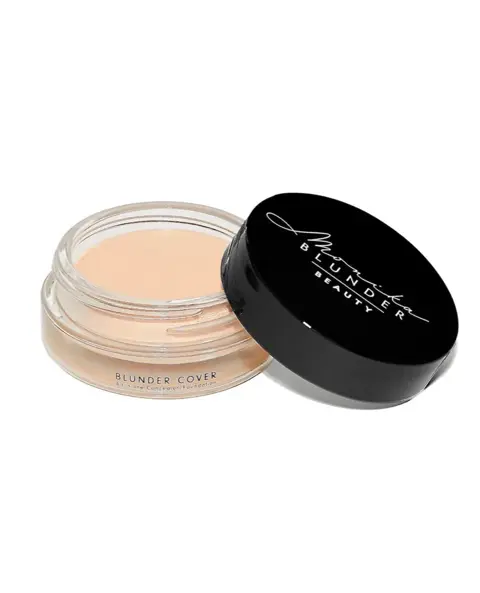
Monika Blunder Beauty Blunder Cover Foundation + Concealer
Monika Blunder Beauty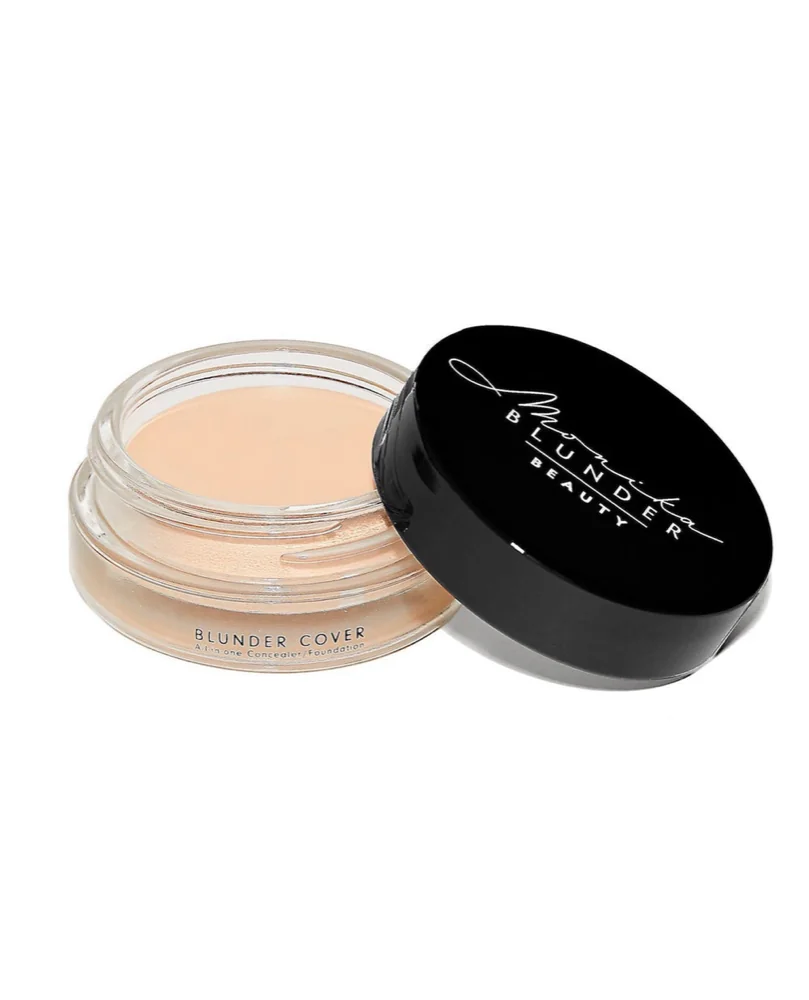
At a glance
Summary
Monika Blunder Beauty Blunder Cover Foundation + Concealer scores 85/100. This product features a predominantly natural ingredient list with beneficial oils and extracts like castor seed oil, rice bran extract, and aloe vera, which provide moisturizing and soothing properties. The presence of microcrystalline wax, a petroleum-derived ingredient, slightly detracts from the overall safety profile. However, the formulation is largely composed of safe, natural components, contributing to a favorable rating.
Key ingredients 26
Ricinus Communis (Castor) Seed OilVery Good
Castor seed oil is a natural oil known for its moisturizing properties. It helps to soothe and hydrate the skin, making it a beneficial ingredient in cosmetics. Its fatty acid content supports skin barrier function.
Risks
There is a low risk of allergic reactions in sensitive individuals.
Benefits
It provides excellent emollient properties, enhancing skin softness and smoothness.
Oryza Sativa (Rice) Bran ExtractVery Good
Rice bran extract is rich in antioxidants and vitamins, providing skin-nourishing benefits. It helps to protect the skin from environmental stressors. It is known for its soothing and anti-inflammatory properties.
Risks
Generally considered safe with minimal risk of irritation.
Benefits
Offers antioxidant protection and soothes the skin.
Aloe Barbadensis Leaf ExtractVery Good
Aloe vera extract is known for its soothing and hydrating properties. It helps to calm irritated skin and provides moisture. It is widely used in cosmetics for its skin-beneficial effects.
Risks
Rarely, it may cause allergic reactions in sensitive individuals.
Benefits
Soothes and hydrates the skin, reducing irritation.
Carthamus Tinctorius (Safflower) Seed OilVery Good
Safflower seed oil is a natural oil rich in linoleic acid, providing moisturizing benefits. It helps to maintain skin barrier function and prevent dryness. It is considered safe and beneficial for skin health.
Risks
Minimal risk of allergic reactions.
Benefits
Moisturizes and supports skin barrier function.
Chamomilla Recutita (Matricaria) Flower ExtractVery Good
Chamomile extract is known for its calming and anti-inflammatory properties. It helps to soothe irritated skin and reduce redness. It is widely used in cosmetics for its gentle and beneficial effects.
Risks
Rarely, it may cause allergic reactions in sensitive individuals.
Benefits
Calms and soothes the skin, reducing inflammation.
Jojoba EstersVery Good
Jojoba esters are derived from jojoba oil and are used as emollients in cosmetics. They help to moisturize and soften the skin. They are considered safe and beneficial for skin health.
Risks
Minimal risk of irritation.
Benefits
Moisturizes and enhances skin softness.
Tetrahexyldecyl AscorbateVery Good
Tetrahexyldecyl ascorbate is a stable form of Vitamin C used in cosmetics for its antioxidant properties. It helps to brighten the skin and reduce signs of aging. It is considered safe and effective for skin health.
Risks
Minimal risk of irritation.
Benefits
Brightens the skin and provides antioxidant protection.
TocopherolVery Good
Tocopherol, or Vitamin E, is a powerful antioxidant used in cosmetics. It helps to protect the skin from oxidative stress and supports skin health. It is considered safe and beneficial for skin health.
Risks
Minimal risk of irritation.
Benefits
Provides antioxidant protection and supports skin health.
MicaGood
Beneficial ingredient — whole-food or functional value in this product class.
Risks
Inhalation of mica particles can be a concern in loose powder forms.
Benefits
Provides a natural shimmer and glow to the skin.
Helianthus Annuus (Sunflower) Seed WaxGood
Sunflower seed wax is a natural wax used as a thickening agent in cosmetics. It helps to stabilize formulations and provides a smooth application. It is derived from sunflower seeds and is biodegradable.
Risks
There are minimal risks associated with its use.
Benefits
Contributes to the stability and texture of cosmetic products.
Copernicia Cerifera (Carnauba) WaxGood
Carnauba wax is a natural wax used as a thickening agent in cosmetics. It provides a glossy finish and helps to stabilize formulations. It is derived from the leaves of the carnauba palm and is biodegradable.
Risks
Minimal risk of irritation.
Benefits
Contributes to product stability and provides a glossy finish.
Arnica Montana Flower ExtractGood
Arnica extract is known for its anti-inflammatory and soothing properties. It is used in cosmetics to help reduce swelling and irritation. It is derived from the arnica flower and is considered safe for topical use.
Risks
May cause irritation if used on broken skin.
Benefits
Reduces inflammation and soothes the skin.
Glycine Soja (Soybean) OilGood
Soybean oil is a natural oil rich in fatty acids and antioxidants. It helps to moisturize and nourish the skin. It is considered safe and beneficial for skin health.
Risks
Minimal risk of allergic reactions.
Benefits
Moisturizes and provides antioxidant protection.
Helianthus Annuus (Sunflower) ExtractGood
Sunflower extract is rich in vitamins and antioxidants, providing skin-nourishing benefits. It helps to protect the skin from environmental stressors. It is considered safe and beneficial for skin health.
Risks
Minimal risk of irritation.
Benefits
Offers antioxidant protection and nourishes the skin.
Leontopodium Alpinum Flower/Leaf/Stem ExtractGood
Edelweiss extract is known for its antioxidant and anti-inflammatory properties. It helps to protect the skin from environmental stressors. It is considered safe and beneficial for skin health.
Risks
Minimal risk of irritation.
Benefits
Provides antioxidant protection and soothes the skin.
Rosmarinus Officinalis (Rosemary) Leaf ExtractGood
Rosemary extract is known for its antioxidant and antimicrobial properties. It helps to protect the skin from environmental damage and supports product preservation. It is considered safe and beneficial for skin health.
Risks
Rarely, it may cause irritation in sensitive individuals.
Benefits
Offers antioxidant protection and antimicrobial benefits.
Tocopheryl AcetateGood
Beneficial ingredient — whole-food or functional value in this product class.
Risks
Minimal risk of irritation.
Benefits
Offers antioxidant protection and supports skin health.
OctyldodecanolNeutral
Octyldodecanol is a fatty alcohol used as an emollient and texture enhancer in cosmetics. It helps to improve the spreadability of products. It is generally considered safe for use in cosmetics.
Risks
Rarely, it may cause mild irritation in sensitive skin types.
Benefits
It enhances the texture and feel of cosmetic formulations.
Polyhydroxystearic AcidNeutral
Polyhydroxystearic acid is used as an emulsifier and stabilizer in cosmetic formulations. It helps to maintain the consistency and texture of products. It is generally considered safe for use in cosmetics.
Risks
Minimal risk of irritation or allergic reaction.
Benefits
Stabilizes emulsions and improves product texture.
C10-18 TriglyceridesNeutral
C10-18 triglycerides are used as emollients and skin-conditioning agents in cosmetics. They help to improve the feel and spreadability of products. They are derived from natural oils and are generally safe.
Risks
Low risk of skin irritation.
Benefits
Enhances skin feel and product application.
Euphorbia Cerifera (Candelilla) WaxNeutral
Standard formulation ingredient — neither beneficial nor harmful at typical use.
Risks
Minimal risk of irritation.
Benefits
Enhances product texture and stability.
Caprylyl GlycolNeutral
Caprylyl glycol is used as a skin-conditioning agent and preservative in cosmetics. It helps to improve the moisture content of the skin. It is generally considered safe for use in cosmetics.
Risks
Low risk of skin irritation.
Benefits
Enhances skin hydration and product preservation.
EthylhexylglycerinNeutral
Ethylhexylglycerin is used as a preservative and skin-conditioning agent in cosmetics. It helps to enhance the efficacy of other preservatives. It is generally considered safe for use in cosmetics.
Risks
Low risk of skin irritation.
Benefits
Improves product preservation and skin feel.
Titanium Dioxide (CI 77891)Neutral
Titanium dioxide is used as a pigment and UV filter in cosmetics. It provides coverage and sun protection in formulations. It is generally considered safe for use in cosmetics.
Risks
Inhalation of fine particles can be a concern in loose powder forms.
Benefits
Provides coverage and sun protection.
Iron Oxides (CI 77492, CI 77491, CI 77499)Neutral
Iron oxides are used as pigments in cosmetics to provide color. They are inert and generally considered safe for use on the skin. They are widely used in makeup for their coloring properties.
Risks
Minimal risk of irritation.
Benefits
Provides natural color to cosmetic products.
Microcrystalline WaxBad
A petroleum-derived wax, the same class as paraffin and ceresin, which Scout treats as bad in topicals.
See more about Microcrystalline Wax →Get the full breakdown in the Scout appTake Scout shopping
Scan any product to see lab results, healthy alternatives, and your personalized analysis.
Are you Monika Blunder Beauty? Fix an error Get the badge Get tested
Amazon pricing & content
Amazon price as of . Product prices and availability are accurate as of the date/time indicated and are subject to change. Any price and availability information displayed on Amazon.com at the time of purchase will apply to the purchase of this product.
CERTAIN CONTENT THAT APPEARS ON THIS SITE COMES FROM AMAZON. THIS CONTENT IS PROVIDED “AS IS” AND IS SUBJECT TO CHANGE OR REMOVAL AT ANY TIME.