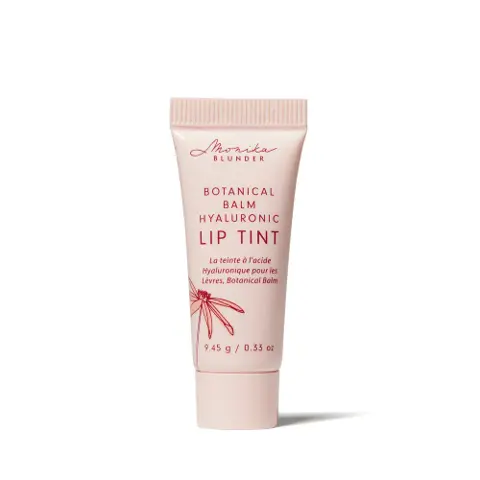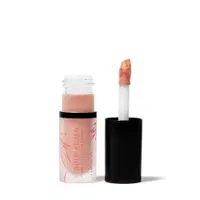
Monika Blunder Beauty Botanical Balm Hyaluronic Lip Tint
Monika Blunder Beauty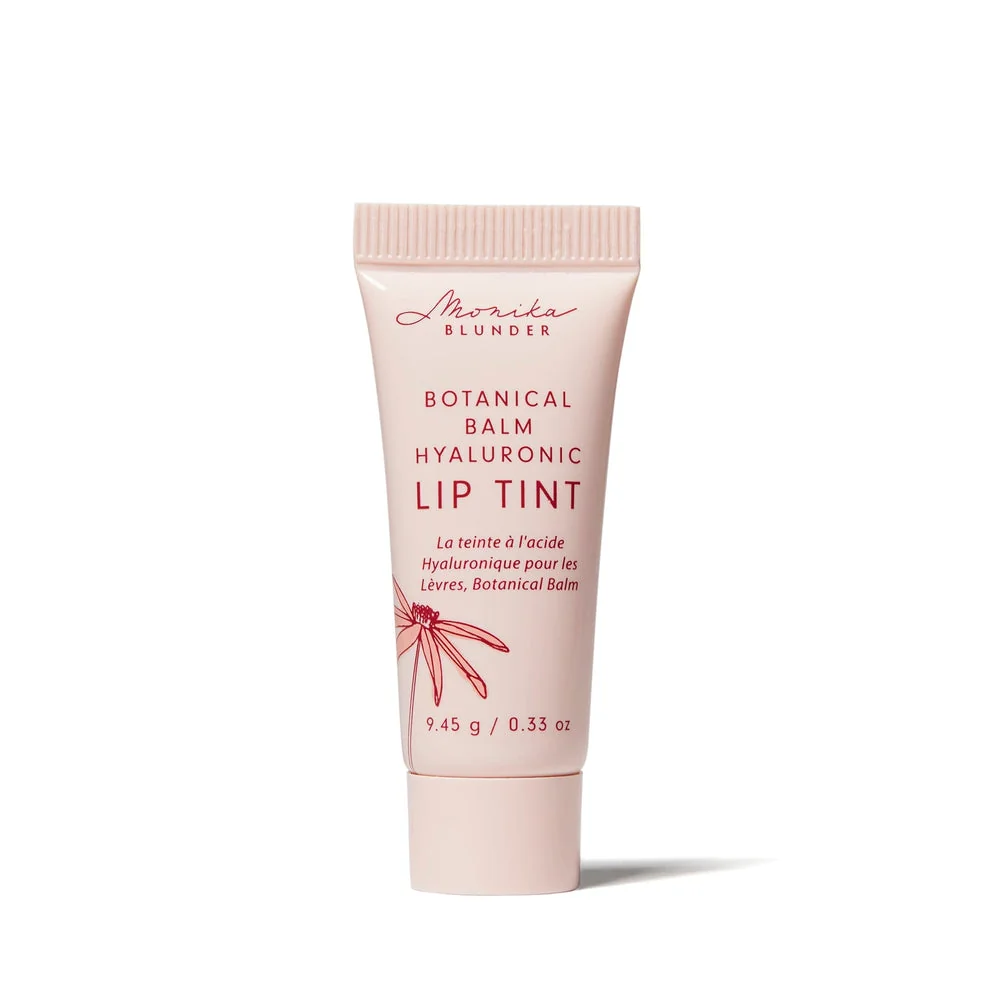
At a glance
Summary
Monika Blunder Beauty Botanical Balm Hyaluronic Lip Tint scores 65/100. This lip tint contains a mix of natural oils and waxes like castor seed oil, sunflower seed wax, and shea butter, which are beneficial for moisturizing and protecting the lips. However, the presence of synthetic dyes and fragrance components such as aroma/flavor, limonene, and linalool, which can cause irritation or allergic reactions, lowers its overall safety profile. The product's formulation is moderately processed with both beneficial and concerning ingredients, leading to a balanced score.
Key ingredients 43
Ricinus Communis (Castor) Seed OilVery Good
Castor seed oil is a natural emollient that helps to moisturize and condition the skin. It is rich in ricinoleic acid, which has anti-inflammatory properties. This oil is commonly used in lip care products for its ability to provide a protective barrier.
Risks
There is a low risk of allergic reactions, but it is generally considered safe for topical use.
Benefits
It deeply moisturizes and provides a protective barrier on the lips.
Oryza Sativa (Rice) Bran ExtractVery Good
Rice bran extract is rich in antioxidants, vitamins, and fatty acids, making it beneficial for skin health. It helps to nourish and protect the skin from environmental damage. It is commonly used in skincare for its anti-aging properties.
Risks
There is a low risk of allergic reactions, but it is generally considered safe.
Benefits
Rich in antioxidants and vitamins, it nourishes and protects the skin.
Jojoba EstersVery Good
Jojoba esters are derived from jojoba oil and are used as emollients in cosmetic formulations. They mimic the natural oils of the skin, providing hydration and a smooth feel. They are non-comedogenic and suitable for all skin types.
Risks
There are minimal risks, as jojoba esters are generally well-tolerated.
Benefits
Provide hydration and mimic natural skin oils.
Butyrospermum Parkii (Shea) ButterVery Good
Shea butter is a natural fat extracted from the nuts of the shea tree. It is highly moisturizing and contains vitamins A and E, which promote skin health. It is widely used in cosmetics for its nourishing and protective properties.
Risks
There is a low risk of allergic reactions, but it is generally considered safe.
Benefits
Highly moisturizing and rich in vitamins A and E.
Carthamus Tinctorius (Safflower) Seed OilVery Good
Safflower seed oil is a natural oil rich in linoleic acid, which helps to maintain the skin's barrier function. It is known for its moisturizing and anti-inflammatory properties. It is suitable for all skin types and is non-comedogenic.
Risks
There is a low risk of allergic reactions, but it is generally considered safe.
Benefits
Moisturizes and maintains the skin's barrier function.
Persea Gratissima (Avocado) OilVery Good
Avocado oil is rich in fatty acids and vitamins, providing deep hydration and nourishment to the skin. It is known for its ability to penetrate the skin and deliver nutrients effectively. It is suitable for all skin types and is non-comedogenic.
Risks
There is a low risk of allergic reactions, but it is generally considered safe.
Benefits
Deeply hydrates and nourishes the skin with essential nutrients.
Prunus Armeniaca (Apricot) Kernel OilVery Good
Apricot kernel oil is a lightweight oil rich in vitamins A and E, providing nourishment and hydration to the skin. It is easily absorbed and helps to maintain the skin's natural barrier. It is suitable for all skin types and is non-comedogenic.
Risks
There is a low risk of allergic reactions, but it is generally considered safe.
Benefits
Nourishes and hydrates the skin with vitamins A and E.
Rosa Canina Seed OilVery Good
Rosehip seed oil is rich in essential fatty acids and antioxidants, known for its regenerative and healing properties. It helps to improve skin texture and reduce the appearance of scars and fine lines. It is a popular ingredient in anti-aging formulations.
Risks
There is a low risk of allergic reactions, but it is generally considered safe.
Benefits
Improves skin texture and reduces the appearance of scars and fine lines.
SqualaneVery Good
Squalane is a lightweight, non-greasy oil that mimics the skin's natural sebum. It provides deep hydration and helps to maintain the skin's barrier function. It is suitable for all skin types and is non-comedogenic.
Risks
There is a low risk of allergic reactions, but it is generally considered safe.
Benefits
Provides deep hydration and maintains the skin's barrier function.
TocopherolVery Good
Tocopherol, or vitamin E, is a powerful antioxidant that helps to protect the skin from free radical damage. It also provides moisturizing and healing benefits, making it a valuable ingredient in lip care products. It is generally considered safe and non-irritating.
Risks
There is a low risk of allergic reactions, but it is generally considered safe.
Benefits
Protects the skin from free radical damage and provides moisturizing benefits.
Helianthus Annuus (Sunflower) Seed WaxGood
Sunflower seed wax is a natural wax used to provide structure and stability to cosmetic products. It is derived from sunflower seeds and is known for its emollient properties. It helps to lock in moisture and protect the skin.
Risks
There is a low risk of allergic reactions, but it is generally safe for use.
Benefits
Provides emollient properties and helps to lock in moisture.
Copernicia Cerifera (Carnauba) WaxGood
Carnauba wax is a natural wax obtained from the leaves of the carnauba palm. It is used to provide a glossy finish and improve the texture of cosmetic products. It is hypoallergenic and safe for use.
Risks
There are minimal risks associated with carnauba wax, primarily related to potential skin irritation.
Benefits
Provides a glossy finish and improves product texture.
Acacia Decurrens Flower WaxGood
Acacia decurrens flower wax is used as a film-forming agent in cosmetics. It helps to create a protective barrier on the skin, locking in moisture. It is derived from the flowers of the acacia tree and is considered safe.
Risks
There is a low risk of allergic reactions, but it is generally well-tolerated.
Benefits
Creates a protective barrier and locks in moisture.
Helianthus Annuus (Sunflower) ExtractGood
Sunflower extract is rich in vitamins and antioxidants, providing nourishing and protective benefits to the skin. It helps to soothe and moisturize, making it a beneficial ingredient in lip care products. It is generally considered safe and non-irritating.
Risks
There is a low risk of allergic reactions, but it is generally considered safe.
Benefits
Nourishes and protects the skin with vitamins and antioxidants.
Leontopodium Alpinum Flower/Leaf/Stem ExtractGood
Edelweiss extract is known for its antioxidant and anti-inflammatory properties. It helps to protect the skin from environmental stressors and soothe irritation. It is a valuable addition to skincare formulations for its protective benefits.
Risks
There is a low risk of skin irritation, but it is generally well-tolerated.
Benefits
Provides antioxidant protection and soothes irritation.
Rosmarinus Officinalis (Rosemary) Leaf ExtractGood
Rosemary leaf extract is known for its antioxidant and antimicrobial properties. It helps to protect the skin from environmental damage and extend the shelf life of cosmetic products. It is generally considered safe for use.
Risks
There is a low risk of skin irritation, but it is generally well-tolerated.
Benefits
Provides antioxidant protection and antimicrobial benefits.
Sodium HyaluronateGood
Beneficial ingredient — whole-food or functional value in this product class.
Risks
There is a low risk of allergic reactions, but it is generally considered safe.
Benefits
Retains moisture and improves skin hydration and elasticity.
Tocopheryl AcetateGood
Tocopheryl acetate is a stable form of vitamin E, used for its antioxidant and skin conditioning properties. It helps to protect the skin from environmental stressors and improve moisture retention. It is generally considered safe for use.
Risks
There is a low risk of skin irritation, but it is generally well-tolerated.
Benefits
Provides antioxidant protection and improves moisture retention.
Iron Oxides (CI 77491)Good
Beneficial ingredient — whole-food or functional value in this product class.
Risks
There is a low risk of skin irritation, but they are generally considered safe.
Benefits
Provide stable and non-toxic color to the product.
Iron Oxides (CI 77492)Good
Beneficial ingredient — whole-food or functional value in this product class.
Risks
There is a low risk of skin irritation, but they are generally considered safe.
Benefits
Provide stable and non-toxic color to the product.
Iron Oxides (CI 77499)Good
Beneficial ingredient — whole-food or functional value in this product class.
Risks
There is a low risk of skin irritation, but they are generally considered safe.
Benefits
Provide stable and non-toxic color to the product.
Hydroxystearic/Linolenic/Oleic PolyglyceridesNeutral
These are emulsifiers derived from natural fatty acids, used to stabilize formulations. They help in maintaining the consistency of the product. They are generally considered safe and non-irritating.
Risks
There are minimal risks associated with these compounds, primarily related to potential skin irritation in sensitive individuals.
Benefits
They help in maintaining product stability and consistency.
Polyhydroxystearic AcidNeutral
Polyhydroxystearic acid is used as a thickening agent in cosmetic formulations. It helps to improve the texture and spreadability of the product. It is generally considered safe for use in cosmetics.
Risks
There is a low risk of skin irritation, but it is generally well-tolerated.
Benefits
Improves the texture and spreadability of the product.
Oleic/Linoleic/Linolenic PolyglyceridesNeutral
These compounds are used as emulsifiers and skin conditioning agents. They help to blend oil and water components in formulations. They are derived from natural fatty acids and are considered safe.
Risks
Potential for mild skin irritation in sensitive individuals.
Benefits
They enhance the stability and moisturizing properties of the product.
Euphorbia Cerifera (Candelilla) WaxNeutral
Standard formulation ingredient — neither beneficial nor harmful at typical use.
Risks
There is a low risk of skin irritation, but it is generally safe for use.
Benefits
Provides a glossy finish and stabilizes formulations.
Arnica Montana Flower ExtractNeutral
Arnica montana flower extract is used for its anti-inflammatory and soothing properties. It is often included in formulations to reduce swelling and irritation. However, it can be irritating to sensitive skin.
Risks
Potential for skin irritation, especially in sensitive individuals.
Benefits
Provides anti-inflammatory and soothing effects.
Caprylyl GlycolNeutral
Caprylyl glycol is a humectant and skin conditioning agent used in cosmetics. It helps to retain moisture and improve the texture of the product. It is generally considered safe and non-irritating.
Risks
There is a low risk of skin irritation, but it is generally well-tolerated.
Benefits
Helps to retain moisture and improve product texture.
Citrus Aurantium Dulcis (Orange) OilNeutral
Orange oil is used for its fragrance and potential antioxidant properties. It can enhance the sensory experience of the product. However, it may cause photosensitivity and irritation in some individuals.
Risks
Potential for photosensitivity and skin irritation.
Benefits
Provides a pleasant fragrance and potential antioxidant benefits.
Ethylhexyl OlivateNeutral
Ethylhexyl olivate is an emollient derived from olive oil, used to improve the texture and spreadability of cosmetic products. It is generally considered safe and non-irritating. It helps to soften and smooth the skin.
Risks
There is a low risk of skin irritation, but it is generally well-tolerated.
Benefits
Improves texture and softens the skin.
Ethylhexyl PalmitateNeutral
Ethylhexyl palmitate is an ester of 2-ethylhexyl alcohol and palmitic acid, used as an emollient and thickening agent. It provides a smooth application and enhances the texture of the product. It is generally considered safe for use in cosmetics.
Risks
There is a low risk of skin irritation, but it is generally well-tolerated.
Benefits
Provides a smooth application and enhances product texture.
EthylhexylglycerinNeutral
Ethylhexylglycerin is used as a skin conditioning agent and preservative enhancer in cosmetics. It helps to improve the efficacy of preservatives and provides a smooth feel. It is generally considered safe and non-irritating.
Risks
There is a low risk of skin irritation, but it is generally well-tolerated.
Benefits
Enhances preservative efficacy and provides a smooth feel.
GlucomannanNeutral
Glucomannan is a polysaccharide derived from the konjac plant, used as a thickening and gelling agent in cosmetics. It helps to improve the texture and stability of the product. It is generally considered safe for use.
Risks
There is a low risk of skin irritation, but it is generally well-tolerated.
Benefits
Improves texture and stability of the product.
Polyglycerin-3Neutral
Polyglycerin-3 is used as an emulsifier and humectant in cosmetic formulations. It helps to retain moisture and improve the texture of the product. It is generally considered safe and non-irritating.
Risks
There is a low risk of skin irritation, but it is generally well-tolerated.
Benefits
Retains moisture and improves product texture.
TrihydroxystearinNeutral
Trihydroxystearin is used as a thickening agent in cosmetic formulations. It helps to improve the texture and stability of the product. It is generally considered safe for use.
Risks
There is a low risk of skin irritation, but it is generally well-tolerated.
Benefits
Improves texture and stability of the product.
Titanium Dioxide (CI 77891)Neutral
Titanium dioxide is a mineral used as a white pigment and UV filter in cosmetics. It provides opacity and sun protection in formulations. It is generally considered safe for use in cosmetics.
Risks
There is a low risk of skin irritation, but it is generally considered safe.
Benefits
Provides opacity and sun protection.
Manganese Violet (CI 77742)Neutral
Manganese violet is a synthetic colorant used to provide a violet hue in cosmetic products. It is approved for use in cosmetics and is generally considered safe. It is commonly used in lip products for its vibrant color.
Risks
There is a low risk of skin irritation, but it is generally considered safe.
Benefits
Provides a vibrant violet color to the product.
Aroma/FlavorBad
The term 'aroma/flavor' is often used to denote added fragrances or flavors in cosmetic products. These can be synthetic and may cause allergic reactions or irritation. The lack of specificity makes it difficult to assess safety.
Risks
Potential for allergic reactions and skin irritation.
Benefits
Enhances the sensory experience of the product.
LimoneneBad
Limonene is a fragrance component that can cause skin irritation and sensitization, especially when oxidized. It is derived from citrus oils and is used for its pleasant scent. It is considered a potential allergen in cosmetics.
Risks
Potential for skin irritation and allergic reactions.
Benefits
Provides a pleasant citrus scent.
LinaloolBad
Linalool is a fragrance ingredient that can cause skin irritation and sensitization. It is found in many essential oils and is used for its floral scent. It is considered a potential allergen in cosmetics.
Risks
Potential for skin irritation and allergic reactions.
Benefits
Provides a pleasant floral scent.
Red 7 Lake (CI 15850)Bad
Synthetic petroleum-derived lake dye. Lip colour is partly swallowed, so it is judged like the artificial dyes the food framework penalizes.
See more about Red 7 Lake (CI 15850) →Red 30 Lake (CI 73360)Bad
Synthetic petroleum-derived lake dye. Lip colour is partly swallowed, so it is judged like the artificial dyes the food framework penalizes.
See more about Red 30 Lake (CI 73360) →Red 6 (CI 15850)Bad
Synthetic petroleum-derived dye. Lip colour is partly swallowed, so it is judged like the artificial dyes the food framework penalizes.
See more about Red 6 (CI 15850) →Yellow 5 Lake (CI 19140)Very Bad
Tartrazine lake, a synthetic azo dye linked to sensitivity reactions; it carries a warning label in the EU on foods. Lip colour is partly swallowed.
See more about Yellow 5 Lake (CI 19140) →Get the full breakdown in the Scout appTake Scout shopping
Scan any product to see lab results, healthy alternatives, and your personalized analysis.
Are you Monika Blunder Beauty? Fix an error Get the badge Get tested
Amazon pricing & content
Amazon price as of . Product prices and availability are accurate as of the date/time indicated and are subject to change. Any price and availability information displayed on Amazon.com at the time of purchase will apply to the purchase of this product.
CERTAIN CONTENT THAT APPEARS ON THIS SITE COMES FROM AMAZON. THIS CONTENT IS PROVIDED “AS IS” AND IS SUBJECT TO CHANGE OR REMOVAL AT ANY TIME.