
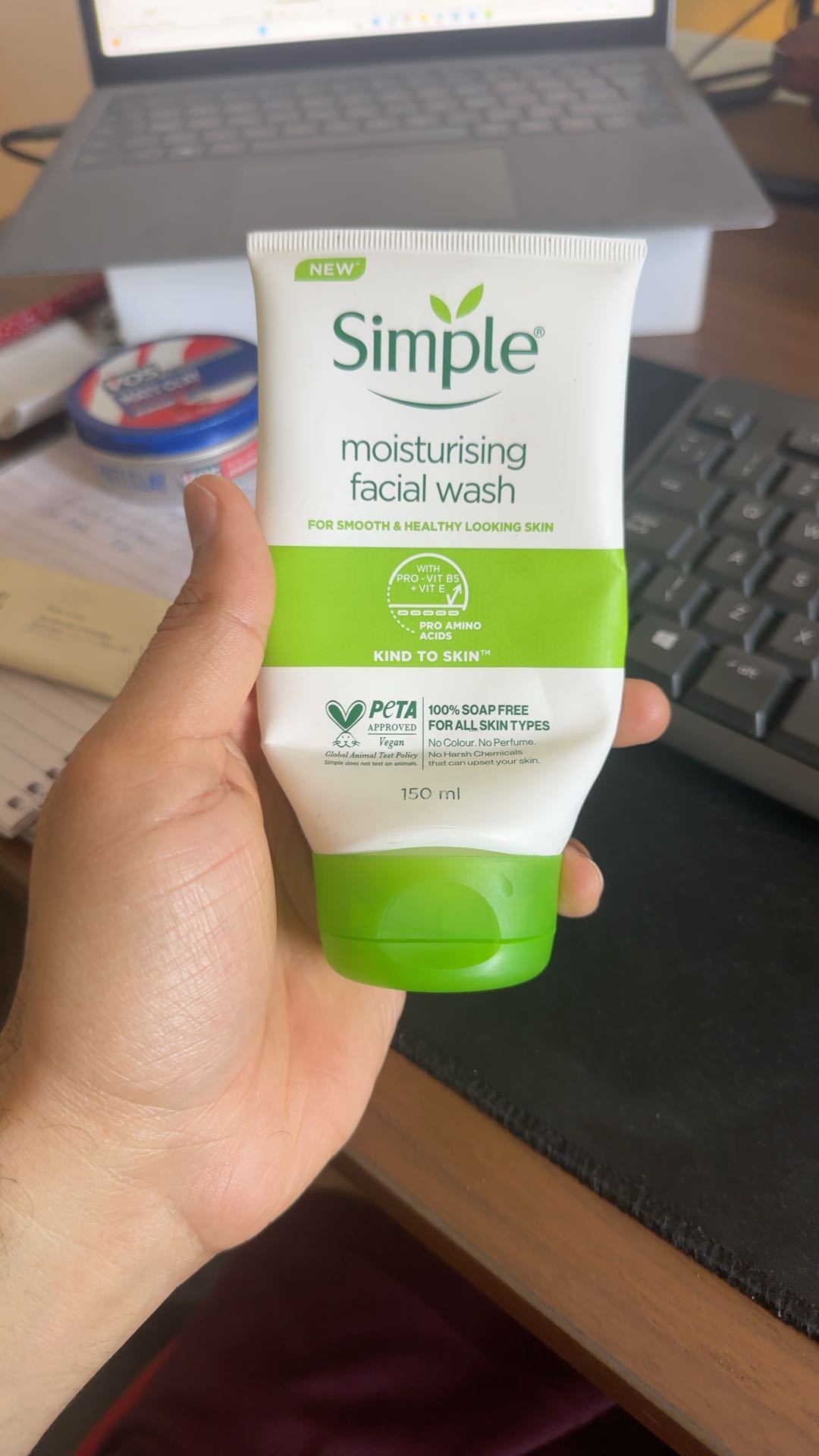
3x Simple Moisturising Facial Wash Sensitive Skin Soap Free Mini 50ml Foaming
Summary
This facial wash contains sodium laureth sulfate, which poses a contamination risk, leading to a moderate penalty. However, it also includes beneficial ingredients like shea butter, coconut oil, and vitamin E, which are known for their moisturizing and soothing properties. The product is processed but maintains a balance of natural and synthetic components, resulting in a mixed safety profile.
At a glance
Key ingredients 13
Water
Water is a universal solvent and is used as a base in many cosmetic formulations. It helps dissolve other ingredients and provides hydration to the skin. It is essential for the consistency and application of the product.
Risks
There are no significant risks associated with water in cosmetics.
Benefits
Water hydrates the skin and helps in the absorption of other beneficial ingredients.
Sodium Laureth Sulfate
Sodium Laureth Sulfate is a surfactant used for its cleansing and foaming properties. It is milder than Sodium Lauryl Sulfate but can still be irritating to sensitive skin. There is a risk of contamination with 1,4-dioxane, a potential carcinogen.
Risks
It may cause skin irritation and dryness, especially in sensitive individuals.
Benefits
It effectively removes dirt and oil from the skin, contributing to a clean feeling.
Decyl Glucoside
Decyl Glucoside is a mild, non-ionic surfactant derived from glucose and coconut oil. It is gentle on the skin and suitable for sensitive skin types. It helps to cleanse the skin without stripping its natural oils.
Risks
There are minimal risks associated with Decyl Glucoside, making it suitable for sensitive skin.
Benefits
It provides gentle cleansing and is biodegradable, making it environmentally friendly.
Cocamidopropyl Betaine
Cocamidopropyl Betaine is a surfactant and foam booster derived from coconut oil. It is used to enhance the texture and feel of the product. It is generally considered mild and suitable for sensitive skin.
Risks
In rare cases, it may cause skin irritation or allergic reactions.
Benefits
It improves the foam quality and provides a gentle cleansing action.
Caprylic/Capric Triglyceride
Caprylic/Capric Triglyceride is an emollient derived from coconut oil and glycerin. It helps to moisturize and soften the skin. It is lightweight and non-greasy, making it suitable for all skin types.
Risks
There are no significant risks associated with this ingredient.
Benefits
It provides hydration and improves the skin's texture without clogging pores.
Glycerin
Glycerin is a humectant that attracts moisture to the skin, keeping it hydrated. It is a common ingredient in skincare products due to its moisturizing properties. It helps to maintain the skin's water balance on an intercellular level.
Risks
There are no significant risks associated with glycerin.
Benefits
It helps to keep the skin soft and supple by retaining moisture.
Pentylene Glycol
Pentylene Glycol is a synthetic humectant and solvent that helps to retain moisture in the skin. It also has antimicrobial properties, which can enhance the preservation of the product. It is often used to improve the texture and spreadability of formulations.
Risks
There are minimal risks associated with Pentylene Glycol.
Benefits
It provides hydration and helps to stabilize the product.
Cocos Nucifera Oil
Cocos Nucifera Oil, or coconut oil, is a natural emollient that moisturizes and nourishes the skin. It is rich in fatty acids and has antibacterial properties. It is often used to soothe and protect the skin.
Risks
It may clog pores in some individuals with acne-prone skin.
Benefits
It deeply moisturizes and provides a protective barrier for the skin.
Hydrogenated Lecithin
Hydrogenated Lecithin is an emulsifier that helps to stabilize and blend ingredients in cosmetic formulations. It is derived from soy and is known for its skin-conditioning properties. It enhances the texture and feel of the product.
Risks
There are minimal risks associated with hydrogenated lecithin.
Benefits
It improves the skin's barrier function and provides a smooth application.
Butyrospermum Parkii Butter
Butyrospermum Parkii Butter, or shea butter, is a natural fat extracted from the nuts of the shea tree. It is known for its moisturizing and anti-inflammatory properties. It helps to soothe and protect the skin.
Risks
There are no significant risks associated with shea butter.
Benefits
It provides deep hydration and helps to improve skin elasticity.
Pro-Vitamin B5
Pro-Vitamin B5, also known as panthenol, is a humectant that attracts and retains moisture in the skin. It has anti-inflammatory properties and helps to soothe irritated skin. It is commonly used to improve skin hydration and elasticity.
Risks
There are no significant risks associated with Pro-Vitamin B5.
Benefits
It enhances skin hydration and promotes healing of minor skin irritations.
Vitamin E
Vitamin E is an antioxidant that helps to protect the skin from free radical damage. It is known for its moisturizing and healing properties. It is often used to improve skin texture and reduce signs of aging.
Risks
There are no significant risks associated with Vitamin E.
Benefits
It provides antioxidant protection and helps to maintain skin health.
Bisabolol
Bisabolol is a natural compound derived from chamomile that has anti-inflammatory and soothing properties. It is used to calm irritated skin and enhance the penetration of other ingredients. It is suitable for sensitive skin types.
Risks
There are no significant risks associated with bisabolol.
Benefits
It soothes and calms the skin, reducing redness and irritation.
Processing
Processed Foods
Get the full breakdown in the Scout app
Scan any product to see lab results, healthy alternatives, and your personalized analysis.
Download on theApp Store