
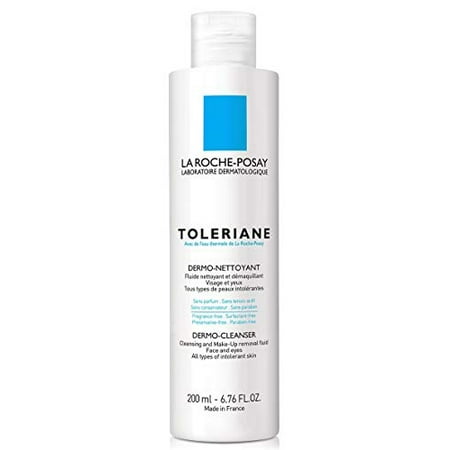

La Roche-Posay Toleriane Dermo Cleanser 6.76 Fl oz
Analysis updated August 2026 · How Scout scores
At a glance
Summary
This face wash contains mostly safe ingredients with glycerin providing hydrating benefits. The formula is relatively simple and free from harsh surfactants or known irritants, but it does include some processed components like carbomer and sodium hydroxide, which slightly lower its score. Overall, it is a well-formulated product with a focus on gentle cleansing.
Key ingredients 7
GlycerinGood
Glycerin is a humectant that attracts moisture to the skin. It is widely used in skincare for its hydrating properties. It is considered safe and beneficial for most skin types.
Risks
There are minimal risks associated with glycerin, though overuse can lead to a sticky feeling on the skin.
Benefits
Glycerin helps to maintain skin hydration and improve skin barrier function.
WaterNeutral
Water is a common solvent used in cosmetic formulations. It helps dissolve other ingredients and provides a base for the product. It is generally considered safe and non-irritating.
Risks
There are no significant risks associated with water in cosmetics.
Benefits
Water helps to hydrate the skin and is essential for the formulation of many cosmetic products.
Ethylhexyl PalmitateNeutral
Ethylhexyl Palmitate is an ester of 2-ethylhexyl alcohol and palmitic acid. It is used as an emollient and thickening agent in cosmetics. It is generally considered safe for use in skincare products.
Risks
It may cause mild irritation in sensitive individuals.
Benefits
It helps to soften and smooth the skin, improving the texture of the product.
Dipropylene GlycolNeutral
Dipropylene Glycol is a solvent and viscosity-decreasing agent. It is used to improve the texture and spreadability of cosmetic products. It is generally regarded as safe for use in cosmetics.
Risks
It may cause mild irritation in sensitive skin types.
Benefits
It helps to improve the consistency and application of the product.
CarbomerNeutral
Carbomer is a thickening agent used to stabilize emulsions in cosmetic formulations. It helps to create a smooth and consistent texture. It is considered safe for use in cosmetics.
Risks
There are minimal risks, though it may cause mild irritation if used in high concentrations.
Benefits
Carbomer helps to improve the texture and stability of the product.
Sodium HydroxideNeutral
Sodium Hydroxide is used to adjust the pH of cosmetic formulations. It is a strong base that is used in small amounts to neutralize acidic components. It is generally safe when used in low concentrations.
Risks
In high concentrations, it can be irritating to the skin and eyes.
Benefits
It helps to maintain the stability and effectiveness of the product by ensuring the correct pH.
Caprylyl GlycolNeutral
Caprylyl Glycol is a skin conditioning agent and preservative. It is used to enhance the shelf life and stability of cosmetic products. It is generally considered safe for use in cosmetics.
Risks
There are minimal risks, though it may cause mild irritation in sensitive individuals.
Benefits
It helps to moisturize the skin and improve the longevity of the product.
Processing
Processed Foods
Get the full breakdown in the Scout appTake Scout shopping
Scan any product to see lab results, healthy alternatives, and your personalized analysis.
Download on theApp Store GET IT ONGoogle Play