
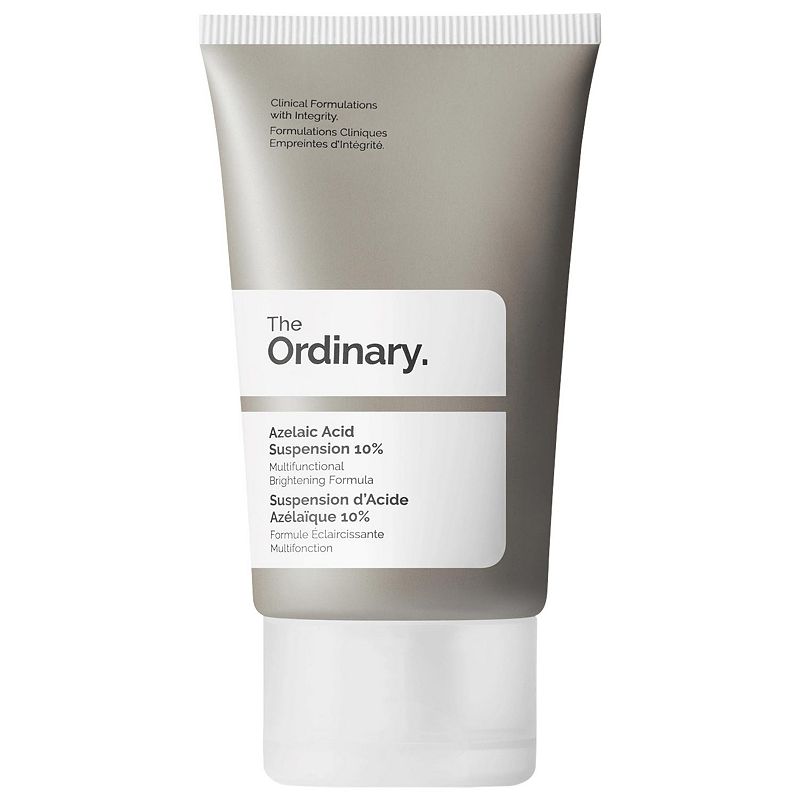


The Ordinary Azelaic Acid Suspension 10% Cream - 1 fl oz - Ulta Beauty: Pore Cleansing, Skin Tone Improvement, Exfoliating
OrdinaryAnalysis updated August 2026 · How Scout scores
At a glance
Summary
This product contains beneficial ingredients like azelaic acid and tocopherol, which offer anti-inflammatory and antioxidant benefits. However, the presence of triethanolamine, which can cause skin irritation and has potential contamination concerns, affects the overall safety profile. Additionally, the formulation includes several synthetic compounds, indicating a moderate level of processing.
Key ingredients 17
Azelaic AcidVery Good
Azelaic Acid is a naturally occurring acid with anti-inflammatory and antimicrobial properties. It is effective in treating acne and rosacea by reducing swelling and redness. It also helps to unclog pores and improve skin tone.
Risks
It may cause mild irritation or dryness in some individuals.
Benefits
It treats acne and rosacea, reduces redness, and improves skin tone.
TocopherolGood
Tocopherol, also known as Vitamin E, is an antioxidant that helps to protect the skin from free radical damage. It also has moisturizing properties and supports skin barrier function. It is widely used in cosmetics for its protective benefits.
Risks
There are minimal risks, though it may cause irritation in very sensitive skin.
Benefits
It protects the skin from free radical damage and provides moisturizing benefits.
Aqua (Water)Neutral
Water is a common solvent used in cosmetics to dissolve other ingredients. It helps in the application and absorption of the product. It does not have any direct benefits or risks.
Risks
There are no significant risks associated with water in cosmetics.
Benefits
Water helps in the application and absorption of the product.
Isodecyl NeopentanoateNeutral
Isodecyl Neopentanoate is an emollient that helps to soften and smooth the skin. It is used to improve the texture and feel of the product. It is generally considered safe for use in cosmetics.
Risks
There are minimal risks associated with this ingredient, though it may cause irritation in very sensitive skin.
Benefits
It helps to soften and smooth the skin, improving the texture of the product.
Dimethyl IsosorbideNeutral
Dimethyl Isosorbide is a solvent that enhances the penetration of active ingredients. It helps to improve the efficacy of the product. It is considered safe for use in cosmetics.
Risks
There are minimal risks associated with this ingredient.
Benefits
It enhances the penetration and efficacy of active ingredients.
Hydroxyethyl Acrylate/Sodium Acryloyldimethyl Taurate CopolymerNeutral
This copolymer is used as a thickening agent and stabilizer in cosmetics. It helps to improve the texture and consistency of the product. It is generally considered safe for use in cosmetics.
Risks
There are minimal risks, though it may cause irritation in sensitive skin.
Benefits
It improves the texture and consistency of the product.
Polysilicone-11Neutral
Polysilicone-11 is a silicone elastomer used to provide a silky, smooth feel to the skin. It helps to fill in fine lines and wrinkles temporarily. It is considered safe for use in cosmetics.
Risks
There are minimal risks, though it may cause irritation in sensitive skin.
Benefits
It provides a silky feel and temporarily fills in fine lines.
IsohexadecaneNeutral
Isohexadecane is a lightweight emollient and solvent used to enhance the spreadability of products. It provides a non-greasy feel and is often used in oil-free formulations. It is considered safe for use in cosmetics.
Risks
There are minimal risks, though it may cause irritation in sensitive skin.
Benefits
It enhances spreadability and provides a non-greasy feel.
Trisodium Ethylenediamine DisuccinateNeutral
This ingredient is a chelating agent that helps to stabilize cosmetic formulations by binding metal ions. It enhances the efficacy and shelf-life of the product. It is considered safe for use in cosmetics.
Risks
There are minimal risks associated with this ingredient.
Benefits
It stabilizes formulations and enhances product efficacy.
Isoceteth-20Neutral
Isoceteth-20 is an emulsifier used to blend oil and water-based ingredients in cosmetics. It helps to improve the texture and stability of the product. It is generally considered safe for use in cosmetics.
Risks
There are minimal risks, though it may cause irritation in sensitive skin.
Benefits
It improves texture and stability by blending ingredients.
EthoxydiglycolNeutral
Ethoxydiglycol is a solvent used to enhance the penetration of active ingredients in cosmetics. It helps to improve the efficacy of the product. It is considered safe for use in cosmetics.
Risks
There are minimal risks associated with this ingredient.
Benefits
It enhances the penetration and efficacy of active ingredients.
ChlorphenesinNeutral
Chlorphenesin is a preservative used to prevent the growth of bacteria and fungi in cosmetics. It helps to maintain the safety and integrity of the product. It is generally considered safe for use in cosmetics.
Risks
It may cause irritation in sensitive skin.
Benefits
It prevents bacterial and fungal growth, maintaining product safety.
DimethiconeBad
Occlusive silicone film-former — flagged under clean-beauty doctrine.
Risks
It may cause breakouts in acne-prone skin due to its occlusive nature.
Benefits
It helps to retain moisture and provides a smooth application.
Dimethicone/Bis-Isobutyl PPG-20 CrosspolymerBad
Processed additive flagged under Scout's ingredient doctrine.
Risks
There are minimal risks, though it may cause irritation in sensitive skin.
Benefits
It enhances the texture and provides a smooth application.
Polysorbate 60Bad
Processed additive flagged under Scout's ingredient doctrine.
Risks
There are minimal risks, though it may cause irritation in sensitive skin.
Benefits
It improves texture and consistency by emulsifying ingredients.
TriethanolamineBad
Triethanolamine is used to adjust the pH of cosmetic formulations. It can cause skin irritation and has potential contamination concerns with nitrosamines, which are carcinogenic. It is generally used in low concentrations to minimize risks.
Risks
It may cause skin irritation and has potential contamination concerns with nitrosamines.
Benefits
It helps to adjust the pH of formulations.
PhenoxyethanolBad
Processed additive flagged under Scout's ingredient doctrine.
Risks
It may cause irritation in sensitive skin or if used in high concentrations.
Benefits
It prevents microbial growth and extends the shelf-life of products.
Get the full breakdown in the Scout appTake Scout shopping
Scan any product to see lab results, healthy alternatives, and your personalized analysis.
Download on theApp Store GET IT ONGoogle PlayAmazon pricing & content
Amazon price as of . Product prices and availability are accurate as of the date/time indicated and are subject to change. Any price and availability information displayed on Amazon.com at the time of purchase will apply to the purchase of this product.
CERTAIN CONTENT THAT APPEARS ON THIS SITE COMES FROM AMAZON. THIS CONTENT IS PROVIDED “AS IS” AND IS SUBJECT TO CHANGE OR REMOVAL AT ANY TIME.