
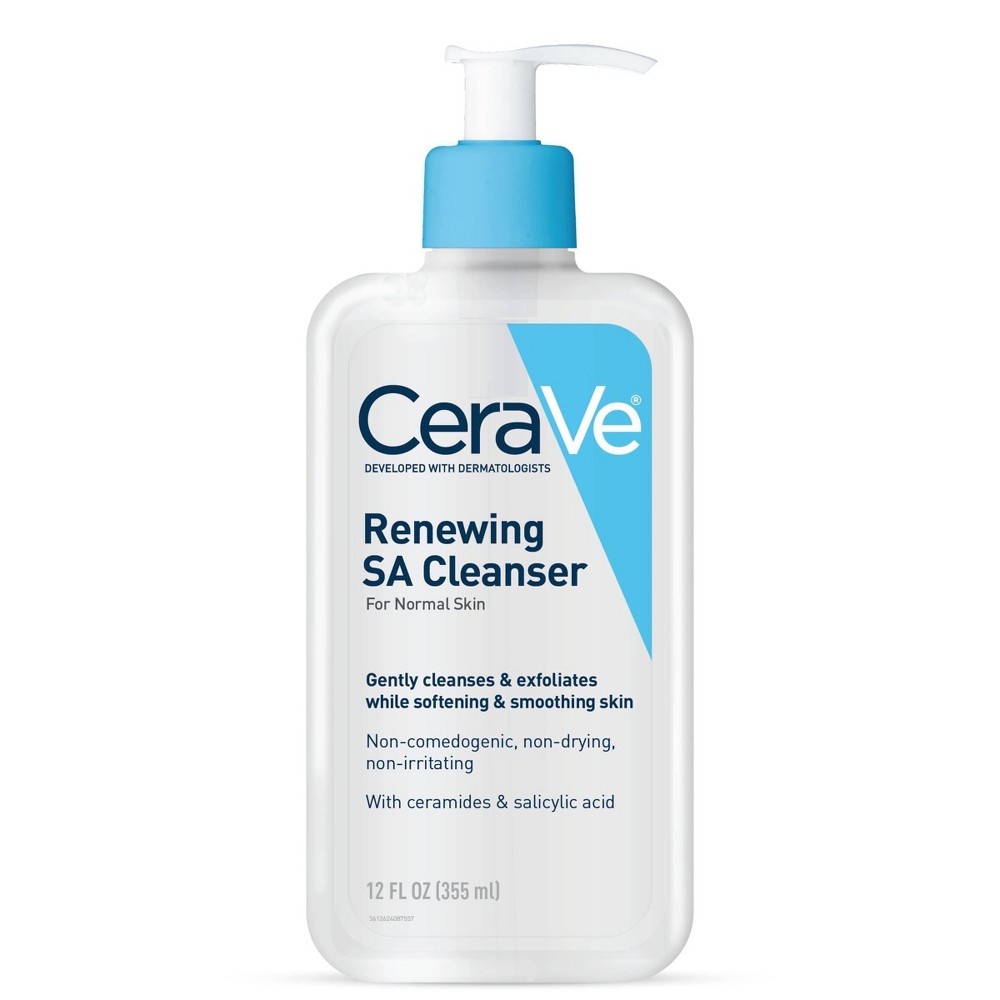
CeraVe Renewing SA Cleanser - 12oz: Noncomedogenic, Paraben-Free, With Salicylic Acid, For Normal, Sensitive Skin
Analysis updated August 2026 · How Scout scores
At a glance
Summary
This face wash contains beneficial ingredients like niacinamide, ceramides, and salicylic acid, which support skin health and hydration. However, the presence of phenoxyethanol, a preservative that can cause irritation, and the use of PEG compounds contribute to a moderate processing level, slightly lowering its overall score. The product is mostly safe with some synthetic components, balancing its beneficial and potentially irritating ingredients.
Key ingredients 27
Ceramide APVery Good
Ceramide AP is another type of ceramide that supports the skin barrier function. It helps to lock in moisture and protect the skin from environmental stressors. It is suitable for all skin types.
Risks
There are minimal risks associated with ceramides.
Benefits
Enhances skin barrier function and provides long-lasting hydration.
Ceramide EOPVery Good
Ceramide EOP is crucial for maintaining the skin's protective barrier. It helps to prevent moisture loss and improve skin resilience. It is beneficial for dry and compromised skin.
Risks
There are minimal risks associated with ceramides.
Benefits
Improves skin barrier integrity and hydration.
Hydrolyzed Hyaluronic AcidVery Good
Hydrolyzed hyaluronic acid is a smaller molecule form of hyaluronic acid that penetrates the skin more easily. It provides intense hydration and helps to plump the skin. It is beneficial for all skin types.
Risks
There are minimal risks associated with hyaluronic acid.
Benefits
Deeply hydrates the skin and improves elasticity.
GlycerinGood
Glycerin is a humectant that attracts moisture to the skin, helping to keep it hydrated. It is widely used in skincare for its moisturizing properties. It is non-irritating and suitable for all skin types.
Risks
There are minimal risks associated with glycerin, though it may feel sticky to some users.
Benefits
Glycerin helps to maintain skin hydration and improve skin barrier function.
NiacinamideGood
Niacinamide is a form of Vitamin B3 that is known for its anti-inflammatory and skin-soothing properties. It helps improve skin texture and tone. It is beneficial for acne-prone and sensitive skin.
Risks
There are minimal risks, though high concentrations may cause irritation.
Benefits
Improves skin barrier function, reduces redness, and enhances skin radiance.
GluconolactoneGood
Gluconolactone is a polyhydroxy acid (PHA) that provides gentle exfoliation. It is suitable for sensitive skin and helps improve skin texture. It also has antioxidant properties.
Risks
May cause mild irritation in very sensitive skin.
Benefits
Exfoliates gently while providing hydration and antioxidant benefits.
Zea Mays Oil/Corn OilGood
Corn oil is a natural oil that provides moisturizing benefits. It is rich in essential fatty acids and vitamin E. It helps to nourish and soften the skin.
Risks
May cause allergic reactions in individuals with corn allergies.
Benefits
Moisturizes and nourishes the skin, improving its texture and softness.
Ceramide NPGood
Ceramide NP is a lipid that helps restore the skin barrier and retain moisture. It is essential for maintaining healthy skin. It is beneficial for dry and sensitive skin types.
Risks
There are minimal risks associated with ceramides.
Benefits
Strengthens the skin barrier and improves hydration.
Salicylic AcidGood
Salicylic acid is a beta hydroxy acid (BHA) known for its exfoliating and acne-fighting properties. It helps to unclog pores and reduce inflammation. It is beneficial for acne-prone skin.
Risks
May cause dryness or irritation if used excessively.
Benefits
Exfoliates the skin, reduces acne, and improves skin texture.
PhytosphingosineGood
Phytosphingosine is a lipid that helps to restore the skin barrier and reduce inflammation. It is beneficial for acne-prone and sensitive skin. It also has antimicrobial properties.
Risks
There are minimal risks associated with phytosphingosine.
Benefits
Reduces inflammation, strengthens the skin barrier, and provides antimicrobial benefits.
Aqua/Water/EauNeutral
Water is a universal solvent and is used as a base in many cosmetic formulations. It helps dissolve other ingredients and provides a medium for them to function. It is generally considered safe and non-irritating.
Risks
There are no significant risks associated with water in cosmetic formulations.
Benefits
Water helps to hydrate the skin and is essential for the formulation of the product.
Cocamidopropyl HydroxysultaineNeutral
This is a mild surfactant derived from coconut oil, used to create foam and cleanse the skin. It is generally considered safe and less irritating than harsher surfactants. It is suitable for sensitive skin types.
Risks
In rare cases, it may cause mild irritation or allergic reactions.
Benefits
It helps to cleanse the skin without stripping natural oils, making it suitable for sensitive skin.
PEG-150 Pentaerythrityl TetrastearateNeutral
This ingredient is used as a thickener and emulsifier in cosmetic formulations. It helps stabilize the product and improve texture. It is generally considered safe for use in cosmetics.
Risks
There are minimal risks, though some may be concerned about PEG compounds due to potential impurities.
Benefits
Improves product texture and stability.
Sodium Methyl Cocoyl TaurateNeutral
This is a mild surfactant derived from coconut oil, used for its cleansing properties. It is considered gentle and suitable for sensitive skin. It helps create a creamy lather.
Risks
May cause mild irritation in very sensitive individuals.
Benefits
Provides gentle cleansing and is suitable for sensitive skin.
CarbomerNeutral
Carbomer is a thickening agent used to create gel-like textures in cosmetic products. It helps stabilize emulsions and improve product consistency. It is generally considered safe for use.
Risks
May cause mild irritation if used in high concentrations.
Benefits
Improves product texture and stability.
Calcium GluconateNeutral
Calcium gluconate is used as a skin-conditioning agent. It helps to improve skin texture and hydration. It is generally considered safe for use in cosmetics.
Risks
There are minimal risks associated with calcium gluconate.
Benefits
Enhances skin hydration and texture.
Sodium ChlorideNeutral
Sodium chloride, or table salt, is used as a thickening agent in cosmetic formulations. It helps to improve the viscosity of the product. It is generally considered safe for use.
Risks
May cause mild irritation in very sensitive skin.
Benefits
Improves product texture and consistency.
Sodium Lauroyl LactylateNeutral
This is a mild surfactant and emulsifier used in cosmetic formulations. It helps to cleanse the skin and stabilize emulsions. It is generally considered safe for use.
Risks
May cause mild irritation in very sensitive skin.
Benefits
Provides gentle cleansing and improves product stability.
CholecalciferolNeutral
Cholecalciferol, or Vitamin D3, is used for its skin-conditioning properties. It helps to improve skin health and appearance. It is generally considered safe for use in cosmetics.
Risks
There are minimal risks associated with topical use of Vitamin D3.
Benefits
Improves skin health and appearance.
CholesterolNeutral
Cholesterol is a lipid that helps to maintain the skin barrier and retain moisture. It is beneficial for dry and sensitive skin. It is generally considered safe for use in cosmetics.
Risks
There are minimal risks associated with cholesterol in cosmetics.
Benefits
Enhances skin barrier function and hydration.
Tetrasodium EDTANeutral
Tetrasodium EDTA is a chelating agent used to enhance the stability of cosmetic products. It helps to bind metal ions and prevent product degradation. It is generally considered safe for use.
Risks
There are minimal risks, though some may be concerned about its environmental impact.
Benefits
Improves product stability and prevents degradation.
Xanthan GumNeutral
Xanthan gum is a thickening agent used to improve the texture of cosmetic products. It helps to stabilize emulsions and provide a smooth consistency. It is generally considered safe for use.
Risks
There are minimal risks associated with xanthan gum.
Benefits
Improves product texture and stability.
EthylhexylglycerinNeutral
Ethylhexylglycerin is a preservative and skin-conditioning agent used in cosmetics. It helps to enhance the efficacy of other preservatives. It is generally considered safe for use.
Risks
May cause mild irritation in sensitive individuals.
Benefits
Enhances preservative efficacy and conditions the skin.
Sodium Lauroyl SarcosinateBad
Processed additive flagged under Scout's ingredient doctrine.
Risks
May cause mild irritation in very sensitive individuals.
Benefits
Provides effective cleansing while being gentle on the skin.
Sodium BenzoateBad
Synthetic preservative that can form benzene in the presence of vitamin C.
Risks
May cause mild irritation in sensitive individuals.
Benefits
Prevents microbial growth and extends product shelf life.
PhenoxyethanolBad
Phenoxyethanol is a preservative used to prevent microbial growth in cosmetic products. It is effective but can cause irritation in some individuals. It is often used as an alternative to parabens.
Risks
May cause irritation or allergic reactions in sensitive individuals.
Benefits
Prevents microbial growth and extends product shelf life.
Disodium EDTABad
Processed additive flagged under Scout's ingredient doctrine.
Risks
There are minimal risks, though some may be concerned about its environmental impact.
Benefits
Improves product stability and prevents degradation.
Processing
Processed Foods
Get the full breakdown in the Scout appTake Scout shopping
Scan any product to see lab results, healthy alternatives, and your personalized analysis.
Download on theApp Store GET IT ONGoogle PlayAmazon pricing & content
CERTAIN CONTENT THAT APPEARS ON THIS SITE COMES FROM AMAZON. THIS CONTENT IS PROVIDED “AS IS” AND IS SUBJECT TO CHANGE OR REMOVAL AT ANY TIME.