
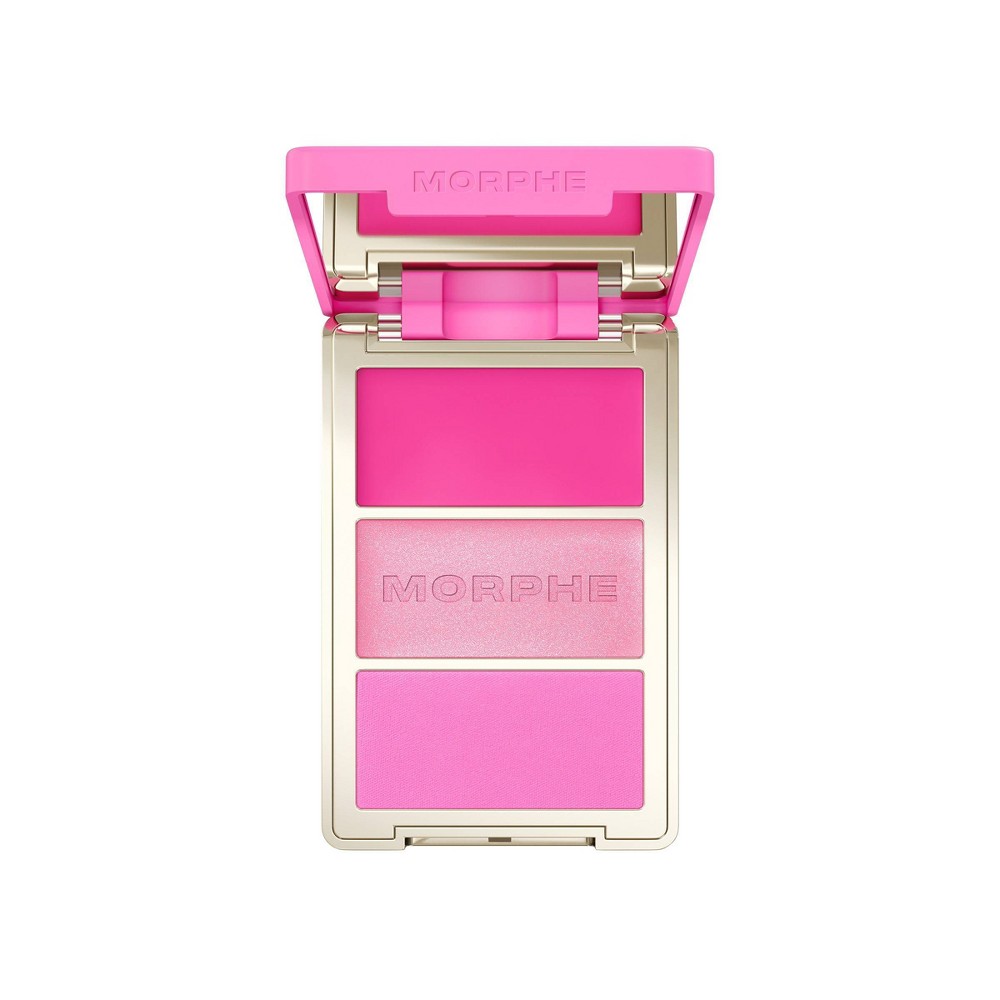

Morphe Cheek Thrills Multi-Finish Face Trio - Apres-Ski - 10.8g: Talcum-Free, Buildable Coverage, No Fragrance Added
Analysis updated August 2026 · How Scout scores
At a glance
Summary
This face trio contains several beneficial ingredients such as jojoba seed oil, grape seed oil, and tocopherol, which provide moisturizing and antioxidant benefits. However, the presence of phenoxyethanol, a preservative that can cause irritation and has potential neurotoxic effects, slightly lowers the score. The product is processed, which also impacts its overall rating, but the absence of fragrance and talc is a positive aspect.
Key ingredients 42
Simmondsia Chinensis (Jojoba) Seed OilVery Good
Jojoba Seed Oil is a natural oil used for its moisturizing and skin-conditioning properties. It is generally considered safe for use in cosmetics and is well-tolerated by most skin types. It closely resembles the skin's natural sebum, making it an excellent moisturizer.
Benefits
Provides excellent moisturizing and skin-conditioning properties.
Vitis Vinifera (Grape) Seed OilVery Good
Grape Seed Oil is a natural oil used for its antioxidant and skin-conditioning properties. It is generally considered safe for use in cosmetics and is well-tolerated by most skin types. It is rich in linoleic acid, which helps to nourish and protect the skin.
Benefits
Provides antioxidant and skin-conditioning properties, nourishing and protecting the skin.
MicaGood
Beneficial ingredient — whole-food or functional value in this product class.
Risks
Inhalation of mica particles can be a concern in loose powder forms.
Benefits
Provides a shimmering appearance to cosmetic products.
Dioscorea Opposita (Wild Yam) Root ExtractGood
Wild Yam Root Extract is a botanical ingredient used for its skin-soothing properties. It is generally considered safe for use in cosmetics and may help to calm irritated skin. There are no significant risks associated with its use.
Benefits
Provides skin-soothing properties, helping to calm irritated skin.
KaolinGood
Beneficial ingredient — whole-food or functional value in this product class.
Risks
Inhalation of kaolin particles can be a concern in loose powder forms.
Benefits
Provides oil-absorbing properties, helping to control shine.
Caprylic/Capric TriglycerideGood
Caprylic/Capric Triglyceride is an emollient derived from coconut oil and glycerin, used to moisturize and condition the skin. It is generally considered safe for use in cosmetics and is well-tolerated by most skin types.
Benefits
Moisturizes and conditions the skin, improving skin texture.
Helianthus Annuus (Sunflower) Seed WaxGood
Sunflower Seed Wax is a natural wax used for its emollient and skin-conditioning properties. It is generally considered safe for use in cosmetics and is well-tolerated by most skin types.
Benefits
Provides emollient and skin-conditioning properties.
Tocopheryl AcetateGood
Tocopheryl Acetate is a form of Vitamin E used for its antioxidant properties in cosmetics. It is generally considered safe for use in cosmetics and helps to protect the skin from free radical damage.
Benefits
Provides antioxidant properties, protecting the skin from free radical damage.
Hydrolyzed SilkGood
Hydrolyzed Silk is used for its moisturizing and skin-conditioning properties in cosmetics. It is generally considered safe for use in cosmetics and helps to improve skin texture and hydration.
Benefits
Provides moisturizing and skin-conditioning properties, improving skin texture and hydration.
TocopherolGood
Tocopherol is a form of Vitamin E used for its antioxidant properties in cosmetics. It is generally considered safe for use in cosmetics and helps to protect the skin from free radical damage.
Benefits
Provides antioxidant properties, protecting the skin from free radical damage.
Phenyl TrimethiconeNeutral
Phenyl Trimethicone is a silicone-based compound used to provide a smooth application and enhance the texture of cosmetic products. It is generally considered safe for use in cosmetics. However, it may cause build-up on the skin if not properly cleansed.
Risks
Potential for build-up on the skin, which may lead to clogged pores.
Benefits
Improves the texture and spreadability of the product, providing a smooth finish.
Triisostearyl CitrateNeutral
Triisostearyl Citrate is an emollient that helps to soften and smooth the skin. It is derived from citric acid and is generally considered safe for use in cosmetics. There are no significant risks associated with its use.
Benefits
Acts as an emollient, helping to soften and smooth the skin.
PPG-3 Benzyl Ether MyristateNeutral
PPG-3 Benzyl Ether Myristate is a synthetic ester used as a skin conditioning agent. It provides a silky feel and enhances the spreadability of products. It is generally considered safe for use in cosmetics.
Benefits
Enhances the spreadability and provides a silky feel to the product.
Synthetic WaxNeutral
Synthetic Wax is used to provide structure and stability to cosmetic formulations. It is generally considered safe for use in cosmetics. However, it may cause minor skin irritation in sensitive individuals.
Risks
May cause minor skin irritation in sensitive individuals.
Benefits
Provides structure and stability to the formulation.
Diisostearyl MalateNeutral
Diisostearyl Malate is an emollient that helps to improve the texture and feel of cosmetic products. It is generally considered safe for use in cosmetics. There are no significant risks associated with its use.
Benefits
Improves the texture and feel of cosmetic products.
Vinyl Dimethicone/Methicone Silsesquioxane CrosspolymerNeutral
This ingredient is a silicone-based polymer used to enhance the texture and spreadability of cosmetic products. It is generally considered safe for use in cosmetics. However, it may cause build-up on the skin if not properly cleansed.
Risks
Potential for build-up on the skin, which may lead to clogged pores.
Benefits
Enhances the texture and spreadability of the product.
Ethylhexyl PalmitateNeutral
Ethylhexyl Palmitate is an ester of 2-ethylhexyl alcohol and palmitic acid, used as an emollient and thickening agent. It is generally considered safe for use in cosmetics. However, it may cause minor skin irritation in sensitive individuals.
Risks
May cause minor skin irritation in sensitive individuals.
Benefits
Acts as an emollient and thickening agent, improving product texture.
Ethylhexyl StearateNeutral
Ethylhexyl Stearate is an ester used as an emollient and thickening agent in cosmetics. It is generally considered safe for use in cosmetics. There are no significant risks associated with its use.
Benefits
Acts as an emollient and thickening agent, improving product texture.
SilicaNeutral
Silica is a mineral used in cosmetics for its oil-absorbing properties and to improve the texture of products. It is generally considered safe for use in cosmetics. However, inhalation of silica particles can be a concern in loose powder forms.
Risks
Inhalation of silica particles can be a concern in loose powder forms.
Benefits
Provides oil-absorbing properties and improves product texture.
PolybuteneNeutral
Polybutene is a polymer used as a binder and thickening agent in cosmetics. It is generally considered safe for use in cosmetics. There are no significant risks associated with its use.
Benefits
Acts as a binder and thickening agent, improving product consistency.
Disteardimonium HectoriteNeutral
Disteardimonium Hectorite is a clay-derived thickening agent used to stabilize emulsions in cosmetics. It is generally considered safe for use in cosmetics. There are no significant risks associated with its use.
Benefits
Stabilizes emulsions and improves product consistency.
OctyldodecanolNeutral
Octyldodecanol is a fatty alcohol used as an emollient and thickening agent in cosmetics. It is generally considered safe for use in cosmetics. However, it may cause minor skin irritation in sensitive individuals.
Risks
May cause minor skin irritation in sensitive individuals.
Benefits
Acts as an emollient and thickening agent, improving product texture.
Propylene CarbonateNeutral
Propylene Carbonate is a solvent used to dissolve other ingredients in cosmetics. It is generally considered safe for use in cosmetics. There are no significant risks associated with its use.
Benefits
Acts as a solvent, helping to dissolve other ingredients in the formulation.
EthylhexylglycerinNeutral
Ethylhexylglycerin is a skin conditioning agent and preservative enhancer used in cosmetics. It is generally considered safe for use in cosmetics. There are no significant risks associated with its use.
Benefits
Enhances the efficacy of preservatives and conditions the skin.
Pentaerythrityl Tetra-di-t-Butyl HydroxyhydrocinnamateNeutral
This ingredient is an antioxidant used to stabilize cosmetic formulations and prevent oxidation. It is generally considered safe for use in cosmetics. There are no significant risks associated with its use.
Benefits
Acts as an antioxidant, stabilizing the formulation and preventing oxidation.
Water (Aqua, Eau)Neutral
Water is used as a solvent in cosmetics to dissolve other ingredients. It is generally considered safe for use in cosmetics. There are no significant risks associated with its use.
Benefits
Acts as a solvent, helping to dissolve other ingredients in the formulation.
Butylene GlycolNeutral
Butylene Glycol is a humectant used to retain moisture in cosmetic products. It is generally considered safe for use in cosmetics. However, it may cause minor skin irritation in sensitive individuals.
Risks
May cause minor skin irritation in sensitive individuals.
Benefits
Acts as a humectant, helping to retain moisture in the skin.
Tin OxideNeutral
Tin Oxide is used as an opacifying agent and to add luster to cosmetic products. It is generally considered safe for use in cosmetics. There are no significant risks associated with its use.
Benefits
Adds luster and acts as an opacifying agent in cosmetic products.
Calcium Aluminum BorosilicateNeutral
Calcium Aluminum Borosilicate is used as a filler and to add shimmer to cosmetic products. It is generally considered safe for use in cosmetics. There are no significant risks associated with its use.
Benefits
Adds shimmer and acts as a filler in cosmetic products.
Dicaprylyl CarbonateNeutral
Dicaprylyl Carbonate is an emollient used to improve the spreadability and feel of cosmetic products. It is generally considered safe for use in cosmetics. There are no significant risks associated with its use.
Benefits
Improves the spreadability and feel of cosmetic products.
Sorbitan IsostearateNeutral
Sorbitan Isostearate is an emulsifier used to stabilize cosmetic formulations. It is generally considered safe for use in cosmetics. There are no significant risks associated with its use.
Benefits
Stabilizes cosmetic formulations, improving product consistency.
Glyceryl CaprylateNeutral
Glyceryl Caprylate is an emollient and emulsifier used in cosmetics. It is generally considered safe for use in cosmetics. There are no significant risks associated with its use.
Benefits
Acts as an emollient and emulsifier, improving product texture.
Stearalkonium HectoriteNeutral
Stearalkonium Hectorite is a clay-derived thickening agent used to stabilize emulsions in cosmetics. It is generally considered safe for use in cosmetics. There are no significant risks associated with its use.
Benefits
Stabilizes emulsions and improves product consistency.
Sorbitan SesquioleateNeutral
Sorbitan Sesquioleate is an emulsifier used to stabilize cosmetic formulations. It is generally considered safe for use in cosmetics. There are no significant risks associated with its use.
Benefits
Stabilizes cosmetic formulations, improving product consistency.
Caprylyl GlycolNeutral
Caprylyl Glycol is a skin conditioning agent and preservative enhancer used in cosmetics. It is generally considered safe for use in cosmetics. There are no significant risks associated with its use.
Benefits
Enhances the efficacy of preservatives and conditions the skin.
Aluminum HydroxideNeutral
Aluminum Hydroxide is used as an opacifying agent and to stabilize emulsions in cosmetics. It is generally considered safe for use in cosmetics. There are no significant risks associated with its use.
Benefits
Acts as an opacifying agent and stabilizes emulsions.
MaltodextrinNeutral
Maltodextrin is used as a binding agent and to improve the texture of cosmetic products. It is generally considered safe for use in cosmetics. There are no significant risks associated with its use.
Benefits
Acts as a binding agent and improves product texture.
Synthetic FluorphlogopiteNeutral
Synthetic Fluorphlogopite is a synthetic mica used to add shimmer and improve the texture of cosmetic products. It is generally considered safe for use in cosmetics. There are no significant risks associated with its use.
Benefits
Adds shimmer and improves product texture.
Magnesium MyristateNeutral
Magnesium Myristate is used as a binding agent and to improve the texture of cosmetic products. It is generally considered safe for use in cosmetics. There are no significant risks associated with its use.
Benefits
Acts as a binding agent and improves product texture.
Magnesium StearateNeutral
Magnesium Stearate is used as a binding agent and to improve the texture of cosmetic products. It is generally considered safe for use in cosmetics. There are no significant risks associated with its use.
Benefits
Acts as a binding agent and improves product texture.
PhenoxyethanolBad
Phenoxyethanol is a preservative used to prevent microbial growth in cosmetics. It is generally considered safe in low concentrations but can cause skin irritation and allergic reactions in some individuals. It is also a potential neurotoxin if ingested.
Risks
Can cause skin irritation and allergic reactions; potential neurotoxin if ingested.
Benefits
Prevents microbial growth, extending the shelf life of the product.
Synthetic BeeswaxBad
Processed additive flagged under Scout's ingredient doctrine.
Benefits
Provides structure and stability to the formulation.
Processing
Processed Foods
Get the full breakdown in the Scout appTake Scout shopping
Scan any product to see lab results, healthy alternatives, and your personalized analysis.
Download on theApp Store GET IT ONGoogle PlayAmazon pricing & content
Amazon price as of . Product prices and availability are accurate as of the date/time indicated and are subject to change. Any price and availability information displayed on Amazon.com at the time of purchase will apply to the purchase of this product.
CERTAIN CONTENT THAT APPEARS ON THIS SITE COMES FROM AMAZON. THIS CONTENT IS PROVIDED “AS IS” AND IS SUBJECT TO CHANGE OR REMOVAL AT ANY TIME.