
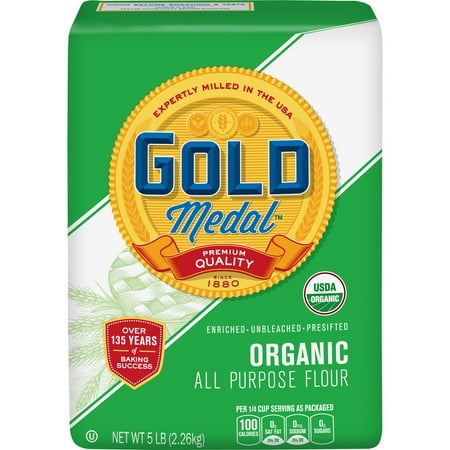


Gold Medal Organic All-Purpose Flour
Analysis updated April 2026 · How Scout scores
At a glance
Summary
This product is made from certified organic wheat flour and is minimally processed, which contributes to its high quality. The addition of essential vitamins and minerals like niacin, iron, thiamin, riboflavin, and folic acid enhances its nutritional profile without introducing any harmful additives. The clean ingredient list and organic certification further support its healthfulness.
Key ingredients 6
Certified organic wheat flourVery Good
Certified organic wheat flour is a high-quality ingredient that is minimally processed. Being organic, it is free from synthetic pesticides and fertilizers, which enhances its nutritional profile. It serves as a versatile base for various baked goods, providing essential carbohydrates and proteins.
Benefits
Provides essential carbohydrates for energy and proteins for muscle maintenance. The organic certification ensures a cleaner and more sustainable product.
NiacinGood
Niacin, also known as vitamin B3, is an essential nutrient that supports metabolic processes. It is often added to flour to enhance its nutritional value, especially in enriched products. Niacin helps convert food into energy and supports skin and nerve health.
Benefits
Supports energy metabolism and maintains healthy skin and nerves. It is crucial for converting nutrients into usable energy.
IronGood
Iron is a vital mineral that is essential for the production of hemoglobin in red blood cells. It is added to flour to prevent iron-deficiency anemia, especially in populations with limited dietary iron sources. Iron fortification helps maintain adequate oxygen transport in the body.
Risks
Excessive iron intake can lead to toxicity, but this is rare with dietary sources.
Benefits
Essential for oxygen transport and energy production in the body. Helps prevent iron-deficiency anemia.
Thiamin mononitrateGood
Thiamin mononitrate is a synthetic form of vitamin B1, crucial for carbohydrate metabolism. It is commonly added to flour to ensure adequate intake of this essential vitamin. Thiamin supports nerve function and energy production.
Benefits
Supports energy metabolism and nerve function. Helps convert carbohydrates into energy.
RiboflavinGood
Riboflavin, or vitamin B2, is an essential nutrient that plays a key role in energy production and cellular function. It is often added to flour to enhance its nutritional profile. Riboflavin helps in the breakdown of proteins, fats, and carbohydrates.
Benefits
Supports energy production and cellular function. Essential for the metabolism of macronutrients.
Folic acidNeutral
Standard formulation ingredient — neither beneficial nor harmful at typical use.
Risks
Excessive intake can mask vitamin B12 deficiency, but this is rare with dietary sources.
Benefits
Essential for DNA synthesis and cell growth. Helps prevent neural tube defects during pregnancy.
Processing
Unprocessed or Minimally Processed Foods
Get the full breakdown in the Scout appTake Scout shopping
Scan any product to see lab results, healthy alternatives, and your personalized analysis.
Download on theApp Store GET IT ONGoogle Play