
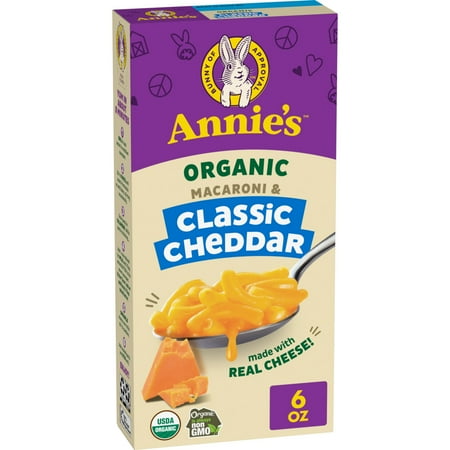



Annie's Organic Classic Cheddar Macaroni & Cheese
Summary
This product features a clean ingredient list with organic components such as pasta, whey, and cheddar cheese, which are beneficial for providing essential nutrients. However, it is classified as ultra-processed due to the presence of additives like citric acid and sodium phosphate, which limits its score. Despite the organic ingredients, the level of processing and the use of refined flour contribute to a lower rating.
At a glance
Key ingredients 13
Organic pastaGood
Organic pasta is made from organic wheat flour, providing a source of carbohydrates. The organic certification indicates no synthetic pesticides or fertilizers were used. It is a staple food that provides energy.
Risks
May contain gluten, which can be a concern for individuals with celiac disease or gluten sensitivity.
Benefits
Provides a good source of energy and is made from organic wheat, reducing exposure to synthetic chemicals.
Organic wheyGood
Organic whey is a high-quality protein source derived from milk. It contains essential amino acids necessary for muscle repair and growth. Being organic, it is free from synthetic hormones and antibiotics.
Risks
May cause allergic reactions in individuals with dairy allergies.
Benefits
Rich in essential amino acids and supports muscle repair and growth.
Organic cultured creamGood
Organic cultured cream is a dairy product that provides healthy fats and probiotics. The organic certification ensures it is free from synthetic additives. It adds richness and flavor to foods.
Risks
Contains lactose, which can be problematic for lactose-intolerant individuals.
Benefits
Provides healthy fats and probiotics that support gut health.
Organic nonfat milkGood
Organic nonfat milk is a source of calcium and protein without added fats. The organic label ensures no synthetic hormones or antibiotics are used. It supports bone health and muscle function.
Risks
May cause allergic reactions in individuals with dairy allergies.
Benefits
Provides calcium and protein, supporting bone health and muscle function.
Organic butterGood
Organic butter is made from organic pasteurized cream and provides healthy fats. It is free from synthetic additives and offers a rich flavor. Organic certification ensures higher animal welfare standards.
Risks
High in saturated fats, which should be consumed in moderation.
Benefits
Provides healthy fats and enhances flavor, with organic certification ensuring quality.
Organic dried cheddar cheeseGood
Organic dried cheddar cheese is a source of protein and calcium. The organic certification ensures it is free from synthetic additives. It adds a rich, cheesy flavor to dishes.
Risks
Contains lactose and may cause issues for lactose-intolerant individuals.
Benefits
Rich in protein and calcium, supporting bone health and muscle function.
Organic corn starchNeutral
Organic corn starch is used as a thickening agent in foods. The organic certification ensures it is free from genetically modified organisms (GMOs). It is a neutral ingredient with no significant health impacts.
See more about Organic corn starch →Organic annatto extractNeutral
Organic annatto extract is used for natural coloring in foods. It is derived from the seeds of the achiote tree and is considered safe. The organic certification ensures no synthetic chemicals are used.
Benefits
Provides natural coloring without synthetic additives.
Citric acidNeutral
Citric acid is a natural preservative and flavor enhancer. It is commonly used in food processing and is generally recognized as safe. It helps maintain freshness and flavor.
Benefits
Helps preserve freshness and enhance flavor.
Lactic acidNeutral
Lactic acid is used as a preservative and acidity regulator in foods. It is naturally occurring and generally recognized as safe. It helps maintain the pH balance in foods.
Benefits
Helps maintain pH balance and preserve food quality.
Sodium phosphateNeutral
Sodium phosphate is used as an emulsifier and stabilizer in processed foods. It helps maintain texture and moisture. It is generally recognized as safe in moderate amounts.
Risks
Excessive consumption may lead to imbalances in phosphate levels.
Benefits
Helps maintain texture and moisture in processed foods.
Silicon dioxideNeutral
Silicon dioxide is used as an anticaking agent in powdered foods. It prevents clumping and is generally recognized as safe. It is a common additive in food processing.
Benefits
Prevents clumping and maintains product quality.
SaltNeutral
Salt is used to enhance flavor and preserve food. It is a common ingredient in many foods and is essential for bodily functions. However, excessive intake can lead to health issues.
Risks
High sodium intake can contribute to hypertension and cardiovascular issues.
Benefits
Enhances flavor and is essential for maintaining fluid balance in the body.
Processing
Ultra-Processed Foods
Get the full breakdown in the Scout app
Scan any product to see lab results, healthy alternatives, and your personalized analysis.
Download on theApp Store