
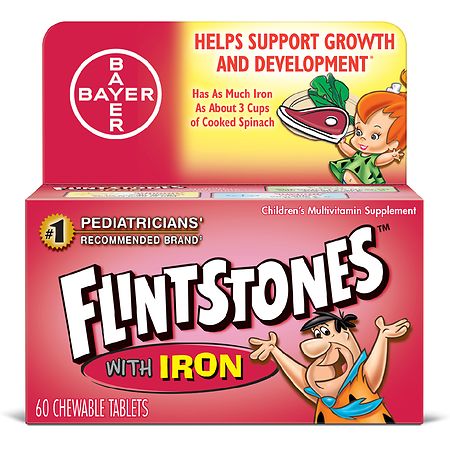


Flintstones Chewable Kids Vitamins w Iron Multivitamin for Kids 60 Ct
Summary
Flintstones Chewable Kids Vitamins contain essential nutrients like calcium, vitamin C, and iron, which are crucial for children's growth and development. However, the presence of artificial colors and sweeteners, common in chewable vitamins, detracts from the overall formulation quality. While these vitamins provide necessary nutrients, the inclusion of less desirable additives impacts their overall healthfulness.
At a glance
Key ingredients 14
CalciumVery Good
Calcium is essential for building and maintaining strong bones and teeth. It plays a crucial role in nerve transmission, muscle function, and blood clotting. Adequate calcium intake is vital for children during their growth years.
Benefits
Supports bone health and development, especially important for growing children.
Vitamin CVery Good
Vitamin C is a powerful antioxidant that supports the immune system and helps in the absorption of iron. It is also important for the growth and repair of tissues in the body. Regular intake can help prevent deficiencies and improve overall health.
Benefits
Enhances immune function and aids in collagen synthesis, promoting healthy skin and tissues.
IronVery Good
Iron is a critical component of hemoglobin, which is necessary for oxygen transport in the blood. It supports energy production and cognitive development in children. Iron deficiency can lead to anemia, making supplementation important for those at risk.
Risks
Excessive iron intake can lead to toxicity, especially in children, so dosage should be monitored.
Benefits
Essential for oxygen transport and energy metabolism, crucial for growing children.
Vitamin EVery Good
Vitamin E is an antioxidant that helps protect cells from damage caused by free radicals. It supports immune function and skin health. Adequate intake is important for maintaining overall health and preventing oxidative stress.
Benefits
Protects cells from oxidative damage and supports immune health.
BiotinVery Good
Biotin is a B-vitamin that plays a key role in the metabolism of fats, carbohydrates, and proteins. It is important for maintaining healthy hair, skin, and nails. Biotin deficiency is rare but can lead to skin and hair issues.
Benefits
Supports metabolic processes and promotes healthy hair and skin.
CopperVery Good
Copper is essential for the formation of red blood cells and maintaining healthy bones, blood vessels, and nerves. It also plays a role in iron absorption and immune function. Adequate copper intake is necessary for overall health.
Risks
Excessive copper intake can lead to toxicity, so it should be consumed in recommended amounts.
Benefits
Supports red blood cell formation and aids in iron absorption.
NiacinVery Good
Niacin, also known as Vitamin B3, is important for converting food into energy and maintaining healthy skin and nerves. It also helps improve cholesterol levels and supports brain function. Niacin is essential for overall metabolic health.
Risks
High doses can cause flushing and liver damage, but this is rare in standard supplement doses.
Benefits
Supports energy metabolism and helps maintain healthy skin and nerves.
Vitamin AVery Good
Vitamin A is crucial for maintaining healthy vision, immune function, and skin health. It plays a role in cell growth and differentiation. Adequate intake is important for preventing deficiencies that can lead to vision problems.
Risks
Excessive intake can lead to toxicity, particularly in supplement form, so it should be monitored.
Benefits
Supports vision and immune health, and promotes healthy skin.
Vitamin B6Very Good
Vitamin B6 is involved in protein metabolism, cognitive development, and the production of neurotransmitters. It supports immune function and helps in the formation of hemoglobin. Adequate intake is important for brain health and energy metabolism.
Benefits
Supports brain health and energy metabolism, and aids in hemoglobin production.
Vitamin B12Very Good
Vitamin B12 is essential for nerve function, red blood cell formation, and DNA synthesis. It is particularly important for energy production and cognitive health. Deficiency can lead to anemia and neurological issues.
Benefits
Supports nerve function and red blood cell formation, crucial for energy and cognitive health.
Vitamin DVery Good
Vitamin D is important for calcium absorption and bone health. It supports immune function and has been linked to mood regulation. Adequate levels are crucial for preventing bone disorders such as rickets in children.
Risks
Excessive intake can lead to toxicity, but this is rare with standard supplementation.
Benefits
Enhances calcium absorption and supports bone and immune health.
ZincVery Good
Zinc is vital for immune function, wound healing, and DNA synthesis. It plays a role in growth and development, particularly in children. Adequate zinc intake is important for maintaining overall health and preventing deficiencies.
Risks
Excessive zinc intake can interfere with copper absorption and lead to toxicity.
Benefits
Supports immune function and is essential for growth and development.
ThiaminVery Good
Thiamin, or Vitamin B1, is essential for energy metabolism and nerve function. It helps convert carbohydrates into energy and supports muscle and heart function. Adequate intake is important for maintaining overall health and preventing deficiencies.
Benefits
Supports energy metabolism and nerve function, crucial for overall health.
RiboflavinVery Good
Riboflavin, or Vitamin B2, is important for energy production and the metabolism of fats, drugs, and steroids. It also supports skin and eye health. Adequate intake is necessary for maintaining overall health and preventing deficiencies.
Benefits
Supports energy production and promotes healthy skin and eyes.
Processing
Unprocessed or Minimally Processed Foods
Get the full breakdown in the Scout app
Scan any product to see lab results, healthy alternatives, and your personalized analysis.
Download on theApp Store