
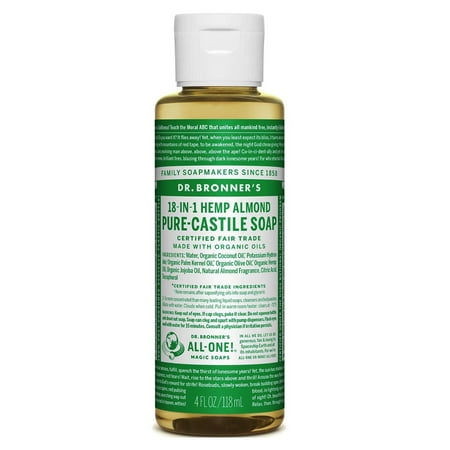



Dr. Bronner s Organic Pure Castile Liquid Soap Almond 4 oz
Dr. Bronner'sAnalysis updated September 2026 · How Scout scores
At a glance
Summary
This product contains several beneficial natural oils such as coconut, olive, hemp seed, and jojoba, which are known for their moisturizing and skin-conditioning properties. However, the presence of fragrance components like benzyl alcohol and limonene, which can cause skin irritation in sensitive individuals, slightly detracts from its overall safety profile. The formulation is relatively clean with a short ingredient list, but the inclusion of these potential irritants prevents it from achieving a higher score.
Key ingredients 13
Cocos Nucifera (Coconut) OilVery Good
Coconut oil is a natural emollient that helps to moisturize and soften the skin. It contains fatty acids that can improve skin barrier function. It is well-regarded for its nourishing properties.
Risks
Some individuals may experience allergic reactions or breakouts from coconut oil.
Benefits
Coconut oil is rich in lauric acid, which has antimicrobial properties and can help soothe dry skin.
Olea Europaea (Olive) Fruit OilVery Good
Olive oil is a nourishing oil that is rich in antioxidants and vitamins. It helps to moisturize and protect the skin. It is highly valued for its skin-conditioning properties.
Risks
There are minimal risks, though some may experience mild irritation or allergic reactions.
Benefits
Olive oil is rich in oleic acid and vitamin E, which help to nourish and protect the skin.
Cannabis Sativa (Hemp) Seed OilVery Good
Hemp seed oil is known for its moisturizing and anti-inflammatory properties. It contains essential fatty acids that can help to balance skin hydration. It is beneficial for soothing and nourishing the skin.
Risks
There are minimal risks, though some may experience allergic reactions.
Benefits
Hemp seed oil is rich in omega-3 and omega-6 fatty acids, which support skin health.
Simmondsia Chinensis (Jojoba) Seed WaxVery Good
Jojoba oil is a natural emollient that closely resembles the skin's natural sebum. It helps to moisturize and protect the skin without clogging pores. It is highly regarded for its skin-conditioning benefits.
Risks
There are minimal risks, though some may experience allergic reactions.
Benefits
Jojoba oil is rich in vitamins and minerals that nourish and protect the skin.
TocopherolVery Good
Tocopherol, or vitamin E, is an antioxidant that helps to protect the skin from free radical damage. It is known for its moisturizing and skin-conditioning properties. It is beneficial for maintaining healthy skin.
Risks
There are minimal risks, though some may experience allergic reactions.
Benefits
Vitamin E helps to nourish and protect the skin, promoting a healthy appearance.
AquaNeutral
Aqua, or water, is a common solvent used in cosmetic formulations. It serves as a base for the product, helping to dissolve other ingredients. It does not provide any direct benefits or risks.
Risks
There are no significant risks associated with water in cosmetic products.
Benefits
Water helps to hydrate the skin by providing moisture.
Potassium HydroxideNeutral
Potassium hydroxide is used in soap making to saponify oils, turning them into soap. It is necessary for the soap-making process but is not present in the final product. It does not provide direct benefits or risks in the finished product.
Risks
In its raw form, it can be caustic and irritating, but it is neutralized in soap formulations.
Benefits
It helps in the creation of soap, which cleanses the skin effectively.
Elaeis Guineensis (Palm) OilNeutral
Palm oil is a common ingredient in soaps due to its ability to create a hard bar with good lather. It is a stable oil that contributes to the texture of the soap. It does not have significant direct benefits or risks in this context.
Risks
The production of palm oil is associated with environmental concerns, such as deforestation.
Benefits
Palm oil provides a creamy lather and helps to harden the soap.
Citric AcidNeutral
Citric acid is used to adjust the pH of cosmetic products. It can help to maintain the stability and effectiveness of the formulation. It does not provide direct benefits or risks in this context.
Risks
In high concentrations, it can cause skin irritation, but it is typically used in safe amounts.
Benefits
Citric acid helps to maintain the pH balance of the product.
BenzaldehydeNeutral
Benzaldehyde is used as a fragrance component in cosmetics. It provides an almond-like scent to the product. It does not have significant direct benefits or risks in this context.
Risks
In high concentrations, it can cause skin irritation, but it is typically used in safe amounts.
Benefits
Benzaldehyde contributes to the product's fragrance profile.
Parfum (Natural Almond Fragrance)Bad
Fragrance, even when natural, can cause allergic reactions or skin irritation in sensitive individuals. It is often criticized for its potential to cause contact dermatitis. It does not provide any skin benefits.
Risks
Fragrances can cause skin irritation and allergic reactions.
Benefits
The primary benefit is the pleasant scent it imparts to the product.
Benzyl AlcoholBad
Benzyl alcohol is used as a preservative and solvent in cosmetics. It can cause skin irritation and allergic reactions in some individuals. It is often criticized for its potential to cause contact dermatitis.
Risks
Benzyl alcohol can cause skin irritation and allergic reactions.
Benefits
It acts as a preservative, helping to extend the shelf life of the product.
LimoneneBad
Limonene is a fragrance component that can cause skin irritation and allergic reactions in sensitive individuals. It is often criticized for its potential to cause contact dermatitis. It does not provide any skin benefits.
Risks
Limonene can cause skin irritation and allergic reactions.
Benefits
The primary benefit is the pleasant citrus scent it imparts to the product.
Get the full breakdown in the Scout appTake Scout shopping
Scan any product to see lab results, healthy alternatives, and your personalized analysis.
Download on theApp Store GET IT ONGoogle PlayAmazon pricing & content
Amazon price as of . Product prices and availability are accurate as of the date/time indicated and are subject to change. Any price and availability information displayed on Amazon.com at the time of purchase will apply to the purchase of this product.
CERTAIN CONTENT THAT APPEARS ON THIS SITE COMES FROM AMAZON. THIS CONTENT IS PROVIDED “AS IS” AND IS SUBJECT TO CHANGE OR REMOVAL AT ANY TIME.