
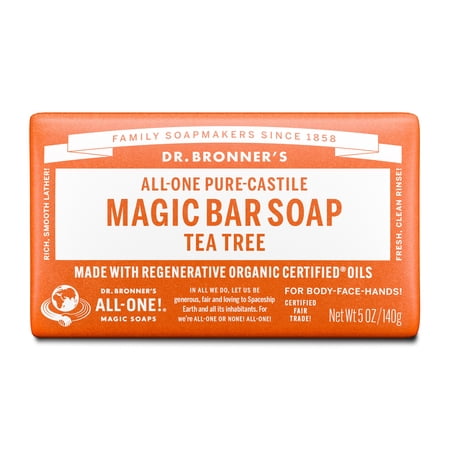
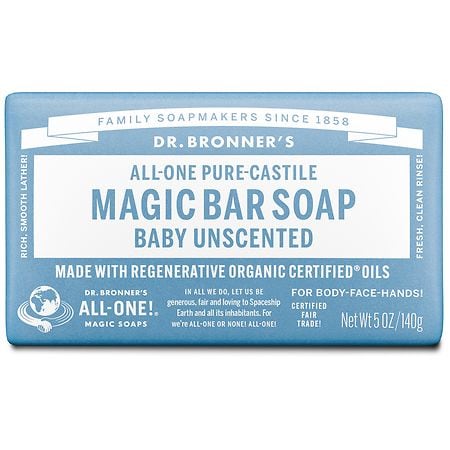
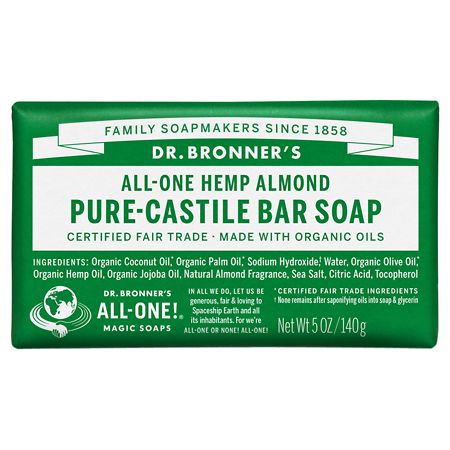
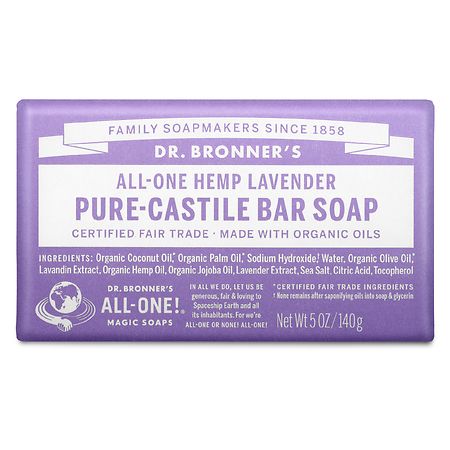


Dr. Bronner s Magic Bar Soap – Tea Tree - Pure-Castile Soap - 5 oz - for face body hands
At a glance
Summary
This soap is made from high-quality organic ingredients such as coconut oil, olive oil, and hemp seed oil, which are known for their moisturizing and skin-conditioning properties. The inclusion of tea tree extract adds natural antiseptic benefits, and the product is free from synthetic additives and harmful chemicals. Its minimal processing and use of organic, sustainable ingredients contribute to its high rating.
Key ingredients 13
Organic Coconut OilVery Good
Organic Coconut Oil is a natural ingredient known for its moisturizing properties. It is derived from coconuts and is free from synthetic additives. Its organic certification ensures it is produced without harmful pesticides.
Risks
There are minimal risks associated with organic coconut oil, though some individuals may experience allergic reactions.
Benefits
It provides excellent hydration and has antimicrobial properties, making it beneficial for skin health.
Tea Tree ExtractVery Good
Tea Tree Extract is known for its natural antiseptic and anti-inflammatory properties. It is derived from the leaves of the tea tree and is used for its skin-soothing benefits. It is a natural ingredient without synthetic additives.
Risks
Some individuals may experience skin irritation or allergic reactions.
Benefits
It helps in reducing acne and skin inflammation due to its antimicrobial properties.
Organic Olive OilVery Good
Organic Olive Oil is a nourishing ingredient rich in antioxidants and vitamins. It is used in soaps for its moisturizing and skin-conditioning properties. Being organic, it is free from harmful pesticides.
Risks
There are minimal risks, though it may cause allergic reactions in sensitive individuals.
Benefits
It provides deep hydration and helps maintain skin elasticity.
Organic Hemp Seed OilVery Good
Organic Hemp Seed Oil is valued for its high content of essential fatty acids. It is used in skincare for its moisturizing and anti-inflammatory properties. Its organic nature ensures it is free from synthetic chemicals.
Risks
It may cause allergic reactions in some individuals.
Benefits
It helps in soothing and hydrating the skin, promoting overall skin health.
Organic Jojoba WaxVery Good
Organic Jojoba Wax is similar to the skin's natural oils, making it an excellent moisturizer. It is derived from the seeds of the jojoba plant and is used for its skin-conditioning properties. Being organic, it is free from synthetic additives.
Risks
There are minimal risks, though it may cause allergic reactions in sensitive individuals.
Benefits
It helps in balancing skin oil production and provides long-lasting hydration.
Organic Palm OilGood
Organic Palm Oil is used for its ability to create a creamy lather in soaps. Being organic, it is sourced sustainably, reducing environmental impact. It is free from synthetic chemicals.
Risks
Palm oil production can lead to deforestation if not sustainably sourced.
Benefits
It is rich in vitamins A and E, which are beneficial for skin health.
Sea SaltGood
Beneficial ingredient — whole-food or functional value in this product class.
Risks
Excessive use may lead to skin dryness or irritation.
Benefits
It helps in exfoliating the skin, leaving it smooth and refreshed.
TocopherolGood
Tocopherol, also known as Vitamin E, is an antioxidant used to preserve the freshness of the product. It is derived from natural sources and helps in protecting the skin from oxidative damage. It is a beneficial ingredient in skincare.
Risks
There are minimal risks, though it may cause allergic reactions in some individuals.
Benefits
It helps in moisturizing the skin and protecting it from environmental damage.
Sodium HydroxideNeutral
Sodium Hydroxide is a necessary component in soap making, used to saponify oils. It is a strong alkali that is neutralized during the soap-making process. In the final product, it is not present in its original form.
Risks
In its raw form, it is caustic and can cause burns, but it is safe in finished soap.
Benefits
It is essential for converting oils into soap, ensuring the product cleans effectively.
WaterNeutral
Water is a universal solvent used in the soap-making process. It helps dissolve other ingredients and facilitates the saponification process. It is a natural and safe ingredient.
Risks
There are no significant risks associated with water in this context.
Benefits
It is crucial for the saponification process and helps in forming the soap structure.
Citric AcidNeutral
Citric Acid is used to adjust the pH level of the soap. It is a natural acid derived from citrus fruits. It helps in maintaining the stability and shelf life of the product.
Risks
In high concentrations, it may cause skin irritation.
Benefits
It helps in balancing the pH of the soap, ensuring it is gentle on the skin.
LimoneneBad
Processed additive flagged under Scout's ingredient doctrine.
Risks
It may cause allergic reactions or skin irritation in sensitive individuals.
Benefits
It provides a pleasant citrus scent and may have antibacterial properties.
LinaloolBad
Processed additive flagged under Scout's ingredient doctrine.
Risks
It may cause allergic reactions or skin irritation in sensitive individuals.
Benefits
It provides a pleasant floral scent and may have calming effects.
Get the full breakdown in the Scout appTake Scout shopping
Scan any product to see lab results, healthy alternatives, and your personalized analysis.
Download on theApp Store GET IT ONGoogle PlayAmazon pricing & content
Amazon price as of . Product prices and availability are accurate as of the date/time indicated and are subject to change. Any price and availability information displayed on Amazon.com at the time of purchase will apply to the purchase of this product.
CERTAIN CONTENT THAT APPEARS ON THIS SITE COMES FROM AMAZON. THIS CONTENT IS PROVIDED “AS IS” AND IS SUBJECT TO CHANGE OR REMOVAL AT ANY TIME.