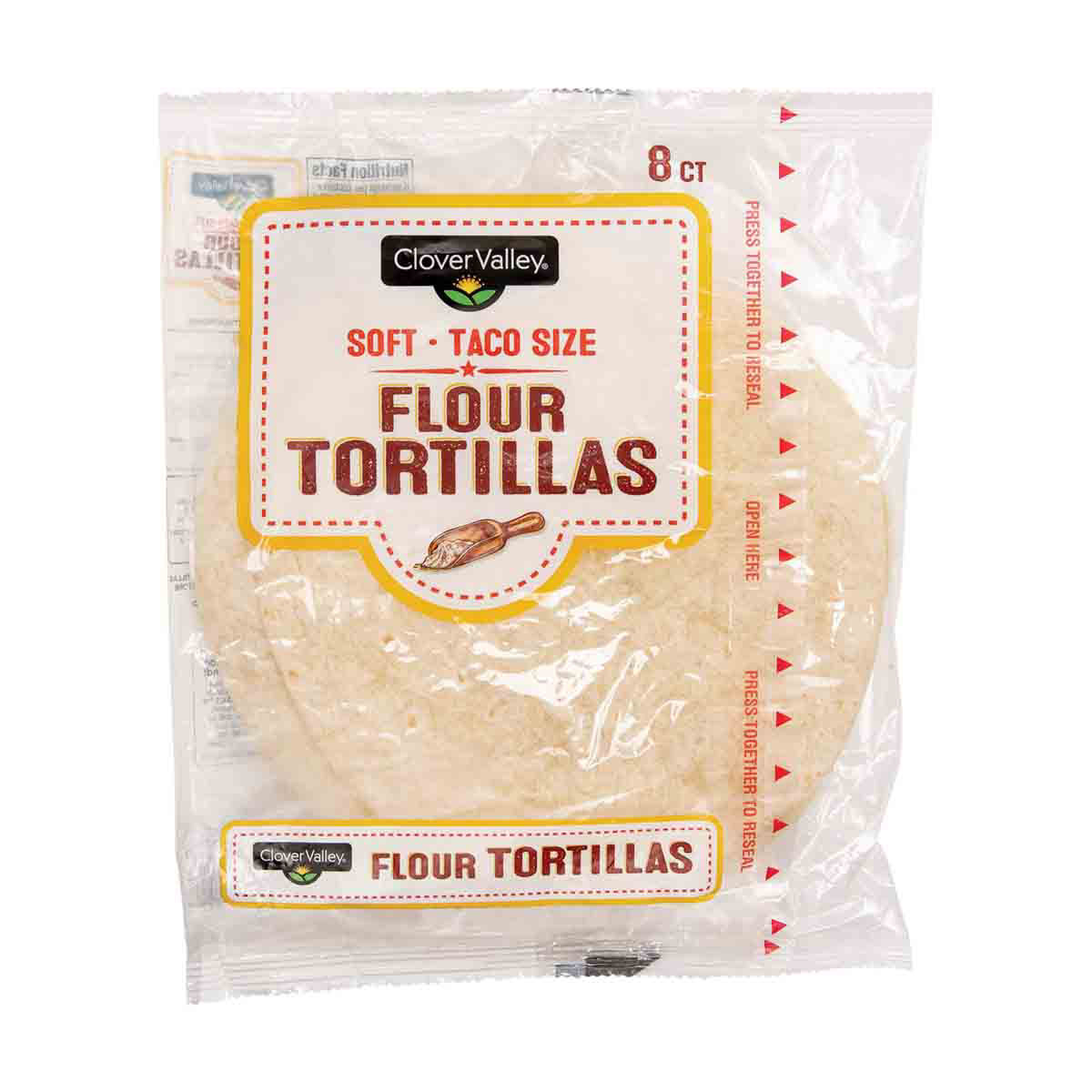
Soft Taco Size Flour Tortillas
At a glance
Summary
These tortillas are made with enriched bleached wheat flour and contain added sugar, which contributes to their processed nature. While they lack harmful additives like artificial colors or seed oils, the presence of refined flour and sugar limits their nutritional quality. The processing level and ingredient choices result in a moderate score, reflecting some nutritional drawbacks despite a relatively simple ingredient list.
Key ingredients 9
Enriched bleached wheat flourNeutral
Enriched bleached wheat flour is a refined flour that has been treated to improve texture and appearance. It is fortified with vitamins and minerals such as niacin, iron, thiamine, riboflavin, and folic acid. However, it lacks the fiber and nutrients found in whole grain flours.
Risks
Refined flours can contribute to blood sugar spikes and lack the fiber necessary for digestive health.
Benefits
Fortification with vitamins and minerals can help prevent deficiencies in these nutrients.
WaterNeutral
Water is used as a solvent and to provide moisture in the dough. It is a neutral ingredient with no direct nutritional impact. It serves as a necessary component in the formation of the tortilla structure.
See more about Water →SaltNeutral
Salt is used to enhance flavor and as a preservative. It is a common ingredient in processed foods. Excessive consumption can lead to health issues such as hypertension.
Risks
High sodium intake is associated with increased risk of hypertension and cardiovascular diseases.
Benefits
Provides essential sodium needed for various bodily functions.
NiacinNeutral
Niacin, also known as vitamin B3, is added to enriched flour to prevent deficiencies. It plays a role in energy metabolism and DNA repair. It is generally safe when consumed in normal dietary amounts.
Benefits
Essential for energy production and maintaining healthy skin and nerves.
Reduced ironNeutral
Reduced iron is added to enriched flour to prevent iron deficiency anemia. It is a common fortification in processed grains. It helps in the formation of hemoglobin and oxygen transport in the body.
Risks
Excessive iron intake can lead to toxicity, but this is rare from dietary sources.
Benefits
Helps prevent iron deficiency anemia and supports oxygen transport in the body.
Thiamine mononitrateNeutral
Thiamine mononitrate is a form of vitamin B1 used to fortify flour. It is essential for carbohydrate metabolism and nerve function. It is generally safe and beneficial in preventing thiamine deficiency.
Benefits
Supports energy metabolism and nerve function.
RiboflavinNeutral
Riboflavin, or vitamin B2, is added to enriched flour to support energy production and cellular function. It is water-soluble and generally safe. It helps in the conversion of food into energy.
Benefits
Essential for energy production and maintaining healthy skin and eyes.
Folic acidNeutral
Folic acid is a synthetic form of vitamin B9 used to fortify foods to prevent neural tube defects. It is crucial for DNA synthesis and cell division. It is especially important during periods of rapid growth such as pregnancy.
Risks
Excessive intake can mask vitamin B12 deficiency, but this is rare from dietary sources.
Benefits
Prevents neural tube defects and supports DNA synthesis and cell division.
SugarBad
Sugar is a refined carbohydrate that can contribute to increased calorie intake without providing essential nutrients. It is associated with various health issues when consumed in excess. Its presence in processed foods can contribute to the overall sugar load in the diet.
Risks
Excessive sugar intake is linked to obesity, type 2 diabetes, and dental cavities.
Processing
Processed Foods
Get the full breakdown in the Scout appTake Scout shopping
Scan any product to see lab results, healthy alternatives, and your personalized analysis.
Are you Clover Valley? Fix an error Get the badge Get tested