
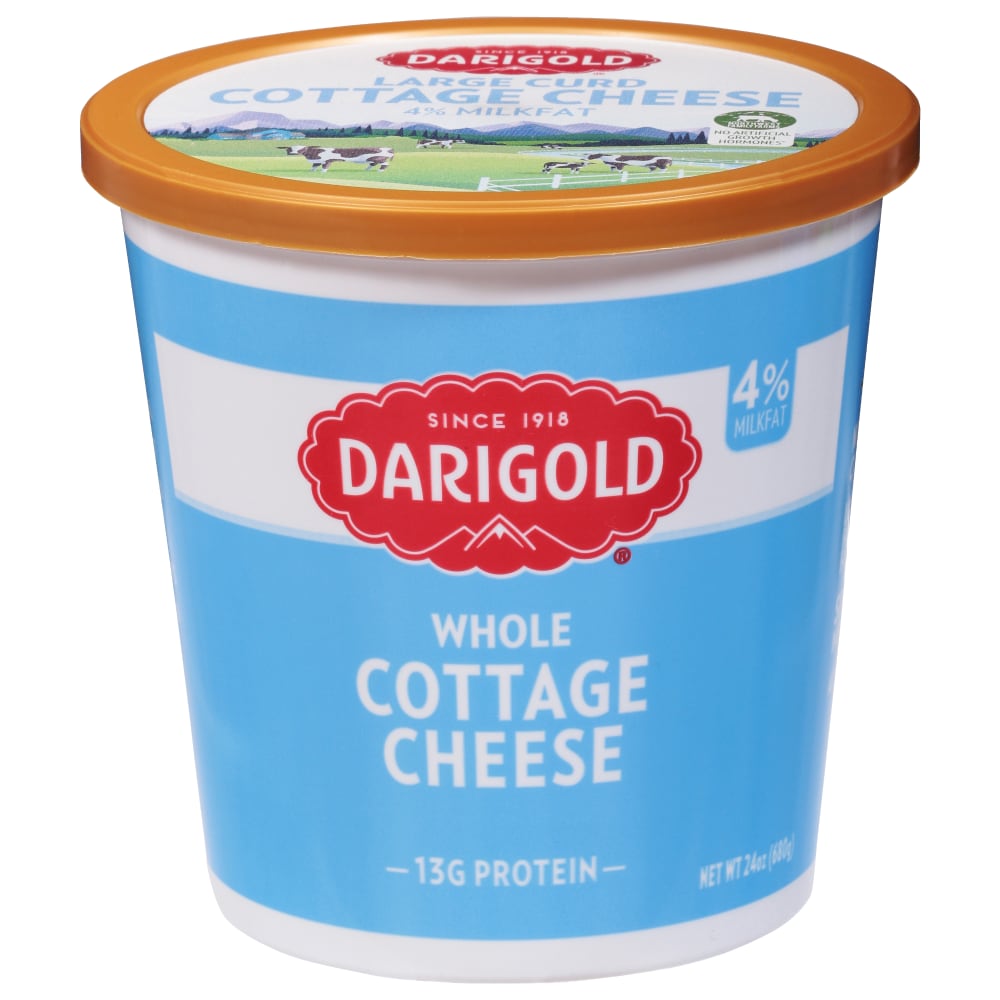


Darigold - Cottage Cheese - Small Curd 16.00 oz
Analysis updated June 2026 · How Scout scores
At a glance
Summary
This cottage cheese is ultra-processed, containing multiple additives such as guar gum, carrageenan, and polysorbate 80, which are used to enhance texture and stability but may pose health concerns. While it provides a good source of protein from cultured nonfat milk, the presence of these additives and the high level of processing limit its overall healthiness.
Key ingredients 12
Cultured nonfat milkGood
Cultured nonfat milk is a primary ingredient in cottage cheese, providing a rich source of protein and calcium. The culturing process enhances digestibility and adds beneficial probiotics. It is minimally processed, retaining most of its natural nutrients.
Benefits
Rich in protein and calcium, supporting bone health and muscle maintenance. Contains probiotics that may aid in digestion and gut health.
Milk and creamNeutral
Milk and cream are used to enhance the texture and flavor of cottage cheese. They provide essential nutrients like calcium and vitamin D. However, they also contribute to the product's fat content.
Risks
Excessive consumption may lead to increased calorie and saturated fat intake.
Benefits
Provides essential nutrients such as calcium and vitamin D, which are important for bone health.
WheyNeutral
Whey is a byproduct of cheese production and is used to improve the protein content of cottage cheese. It is a complete protein source with all essential amino acids. However, it may cause digestive issues for those with lactose intolerance.
Risks
May cause digestive discomfort in individuals with lactose intolerance.
Benefits
Offers a complete protein source, supporting muscle growth and repair.
SaltNeutral
Salt is used to enhance the flavor of cottage cheese. It is a common ingredient in dairy products but contributes to the sodium content. Excessive sodium intake can be a health concern.
Risks
High sodium intake may contribute to hypertension and cardiovascular issues.
Benefits
Enhances flavor and acts as a preservative.
Guar gumNeutral
Standard formulation ingredient — neither beneficial nor harmful at typical use.
Risks
May cause digestive discomfort such as bloating and gas when consumed in large amounts.
Locust bean gumNeutral
Locust bean gum is a natural thickener derived from carob seeds. It is used to improve the texture of cottage cheese. It is generally considered safe but offers no significant nutritional benefits.
Benefits
Improves texture and consistency of the product.
Citric acidNeutral
Citric acid is used as a preservative and to add acidity to cottage cheese. It is naturally found in citrus fruits but is often synthetically produced for food use. It is generally recognized as safe but can cause irritation in some individuals.
Risks
May cause irritation in sensitive individuals when consumed in large amounts.
Benefits
Acts as a preservative and enhances flavor.
Carbon dioxideNeutral
Carbon dioxide is used to help protect the flavor of cottage cheese. It is a naturally occurring gas and is generally recognized as safe. It does not contribute any nutritional value.
Benefits
Helps preserve flavor without adding calories or nutrients.
CarrageenanBad
Carrageenan is used as a stabilizer and thickener in dairy products. It is extracted from red seaweed but is highly processed. There are concerns about its potential to cause inflammation and digestive issues.
Risks
May cause gastrointestinal inflammation and discomfort in sensitive individuals.
Polysorbate 80Bad
Polysorbate 80 is an emulsifier used to improve texture and stability in processed foods. It is a synthetic compound with potential health concerns. Some studies suggest it may affect gut health and cause inflammation.
Risks
May contribute to gut inflammation and alter gut microbiota.
Acetylated monoglyceridesBad
Acetylated monoglycerides are used as emulsifiers in processed foods. They are chemically modified fats that help stabilize emulsions. There are concerns about their impact on health due to their synthetic nature.
Risks
Potential health concerns due to their synthetic nature and processing.
Natural flavorBad
Natural flavor is a catch-all term for flavoring agents derived from natural sources. It lacks transparency and can include a wide range of substances. There are concerns about the lack of disclosure and potential allergens.
Risks
Potential allergens and lack of transparency in ingredient sourcing.
Processing
Ultra-Processed Foods
Get the full breakdown in the Scout appTake Scout shopping
Scan any product to see lab results, healthy alternatives, and your personalized analysis.
Download on theApp Store GET IT ONGoogle Play