


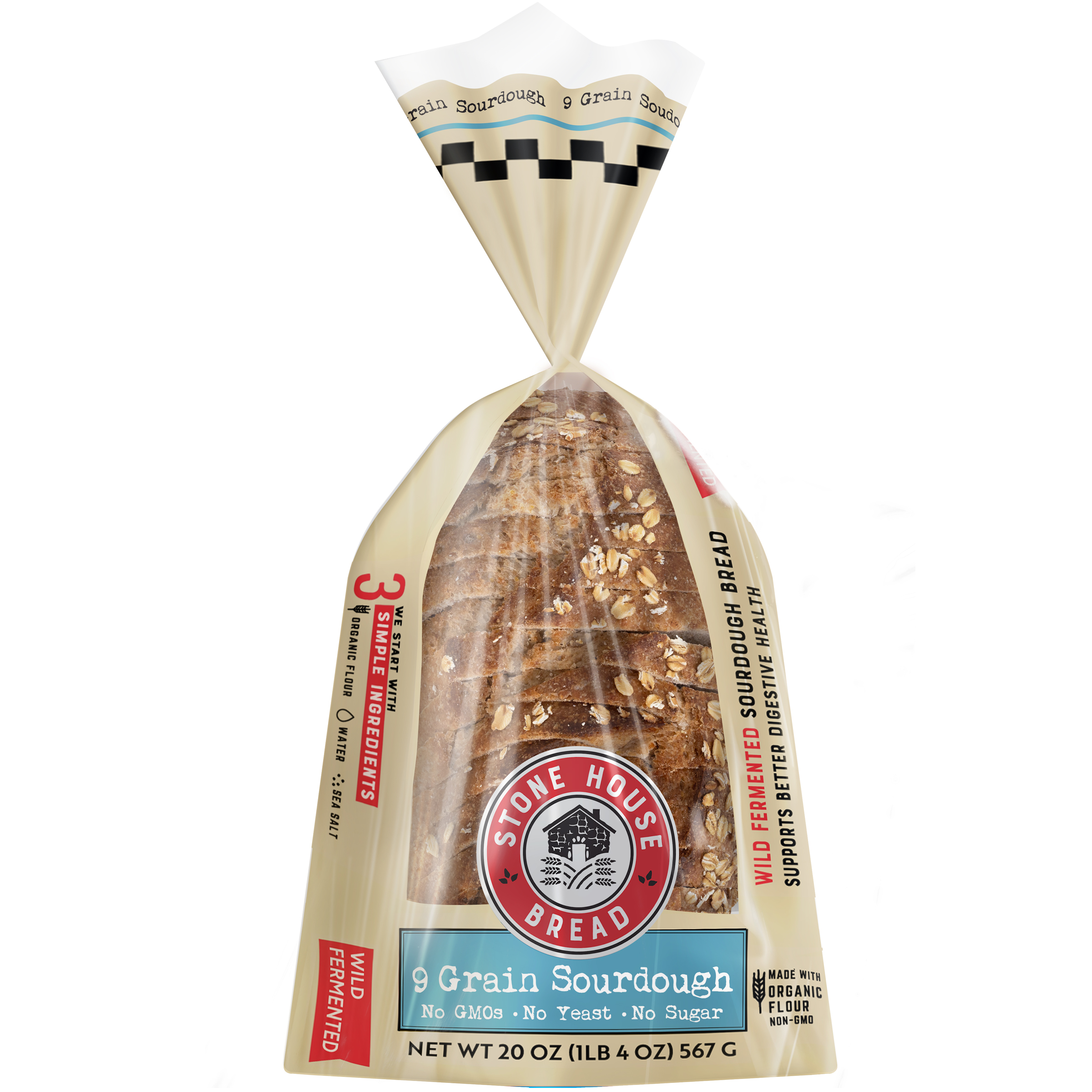

At a glance
Summary
This sourdough bread is made with simple, recognizable ingredients such as untreated unbleached wheat flour, sourdough starter, and sea salt, which contribute to its overall quality. The fermentation process involved in sourdough enhances digestibility and nutrient absorption, while the absence of harmful additives or seed oils supports a healthier profile. However, as a processed food, its score is capped due to the level of processing involved.
Key ingredients 6
SourdoughGood
Sourdough fermentation can improve digestibility and flavor, making it a beneficial ingredient.
See more about Sourdough →Sea saltGood
Sea salt adds natural flavor and essential minerals, enhancing the overall taste and nutritional profile.
See more about Sea salt →Malted barley flourGood
Malted barley flour adds natural sweetness and nutrients, supporting fermentation and flavor development.
See more about Malted barley flour →Untreated unbleached wheat flourNeutral
This ingredient is a natural flour that provides essential carbohydrates and nutrients, and is minimally processed.
WaterNeutral
Water is a fundamental component in bread making, necessary for dough formation without added health concerns.
See more about Water →YeastNeutral
Baker's/nutritional yeast in standard use — benign.
See more about Yeast →Processing
Processed Foods
Get the full breakdown in the Scout appTake Scout shopping
Scan any product to see lab results, healthy alternatives, and your personalized analysis.
Download on theApp Store GET IT ONGoogle Play