
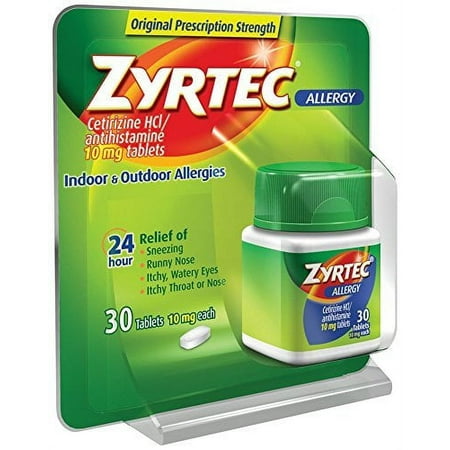


Zyrtec Allergy Tablets 10 mg 30 ct
Analysis updated August 2026 · How Scout scores
At a glance
Summary
This product contains cetirizine HCl as the active ingredient, which is effective for allergy relief. However, it includes several inactive ingredients such as titanium dioxide and polyethylene glycol, which are common in pharmaceuticals but may raise concerns for some consumers due to their synthetic nature. The formulation is typical for allergy medications, balancing efficacy with necessary excipients, but lacks the simplicity and natural focus seen in higher-scoring supplements.
Key ingredients 9
Cetirizine HclNeutral
Cetirizine HCl is an antihistamine used to relieve allergy symptoms. It is effective in blocking histamine, a substance in the body that causes allergic symptoms. It is generally well-tolerated with minimal side effects.
Risks
May cause drowsiness or dizziness in some individuals.
Benefits
Effective in reducing symptoms of allergies such as sneezing, itching, and runny nose.
Colloidal Silicon DioxideNeutral
Colloidal Silicon Dioxide is used as an anti-caking agent to prevent clumping in tablets. It is a common additive in pharmaceuticals and food products. It is considered safe for consumption in small amounts.
Benefits
Helps maintain the consistency and quality of the tablet formulation.
Croscarmellose SodiumNeutral
Croscarmellose Sodium is a disintegrant used to help tablets dissolve properly in the digestive tract. It is widely used in the pharmaceutical industry for its effectiveness. It is generally recognized as safe when used in appropriate amounts.
Benefits
Enhances the dissolution and absorption of the active ingredient in the body.
HypromelloseNeutral
Hypromellose is used as a binder and film former in tablets. It helps in controlling the release of the active ingredient. It is a common pharmaceutical excipient with a good safety profile.
Benefits
Contributes to the controlled release and stability of the tablet.
Lactose MonohydrateNeutral
Lactose Monohydrate is used as a filler and binder in tablets. It is a natural sugar derived from milk and is commonly used in pharmaceuticals. It is generally safe but may cause issues for lactose-intolerant individuals.
Risks
May cause digestive discomfort in individuals with lactose intolerance.
Benefits
Provides bulk and stability to the tablet formulation.
Magnesium StearateNeutral
Magnesium Stearate is used as a lubricant in tablet manufacturing to prevent ingredients from sticking to equipment. It is widely used in the pharmaceutical industry. It is considered safe in small amounts.
Benefits
Improves the manufacturing process and quality of the tablets.
Microcrystalline CelluloseNeutral
Microcrystalline Cellulose is used as a bulking agent and binder in tablets. It is derived from plant fibers and is commonly used in pharmaceuticals. It is considered safe and inert.
Benefits
Provides structure and stability to the tablet formulation.
Polyethylene GlycolNeutral
Polyethylene Glycol is used as a solvent and plasticizer in tablet coatings. It helps in the controlled release of the active ingredient. It is generally recognized as safe for use in pharmaceuticals.
Benefits
Enhances the dissolution and bioavailability of the active ingredient.
Titanium DioxideVery Bad
Heavily flagged ingredient class under Scout's doctrine.
Benefits
Provides color and opacity to the tablet, improving its appearance.
Processing
Processed Foods
Get the full breakdown in the Scout appTake Scout shopping
Scan any product to see lab results, healthy alternatives, and your personalized analysis.
Download on theApp Store GET IT ONGoogle PlayAmazon pricing & content
Amazon price as of . Product prices and availability are accurate as of the date/time indicated and are subject to change. Any price and availability information displayed on Amazon.com at the time of purchase will apply to the purchase of this product.
CERTAIN CONTENT THAT APPEARS ON THIS SITE COMES FROM AMAZON. THIS CONTENT IS PROVIDED “AS IS” AND IS SUBJECT TO CHANGE OR REMOVAL AT ANY TIME.