
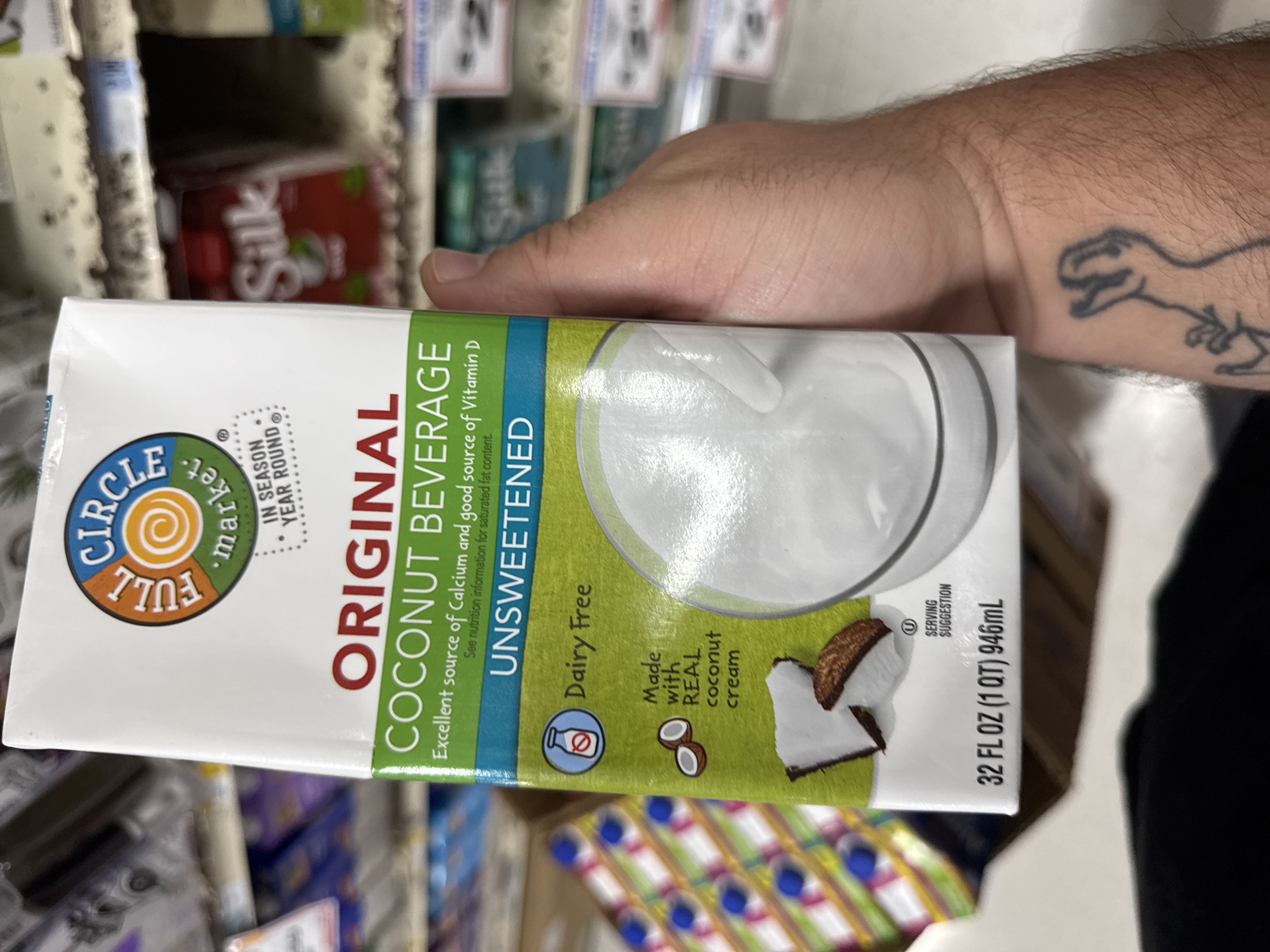

Full Circle UNSWEETENED ORIGINAL COCONUT MILK
Analysis updated August 2026 · How Scout scores
At a glance
Summary
This coconut milk is ultra-processed, which limits its score despite having some beneficial ingredients like coconut milk itself. The presence of additives such as carrageenan and natural flavors raises concerns due to potential inflammatory effects and lack of transparency. While it provides a dairy-free alternative with healthy fats, the processing level and additives prevent a higher rating.
Key ingredients 10
Coconut milkGood
Coconut milk is a natural source of healthy fats and provides a creamy texture. It is minimally processed and retains beneficial nutrients. It is a good alternative for those avoiding dairy.
Benefits
Rich in medium-chain triglycerides (MCTs) that may support metabolism and energy levels.
Vitamin B12Good
Beneficial ingredient — whole-food or functional value in this product class.
Benefits
Essential for nerve function and red blood cell production.
Xanthan gumNeutral
Xanthan gum is a common food additive used as a thickener and stabilizer. It is produced through fermentation of sugars by bacteria. Generally recognized as safe, but excessive consumption may cause digestive issues.
Risks
May cause digestive discomfort in sensitive individuals when consumed in large amounts.
Benefits
Helps improve texture and consistency in food products.
Guar gumNeutral
Guar gum is a natural thickening agent derived from guar beans. It is used to improve texture and stability in foods. Generally safe, but may cause digestive issues if consumed in large quantities.
Risks
May cause bloating or gas in some individuals when consumed in excess.
Benefits
Helps maintain consistency and texture in food products.
Calcium carbonateNeutral
Calcium carbonate is used as a calcium supplement and acidity regulator. It is a common additive in fortified foods. Provides a source of calcium, but excessive intake can lead to health issues.
Risks
Excessive consumption may lead to hypercalcemia or kidney stones.
Benefits
Provides a source of calcium, which is essential for bone health.
Gellan gumNeutral
Gellan gum is a gelling agent produced by bacterial fermentation. It is used to stabilize and thicken food products. Generally considered safe, but may cause digestive issues in sensitive individuals.
Risks
May cause digestive discomfort if consumed in large amounts.
Benefits
Improves texture and stability in food products.
Vitamin A palmitateNeutral
Vitamin A palmitate is a synthetic form of vitamin A used to fortify foods. It helps maintain vision and immune function. Overconsumption can lead to toxicity.
Risks
Excessive intake may lead to vitamin A toxicity.
Benefits
Supports vision and immune health.
Vitamin D2Neutral
Vitamin D2 is a plant-derived form of vitamin D used in food fortification. It supports bone health by aiding calcium absorption. Less effective than vitamin D3 in raising blood vitamin D levels.
Benefits
Supports bone health and calcium absorption.
CarrageenanBad
Carrageenan is a thickening agent derived from red seaweed. It is controversial due to potential inflammatory effects in the digestive tract. Some studies suggest it may cause gastrointestinal issues.
Risks
Potential to cause inflammation and digestive issues in sensitive individuals.
Benefits
Provides a smooth texture and stabilizes emulsions in food products.
Natural flavorsBad
Natural flavors are a catch-all term for flavoring agents derived from natural sources. The exact composition is often undisclosed, leading to potential allergen concerns. Lack of transparency makes it difficult to assess health impacts.
Risks
Potential allergen risk due to undisclosed ingredients.
Benefits
Enhances flavor without adding calories.
Processing
Ultra-Processed Foods
Get the full breakdown in the Scout appTake Scout shopping
Scan any product to see lab results, healthy alternatives, and your personalized analysis.
Download on theApp Store GET IT ONGoogle Play