
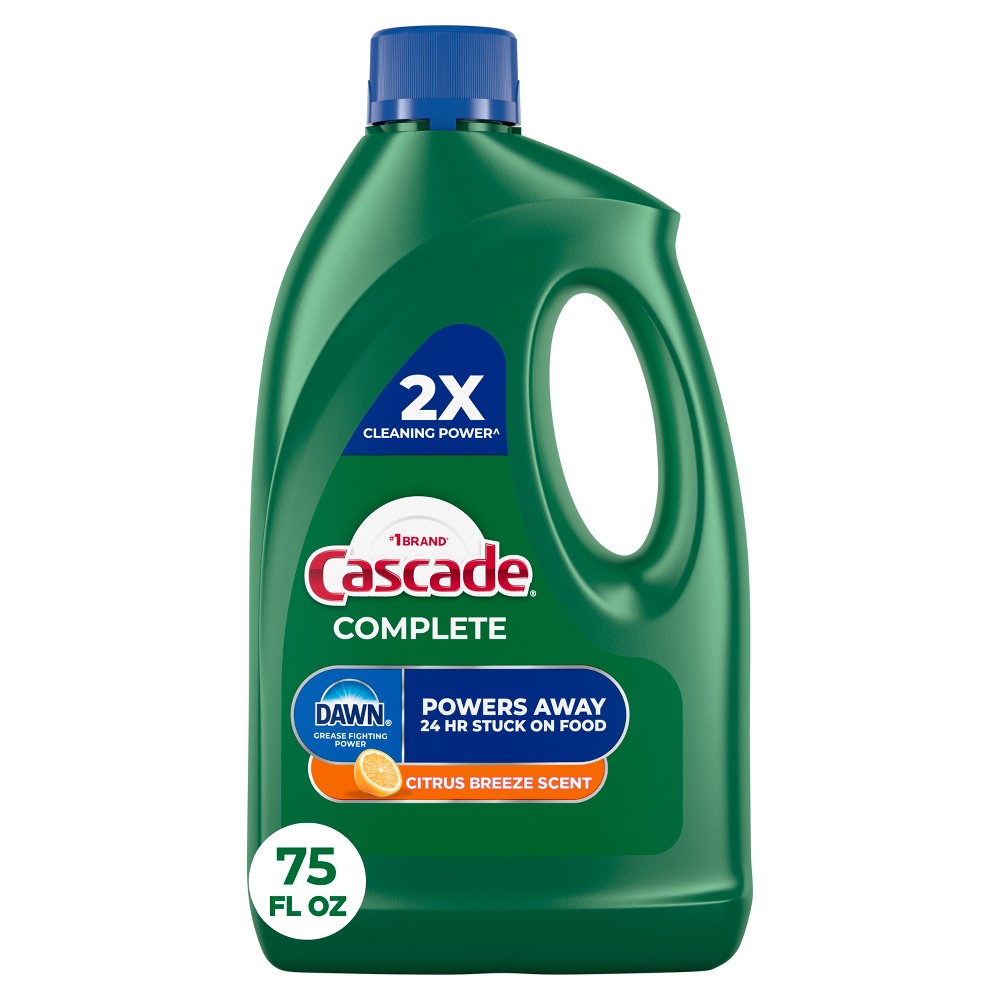

Cascade Citrus Breeze Scent Complete Dishwasher Detergent Gel with Dawn Grease Fighting Power - 75oz
Analysis updated August 2026 · How Scout scores
At a glance
Summary
This dishwasher detergent contains beneficial enzymes like amylase and subtilisin, which are biodegradable and effective at lower temperatures, contributing to energy efficiency. However, the presence of sodium tripolyphosphate, a phosphate that can lead to environmental issues such as eutrophication, negatively impacts its environmental safety profile. The product's processing level and inclusion of potentially harmful ingredients limit its overall score.
Key ingredients 6
Amylase EnzymeGood
Amylase enzymes break down starches into sugars, aiding in the removal of food residues. They are derived from natural sources and are biodegradable. Enzymes are effective at lower temperatures, making them energy efficient.
Risks
There is minimal risk associated with enzymes, though they can cause allergic reactions in sensitive individuals.
Benefits
They enhance cleaning performance by breaking down complex carbohydrates.
Subtilisin EnzymeGood
Subtilisin is a protease enzyme that breaks down proteins, aiding in the removal of food stains. It is biodegradable and derived from natural sources. Enzymes like subtilisin are effective at lower temperatures, reducing energy consumption.
Risks
Potential allergen for sensitive individuals, though generally safe in formulated products.
Benefits
Improves cleaning efficiency by breaking down protein-based stains.
Sodium CarbonateNeutral
Sodium carbonate is commonly used as a water softener in cleaning products. It helps to remove grease and stains by breaking down the minerals in hard water. It is generally considered safe for use in cleaning products.
Risks
There is a risk of skin and eye irritation if it comes into direct contact with skin or eyes.
Benefits
It effectively softens water, enhancing the cleaning power of detergents.
Sodium SulfateNeutral
Sodium sulfate is used as a filler in powdered detergents. It helps to evenly distribute the active ingredients. It is generally considered safe and non-toxic.
Risks
Inhalation of dust may cause respiratory irritation.
Benefits
It helps to improve the texture and flow of powdered detergents.
Boric AcidNeutral
Boric acid is used as a pH buffer and mild antiseptic in cleaning products. It helps to stabilize the formula and enhance cleaning performance. It is generally considered safe in small quantities.
Risks
High exposure can lead to toxicity, but it is safe in regulated amounts.
Benefits
Acts as a pH stabilizer and mild antiseptic, enhancing product stability and performance.
Sodium TripolyphosphateBad
Sodium tripolyphosphate is used as a water softener and to prevent redeposition of soil. However, it is a phosphate, which can contribute to environmental issues such as eutrophication. Its use is restricted in many regions due to environmental concerns.
Risks
Contributes to water pollution and algal blooms, which can harm aquatic life.
Benefits
Enhances cleaning efficiency by softening water and preventing soil redeposition.
Get the full breakdown in the Scout appTake Scout shopping
Scan any product to see lab results, healthy alternatives, and your personalized analysis.
Download on theApp Store GET IT ONGoogle PlayAmazon pricing & content
Amazon price as of . Product prices and availability are accurate as of the date/time indicated and are subject to change. Any price and availability information displayed on Amazon.com at the time of purchase will apply to the purchase of this product.
CERTAIN CONTENT THAT APPEARS ON THIS SITE COMES FROM AMAZON. THIS CONTENT IS PROVIDED “AS IS” AND IS SUBJECT TO CHANGE OR REMOVAL AT ANY TIME.