
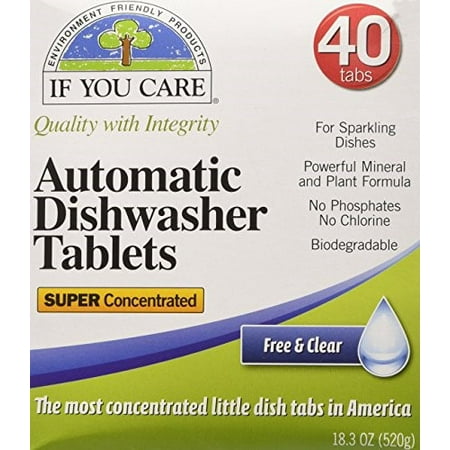

If You Care Automatic Dishwasher Tablets 40 Ct

83 Good
$9.69 · 40 count
View on Amazon
Verified Amazon match

Summary

This dishwasher tablet product contains mostly safe and environmentally friendly ingredients such as sodium carbonate and plant-based enzymes. It avoids harsh chemicals like SLS, synthetic fragrances, and phosphates, which are common in many cleaning products. The formulation is processed but maintains a focus on biodegradability and eco-friendliness, contributing to its high rating.

At a glance

Beneficial ingredients 0
Harmful ingredients 0
Category Dishwasher

Key ingredients 8

Sodium Carbonate

Sodium carbonate is a common cleaning agent used to soften water and enhance the effectiveness of detergents. It is a naturally occurring substance that is often used in eco-friendly cleaning products. It helps to remove grease and stains effectively.

Risks

Sodium carbonate can cause skin and eye irritation if not handled properly.

Benefits

It is biodegradable and considered safe for the environment when used in appropriate amounts.

See more about Sodium Carbonate →
Sodium Carbonate Peroxide

Sodium carbonate peroxide is an oxygen-based bleaching agent that releases hydrogen peroxide when dissolved in water. It is used to remove stains and whiten surfaces without the harshness of chlorine bleach. This ingredient is often found in eco-friendly cleaning products.

Risks

It can cause irritation to the skin and eyes upon contact.

Benefits

It is considered environmentally friendly as it breaks down into water, oxygen, and soda ash.

See more about Sodium Carbonate Peroxide →
Sodium Citrate

Sodium citrate is used as a water softener and pH regulator in cleaning products. It helps to enhance the cleaning power of detergents by binding with minerals in the water. This ingredient is derived from citric acid, which is found naturally in citrus fruits.

Risks

Sodium citrate is generally considered safe with minimal risk when used in cleaning products.

Benefits

It is biodegradable and non-toxic, making it a preferred choice in eco-friendly formulations.

See more about Sodium Citrate →
TAED

TAED (Tetraacetylethylenediamine) is an activator used in conjunction with oxygen-based bleaching agents to enhance their effectiveness at lower temperatures. It helps to improve the stain removal capabilities of cleaning products. TAED is often used in eco-friendly formulations due to its efficiency.

Risks

TAED is considered to have low toxicity and minimal environmental impact.

Benefits

It is biodegradable and enhances the performance of bleach at lower temperatures, reducing energy consumption.

Oxygen-based bleaching agents

Oxygen-based bleaching agents are used to remove stains and whiten surfaces without the use of chlorine. They release oxygen when dissolved in water, which helps to break down stains. These agents are often preferred in eco-friendly cleaning products.

Risks

They can cause irritation to the skin and eyes if not handled properly.

Benefits

They are considered environmentally friendly as they break down into non-toxic substances.

Polycarboxylates

Polycarboxylates are used as dispersing agents in cleaning products to prevent redeposition of dirt on surfaces. They help to enhance the cleaning efficiency of detergents. These compounds are synthetic but are designed to be effective in small quantities.

Risks

Polycarboxylates are generally considered safe but can contribute to water pollution if not properly treated.

Benefits

They improve the performance of cleaning agents, reducing the need for harsher chemicals.

Non-ionic surfactants

Non-ionic surfactants are used to reduce surface tension and improve the wetting and spreading properties of cleaning solutions. They are less likely to cause skin irritation compared to ionic surfactants. These surfactants are often derived from plant-based sources.

Risks

While generally safe, they can still cause mild irritation with prolonged exposure.

Benefits

They are effective in removing grease and are often biodegradable, making them suitable for eco-friendly products.

Enzymes

Enzymes are biological molecules that break down proteins, starches, and fats, enhancing the cleaning power of detergents. They are derived from natural sources and are effective at low temperatures. Enzymes are commonly used in eco-friendly cleaning products.

Risks

Enzymes can cause allergic reactions in some individuals if inhaled or in contact with skin.

Benefits

They are biodegradable and improve cleaning efficiency, reducing the need for harsh chemicals.

See more about Enzymes →

Processing

Group 3 · Processed

Processed Foods

Get the full breakdown in the Scout app

Scan any product to see lab results, healthy alternatives, and your personalized analysis.

Download on theApp Store