
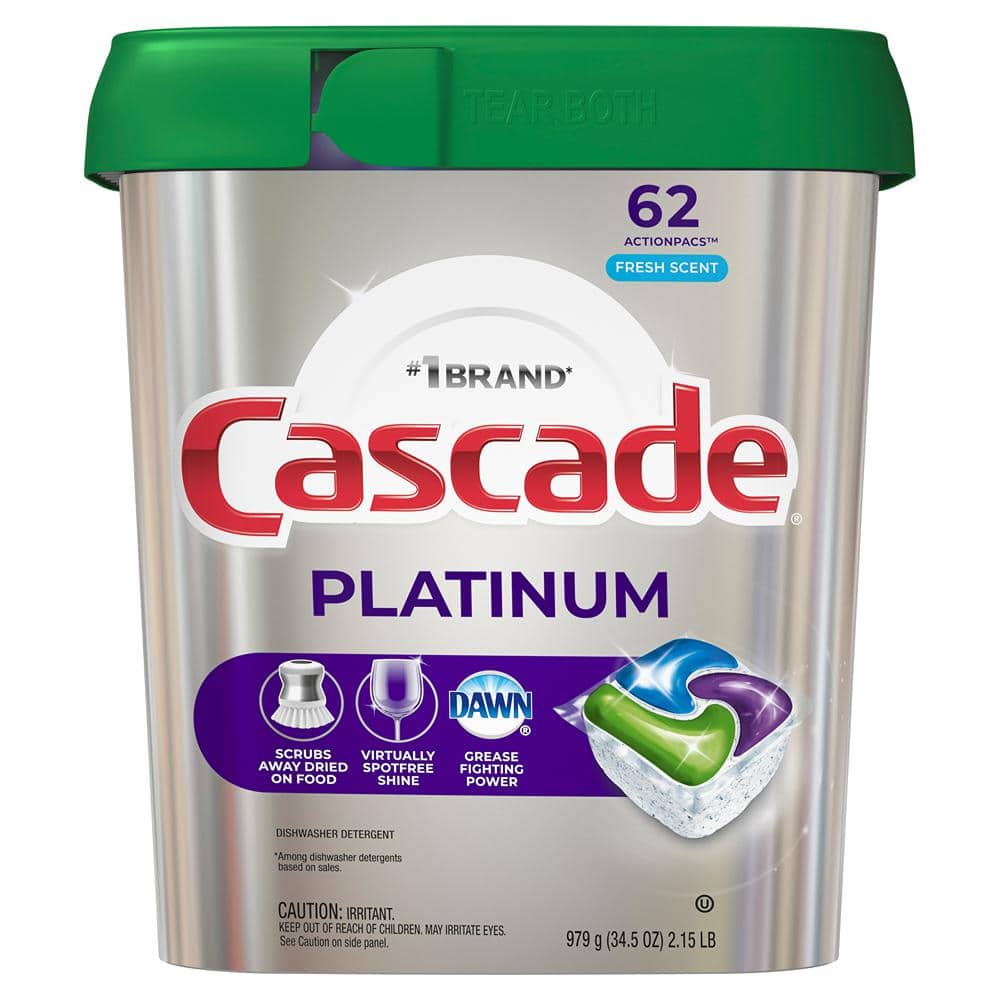

Cascade Platinum ActionPacs Dishwasher Detergent Fresh Scent 62 Count
Analysis updated August 2026 · How Scout scores
At a glance
Summary
This dishwasher detergent contains beneficial cleaning enzymes like amylase and subtilisin, which are effective and environmentally friendly. However, the presence of synthetic fragrances and other chemical compounds such as copolymers and ethoxylated alcohols raises concerns about potential health and environmental impacts. The product's formulation includes a mix of synthetic and plant-based components, resulting in a moderate processing level.
Key ingredients 19
Amylase EnzymeGood
Amylase enzymes are effective in breaking down starches into sugars, enhancing cleaning performance. They are considered safe and biodegradable, making them environmentally friendly. Their use in detergents helps improve cleaning efficiency.
Risks
There are minimal risks associated with amylase enzymes in cleaning products.
Benefits
Amylase enzymes improve the breakdown of food residues, enhancing the overall cleaning power of the detergent.
SubtilisinGood
Subtilisin is a protease enzyme that breaks down proteins, enhancing cleaning performance. It is biodegradable and considered environmentally friendly. Its use in detergents helps improve cleaning efficiency.
Risks
There are minimal risks associated with subtilisin in cleaning products.
Benefits
Subtilisin improves the breakdown of protein-based stains, enhancing the overall cleaning power of the detergent.
ColorantsNeutral
Colorants are used to give products a visually appealing appearance. They do not contribute to the cleaning efficacy of the product. Their impact is primarily aesthetic.
Risks
Some colorants may cause allergic reactions in sensitive individuals.
Benefits
Colorants can make the product more visually appealing to consumers.
Copolymer of Acrylic and Sulphonic AcidsNeutral
This copolymer acts as a dispersing agent, preventing redeposition of soil on dishes. It enhances the cleaning performance of the detergent. It is commonly used in cleaning products for its effectiveness.
Risks
There are minimal risks associated with this copolymer in cleaning products.
Benefits
It helps maintain the cleanliness of dishes by preventing soil redeposition.
Dipropylene GlycolNeutral
Dipropylene glycol is used as a solvent and carrier in cleaning products. It helps dissolve other ingredients and ensures even distribution. It is generally considered safe for use in household products.
Risks
Exposure to large amounts may cause irritation, but typical use in cleaning products poses minimal risk.
Benefits
It aids in the effective distribution of active ingredients in the detergent.
GlycerinNeutral
Glycerin is used as a humectant and lubricant in cleaning products. It helps maintain moisture and improve the texture of the product. It is generally considered safe and non-toxic.
Risks
There are minimal risks associated with glycerin in cleaning products.
Benefits
Glycerin helps maintain product consistency and prevents drying out.
Isotridecanol EthoxylatedNeutral
Isotridecanol ethoxylated is a nonionic surfactant used for its cleaning and emulsifying properties. It helps break down and remove grease and dirt. It is commonly used in cleaning formulations.
Risks
Prolonged exposure may cause skin irritation, but typical use in cleaning products is considered safe.
Benefits
It enhances the cleaning power of the detergent by breaking down grease and dirt.
PEG/PPG/Propylheptyl EtherNeutral
This compound is used as a surfactant and emulsifier in cleaning products. It helps mix oil and water-based ingredients for effective cleaning. It is widely used in household cleaning formulations.
Risks
There are minimal risks associated with this compound in cleaning products.
Benefits
It improves the overall cleaning performance by aiding in the emulsification of ingredients.
Polyvinyl Alcohol PolymerNeutral
Polyvinyl alcohol polymer is used as a film-forming agent in cleaning products. It helps create a protective layer on surfaces. It is considered safe for use in household products.
Risks
There are minimal risks associated with polyvinyl alcohol polymer in cleaning products.
Benefits
It provides a protective film that can enhance the durability of the cleaning effect.
Sodium CarbonateNeutral
Sodium carbonate, also known as washing soda, is used to soften water and enhance cleaning efficiency. It helps remove grease and stains from dishes. It is a common ingredient in many cleaning products.
Risks
High concentrations may cause skin irritation, but typical use in cleaning products is safe.
Benefits
It improves the cleaning power by softening water and aiding in stain removal.
Sodium Carbonate PeroxideNeutral
Sodium carbonate peroxide is a bleaching agent used to remove stains and whiten surfaces. It releases oxygen when dissolved in water, enhancing cleaning power. It is commonly used in cleaning products for its effectiveness.
Risks
Exposure to high concentrations may cause irritation, but typical use in cleaning products is safe.
Benefits
It provides effective stain removal and whitening properties.
Sodium SulfateNeutral
Sodium sulfate is used as a filler and bulking agent in cleaning products. It helps maintain the consistency and flow of the detergent. It is generally considered safe for use in household products.
Risks
There are minimal risks associated with sodium sulfate in cleaning products.
Benefits
It helps maintain product consistency and ensures even distribution.
Transitional Metal CatalystNeutral
Transitional metal catalysts are used to enhance the effectiveness of bleaching agents. They help accelerate chemical reactions, improving cleaning performance. They are commonly used in cleaning formulations.
Risks
There are minimal risks associated with transitional metal catalysts in cleaning products.
Benefits
They enhance the effectiveness of bleaching agents, improving stain removal.
Trisodium Dicarboxymethyl AlaninateNeutral
This compound is used as a chelating agent to bind metal ions and improve cleaning efficiency. It helps prevent the formation of scale and deposits. It is commonly used in cleaning products for its effectiveness.
Risks
There are minimal risks associated with this compound in cleaning products.
Benefits
It helps prevent scale formation, enhancing the overall cleaning performance.
WaterNeutral
Water is used as a solvent and carrier for other ingredients in cleaning products. It helps dissolve and distribute active ingredients evenly. It is a fundamental component of most cleaning formulations.
Risks
There are no risks associated with water in cleaning products.
Benefits
Water acts as a solvent, aiding in the distribution and effectiveness of cleaning agents.
BenzotriazoleNeutral
Benzotriazole is used as a corrosion inhibitor in cleaning products. It helps protect metal surfaces from corrosion and tarnishing. It is commonly used in formulations to enhance product longevity.
Risks
There are minimal risks associated with benzotriazole in cleaning products.
Benefits
It helps protect metal surfaces from corrosion, extending the life of the product.
Copolymer of Acrylic Maleic and Sulphonic AcidsNeutral
This copolymer acts as a dispersing agent, preventing redeposition of soil on dishes. It enhances the cleaning performance of the detergent. It is commonly used in cleaning products for its effectiveness.
Risks
There are minimal risks associated with this copolymer in cleaning products.
Benefits
It helps maintain the cleanliness of dishes by preventing soil redeposition.
Sodium SilicateNeutral
Sodium silicate is used as a corrosion inhibitor and stabilizer in cleaning products. It helps protect metal surfaces and maintain product stability. It is commonly used in cleaning formulations for its effectiveness.
Risks
There are minimal risks associated with sodium silicate in cleaning products.
Benefits
It helps protect metal surfaces and stabilize the product, enhancing its longevity.
FragrancesBad
Fragrances are added to provide a pleasant scent to the product. However, they can contain synthetic chemicals that may cause allergic reactions. Their use is often criticized due to potential health concerns.
Risks
Fragrances can cause skin irritation and allergic reactions in sensitive individuals.
Benefits
They provide a pleasant scent, enhancing the user experience.
Get the full breakdown in the Scout appTake Scout shopping
Scan any product to see lab results, healthy alternatives, and your personalized analysis.
Download on theApp Store GET IT ONGoogle PlayAmazon pricing & content
Amazon price as of . Product prices and availability are accurate as of the date/time indicated and are subject to change. Any price and availability information displayed on Amazon.com at the time of purchase will apply to the purchase of this product.
CERTAIN CONTENT THAT APPEARS ON THIS SITE COMES FROM AMAZON. THIS CONTENT IS PROVIDED “AS IS” AND IS SUBJECT TO CHANGE OR REMOVAL AT ANY TIME.