
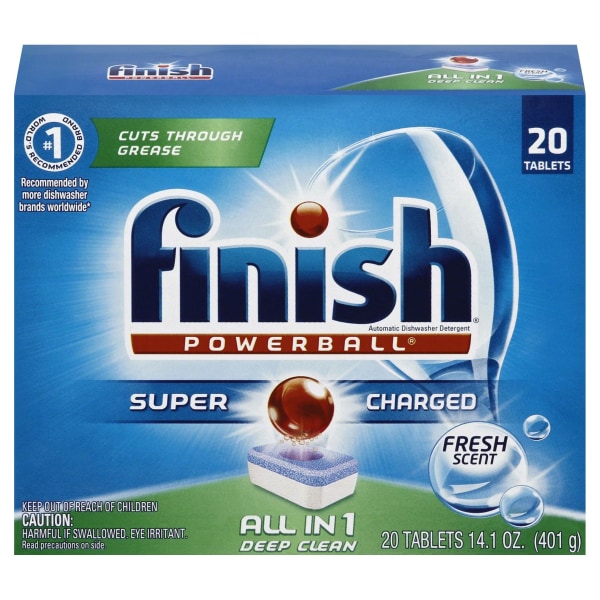

Finish - Dishwasher Detergent - Automatic Fresh Scent 20.00 ct
Analysis updated August 2026 · How Scout scores
At a glance
Summary
This dishwasher detergent contains beneficial cleaning agents like citric acid and enzymes, which enhance its cleaning performance and are environmentally friendly. However, the presence of synthetic fragrance, which can contain harmful chemicals, and the overall high level of processing reduce its score. The product's formulation is more synthetic than plant-based, impacting its safety and environmental profile.
Key ingredients 20
Protease EnzymeVery Good
Protease enzyme is used for its ability to break down proteins and remove stains. It is effective in enhancing the cleaning power of detergents. It is considered safe and environmentally friendly.
Risks
Minimal risks associated with its use in cleaning products.
Benefits
Enhances cleaning power by breaking down proteins and removing stains.
Amylase EnzymeVery Good
Amylase enzyme is used for its ability to break down starches and remove stains. It is effective in enhancing the cleaning power of detergents. It is considered safe and environmentally friendly.
Risks
Minimal risks associated with its use in cleaning products.
Benefits
Enhances cleaning power by breaking down starches and removing stains.
Sodium BicarbonateNeutral
Sodium bicarbonate is a common ingredient used for its cleaning and deodorizing properties. It is generally considered safe and effective in cleaning products. However, it does not have significant environmental or health concerns.
Risks
There are minimal risks associated with sodium bicarbonate in cleaning products.
Benefits
It helps in neutralizing odors and enhancing cleaning efficiency.
Sodium CarbonateNeutral
Sodium carbonate is used to soften water and enhance cleaning performance. It is a common ingredient in many cleaning products. It is generally safe but can be irritating to the skin and eyes in concentrated forms.
Risks
Potential skin and eye irritation if used in high concentrations.
Benefits
Improves cleaning efficiency by softening water.
Sodium Carbonate PeroxideNeutral
Sodium carbonate peroxide acts as a bleaching agent and is used for its stain removal properties. It releases hydrogen peroxide when dissolved in water. It is considered safe for use in cleaning products.
Risks
May cause irritation to skin and eyes upon direct contact.
Benefits
Effective in removing stains and brightening surfaces.
Polyethylene GlycolNeutral
Polyethylene glycol is used as a dispersing agent in cleaning products. It helps in maintaining the stability of the formulation. It is generally considered safe but can be a concern if contaminated with impurities.
Risks
Potential contamination with impurities during manufacturing.
Benefits
Helps in maintaining product stability and consistency.
Polyacrylic Acid Sodium Bisulfite TerminatedNeutral
This ingredient is used as a dispersant and scale inhibitor in cleaning products. It helps in preventing the deposition of minerals on surfaces. It is generally considered safe for use in cleaning formulations.
Risks
Minimal risks associated with its use in cleaning products.
Benefits
Prevents mineral deposits and enhances cleaning efficiency.
TAEDNeutral
TAED is used as a bleach activator in cleaning products. It enhances the effectiveness of bleaching agents at lower temperatures. It is considered safe for use in cleaning formulations.
Risks
Minimal risks associated with its use in cleaning products.
Benefits
Improves bleaching efficiency at lower temperatures.
Trisodium Dicarboxymethyl AlaninateNeutral
This ingredient is used as a chelating agent in cleaning products. It helps in binding metal ions and improving cleaning performance. It is generally considered safe for use in cleaning formulations.
Risks
Minimal risks associated with its use in cleaning products.
Benefits
Enhances cleaning performance by binding metal ions.
Microcrystalline CelluloseNeutral
Microcrystalline cellulose is used as a bulking agent in cleaning products. It helps in maintaining the physical structure of the product. It is generally considered safe for use in cleaning formulations.
Risks
Minimal risks associated with its use in cleaning products.
Benefits
Maintains the physical structure of the product.
Citric AcidNeutral
Common acidulant and preservative — safe at typical use levels, neither beneficial nor harmful.
Risks
Minimal risks associated with its use in cleaning products.
Benefits
Effective in breaking down mineral deposits and enhancing cleaning performance.
Alcohol PolyglycoletherNeutral
Alcohol polyglycolether is used as a surfactant in cleaning products. It helps in reducing surface tension and improving cleaning efficiency. It is generally considered safe for use in cleaning formulations.
Risks
Minimal risks associated with its use in cleaning products.
Benefits
Improves cleaning efficiency by reducing surface tension.
Tetrasodium EtidronateNeutral
Tetrasodium etidronate is used as a chelating agent in cleaning products. It helps in preventing the deposition of minerals on surfaces. It is generally considered safe for use in cleaning formulations.
Risks
Minimal risks associated with its use in cleaning products.
Benefits
Prevents mineral deposits and enhances cleaning efficiency.
Sodium OrthosilicateNeutral
Sodium orthosilicate is used as a corrosion inhibitor in cleaning products. It helps in protecting metal surfaces from corrosion. It is generally considered safe for use in cleaning formulations.
Risks
Minimal risks associated with its use in cleaning products.
Benefits
Protects metal surfaces from corrosion.
GlycerinNeutral
Glycerin is used as a humectant in cleaning products. It helps in maintaining moisture and preventing drying out of the product. It is generally considered safe for use in cleaning formulations.
Risks
Minimal risks associated with its use in cleaning products.
Benefits
Maintains moisture and prevents drying out of the product.
Magnesium StearateNeutral
Magnesium stearate is used as a lubricant in cleaning products. It helps in preventing ingredients from sticking together. It is generally considered safe for use in cleaning formulations.
Risks
Minimal risks associated with its use in cleaning products.
Benefits
Prevents ingredients from sticking together.
BenzotriazoleNeutral
Benzotriazole is used as a corrosion inhibitor in cleaning products. It helps in protecting metal surfaces from corrosion. It is generally considered safe for use in cleaning formulations.
Risks
Minimal risks associated with its use in cleaning products.
Benefits
Protects metal surfaces from corrosion.
TolyltriazolNeutral
Tolyltriazol is used as a corrosion inhibitor in cleaning products. It helps in protecting metal surfaces from corrosion. It is generally considered safe for use in cleaning formulations.
Risks
Minimal risks associated with its use in cleaning products.
Benefits
Protects metal surfaces from corrosion.
ColorantsNeutral
Colorants are used to impart color to cleaning products. They are generally considered safe when used in compliance with regulations. However, some synthetic colorants may pose health concerns.
Risks
Potential health concerns with certain synthetic colorants.
Benefits
Provides aesthetic appeal to the product.
FragranceVery Bad
Fragrance is used to impart a pleasant scent to cleaning products. However, synthetic fragrances can contain phthalates and other harmful chemicals. They are often associated with allergies and sensitivities.
Risks
Potential for allergies, sensitivities, and exposure to harmful chemicals.
Benefits
Provides a pleasant scent to the product.
Get the full breakdown in the Scout appTake Scout shopping
Scan any product to see lab results, healthy alternatives, and your personalized analysis.
Download on theApp Store GET IT ONGoogle PlayAmazon pricing & content
Amazon price as of . Product prices and availability are accurate as of the date/time indicated and are subject to change. Any price and availability information displayed on Amazon.com at the time of purchase will apply to the purchase of this product.
CERTAIN CONTENT THAT APPEARS ON THIS SITE COMES FROM AMAZON. THIS CONTENT IS PROVIDED “AS IS” AND IS SUBJECT TO CHANGE OR REMOVAL AT ANY TIME.