
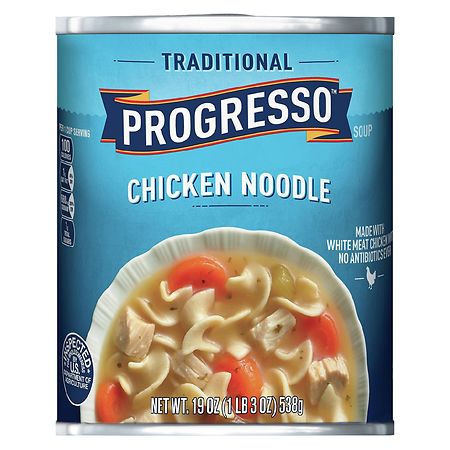


Progresso Traditional Chicken Noodle Soup
Summary
This soup contains beneficial ingredients like chicken broth, carrots, and white chicken meat, which provide essential nutrients. However, it is heavily processed with additives such as hydrolyzed corn protein, soy protein isolate, and sodium phosphate, which are associated with potential health concerns. The presence of these processed ingredients and the overall high level of processing significantly impact its healthiness.
At a glance
Key ingredients 12
Chicken brothGood
Chicken broth is a flavorful base that provides essential nutrients like collagen and amino acids. It is typically made by simmering chicken bones and meat, which can enhance the nutritional profile. The quality of the broth depends on the ingredients used and the cooking process.
Benefits
Rich in collagen and amino acids that support joint health and digestion. Provides a savory flavor base for soups and stews.
CarrotsGood
Carrots are a nutritious vegetable high in beta-carotene, fiber, and antioxidants. They are typically included in soups for their flavor and nutritional benefits. The cooking process can slightly reduce vitamin content but enhances digestibility.
Benefits
High in beta-carotene, which the body converts to vitamin A, supporting vision and immune function. Provides dietary fiber and antioxidants.
Cooked white chicken meatGood
Cooked white chicken meat is a high-quality protein source that provides essential amino acids. It is typically lean and low in fat, making it a healthy addition to meals. The cooking process ensures safety and enhances flavor.
Benefits
Excellent source of lean protein, supporting muscle maintenance and repair. Provides essential amino acids necessary for various bodily functions.
Egg noodlesNeutral
Egg noodles are a common carbohydrate source made from wheat flour and eggs. They provide energy but are not particularly nutrient-dense. The inclusion of eggs adds some protein and richness to the noodles.
Risks
May contain gluten, which can be a concern for individuals with celiac disease or gluten sensitivity.
Benefits
Provides carbohydrates for energy and some protein from the eggs.
CeleryNeutral
Celery is a low-calorie vegetable often used for its flavor and crunch. It contains some vitamins and minerals but is primarily water. Cooking celery in soup can enhance its flavor while slightly reducing its nutrient content.
Benefits
Provides a small amount of vitamins and minerals, including vitamin K and potassium.
Modified food starchNeutral
Modified food starch is used as a thickening agent in soups and sauces. It is derived from various starches and undergoes processing to enhance its properties. While it adds texture, it does not provide significant nutritional benefits.
Benefits
Improves texture and consistency of soups and sauces.
Chicken fatNeutral
Chicken fat is used to enhance flavor and richness in soups. It is a source of saturated fat, which should be consumed in moderation. The quality of chicken fat depends on the source and processing methods.
Risks
High intake of saturated fats may contribute to heart disease if consumed excessively.
Benefits
Adds flavor and richness to dishes, providing a source of energy.
Hydrolyzed corn proteinBad
Hydrolyzed corn protein is used as a flavor enhancer and is a source of free glutamates. It is highly processed and can contain MSG, which some individuals may be sensitive to. The processing method involves breaking down corn protein into amino acids.
Risks
May cause adverse reactions in sensitive individuals due to free glutamates. Highly processed and may contain MSG.
Benefits
Enhances flavor in processed foods.
SaltNeutral
Salt is used to enhance flavor and preserve food. It is essential for various bodily functions but should be consumed in moderation. Excessive salt intake can lead to health issues such as hypertension.
Risks
High sodium intake can increase the risk of hypertension and cardiovascular disease.
Benefits
Essential for maintaining fluid balance and nerve function.
Soy protein isolateBad
Soy protein isolate is a highly processed form of soy protein used to boost protein content. It lacks the complete amino acid profile found in animal proteins. The extraction process often involves chemicals, which can affect the final product's quality.
Risks
May contain residual chemicals from processing and can affect hormone levels due to phytoestrogens.
Benefits
Provides a plant-based protein source, though less complete than animal proteins.
Sodium phosphateBad
Sodium phosphate is used as a preservative and emulsifier in processed foods. It is a synthetic additive that can affect kidney function when consumed in large amounts. The use of sodium phosphate is common in processed foods to maintain texture and moisture.
Risks
Excessive consumption can lead to imbalances in phosphate levels, affecting kidney health.
Benefits
Helps maintain texture and moisture in processed foods.
Natural flavorBad
Natural flavor is a catch-all term for flavoring agents derived from natural sources. It is highly processed and lacks transparency regarding its specific components. The term 'natural' does not guarantee the absence of synthetic additives.
Risks
Lack of transparency can lead to potential allergens or unwanted additives.
Benefits
Enhances flavor in processed foods.
Processing
Ultra-Processed Foods
Get the full breakdown in the Scout app
Scan any product to see lab results, healthy alternatives, and your personalized analysis.
Download on theApp Store