
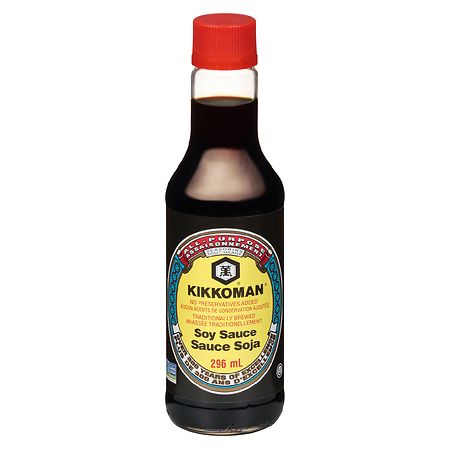


Kikkoman Soy Sauce
Analysis updated June 2026 · How Scout scores
At a glance
Summary
This soy sauce is a processed product with a relatively simple ingredient list, primarily consisting of water, wheat, soybeans, and salt. However, it contains sodium benzoate as a preservative, which is a moderate concern due to potential health risks when combined with certain other substances. The processing level and presence of this preservative limit the score, despite the otherwise straightforward composition.
Key ingredients 5
WaterNeutral
Water is a neutral ingredient used as a solvent and base in many food products. It does not contribute any calories or nutrients. It is essential for dissolving other ingredients and ensuring proper consistency.
See more about Water →WheatNeutral
Wheat is used in soy sauce fermentation, providing carbohydrates for yeast and bacteria. It is a common allergen and may cause reactions in sensitive individuals. The fermentation process breaks down gluten, but trace amounts may remain.
Risks
May cause allergic reactions in individuals with wheat or gluten sensitivities.
Benefits
Provides carbohydrates that are essential for the fermentation process, contributing to the flavor profile of soy sauce.
SoybeansNeutral
Soybeans are a key ingredient in soy sauce, providing protein and flavor. They undergo fermentation, which enhances umami taste and reduces anti-nutrients. Fermentation improves digestibility and flavor complexity.
Risks
May cause allergic reactions in individuals with soy allergies.
Benefits
Rich in protein and contributes to the umami flavor of soy sauce. Fermentation enhances digestibility and nutritional profile.
SaltNeutral
Salt is used as a preservative and flavor enhancer in soy sauce. It helps control microbial growth during fermentation. Excessive consumption can lead to health issues like hypertension.
Risks
High sodium intake may increase the risk of hypertension and cardiovascular diseases.
Benefits
Acts as a preservative and enhances the flavor profile of soy sauce.
Sodium BenzoateBad
Sodium benzoate is a preservative used to prevent spoilage and extend shelf life. It is effective in acidic environments but can form benzene, a carcinogen, when combined with vitamin C. Its use is limited to small quantities due to potential health concerns.
Risks
May form benzene, a potential carcinogen, when combined with vitamin C. Long-term exposure may pose health risks.
Benefits
Extends shelf life by preventing microbial growth in acidic products like soy sauce.
Processing
Processed Foods
Get the full breakdown in the Scout appTake Scout shopping
Scan any product to see lab results, healthy alternatives, and your personalized analysis.
Download on theApp Store GET IT ONGoogle PlayAmazon pricing & content
Amazon price as of . Product prices and availability are accurate as of the date/time indicated and are subject to change. Any price and availability information displayed on Amazon.com at the time of purchase will apply to the purchase of this product.
CERTAIN CONTENT THAT APPEARS ON THIS SITE COMES FROM AMAZON. THIS CONTENT IS PROVIDED “AS IS” AND IS SUBJECT TO CHANGE OR REMOVAL AT ANY TIME.